
Grain10 recipes
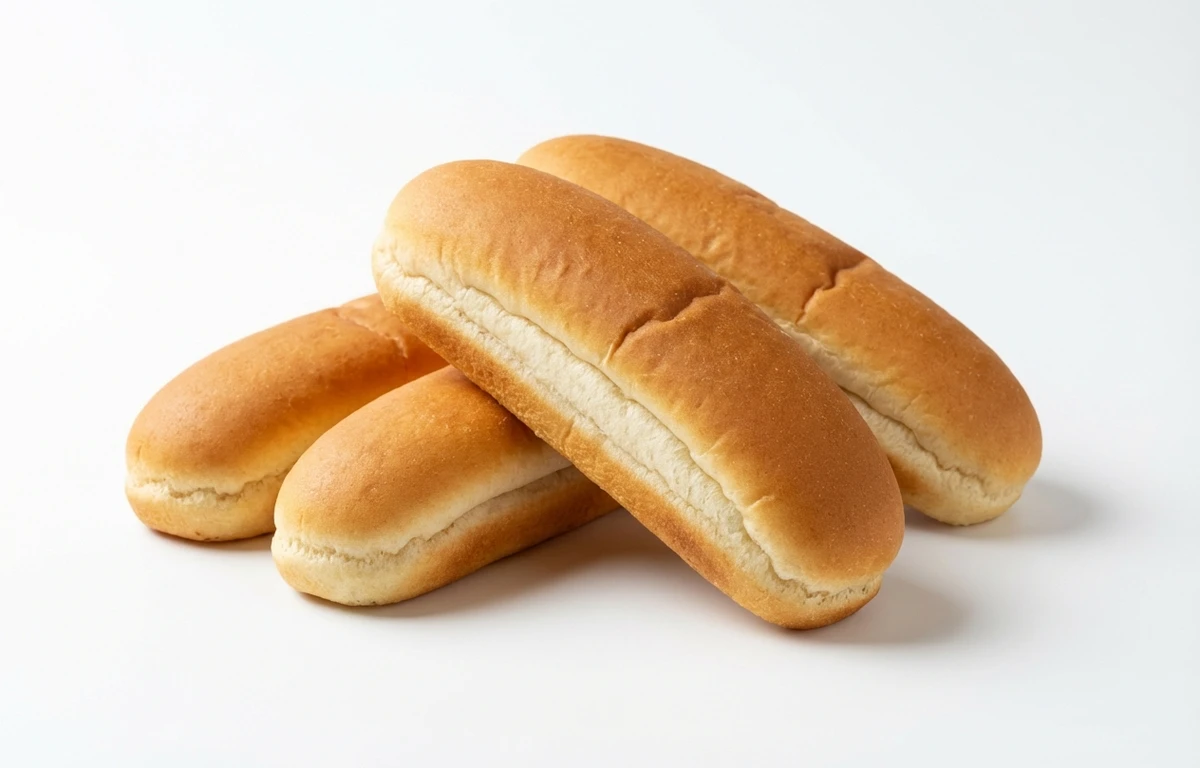
hot dog buns.
VegetarianVeganGluten-freeDairy-freeNut-freePeanut-freeSoy-freeEgg-freeShellfish-freeHoney-freeAlcohol-freeFermented
ALSO KNOWN AS
frankfurter rollswiener bunshot dog bunstop-split bunsnew england-style hot dog bunswiener rollssausage buns
SERVING
CALORIES
274
PROTEIN
8.5g
CARBS
51g
FAT
4.2g
FIBER
2.3g
NUTRITION PROFILE · per 100 g
Everything in this ingredient.
MACRONUTRIENTS
Calories274kcal—
Protein8.5g17%
Carbohydrates51g19%
Fiber2.3g8%
Sugar6.5g13%
Total fat4.2g5%
Saturated fat0.80g4%
Trans fat0g—
Cholesterol0mg0%
Water33g—
MINERALS
Sodium510mg22%
Potassium115mg2%
Calcium140mg11%
Iron3.2mg18%
Magnesium25mg6%
Phosphorus105mg8%
Zinc0.80mg7%
Copper0.15mg17%
Manganese0.40mg17%
Selenium28.5µg52%
VITAMINS
Vitamin A1.0µg0%
Vitamin C0.20mg0%
Vitamin D0µg0%
Vitamin E0.30mg2%
Vitamin K0.50µg0%
Thiamin (B1)0.45mg38%
Riboflavin (B2)0.30mg23%
Niacin (B3)4.2mg26%
Pantothenic acid (B5)0.40mg8%
Vitamin B60.05mg3%
Folate (B9)145µg36%
Vitamin B120µg0%
%DV based on a 2,000 cal diet. Source: USDA FoodData Central. A dash in the %DV column means there’s no established Daily Value for that nutrient.
MEASUREMENT CONVERSIONS
How much is what.
1 oz3.5g
1 lb0.2g
1 piece50g
HEALTH BENEFITS
Why eat it.
- ✓Provides quick energy through carbohydrates
- ✓Enriched varieties provide essential B vitamins
- ✓Contains iron for oxygen transport in blood
- ✓Source of selenium for antioxidant support
- ✓Low in dietary cholesterol
COOKING TIPS
In the kitchen.
- 1Toast or grill the inside faces for better texture and flavor
- 2Steam briefly for a soft, stadium-style bun
- 3Brush with melted butter before toasting for a golden finish
STORAGE
Keep it fresh.
- Store at room temperature in a cool, dry place
- Keep tightly sealed in original packaging to prevent staling
- Freeze for up to 3 months if not using within a week
FAQ
Frequently asked questions.
How long do hot dog buns last at room temperature?
Typically 5 to 7 days if kept in a sealed bag in a cool, dry environment.
Can you freeze hot dog buns?
Yes, they freeze very well. Keep them in their original bag and use within 3 months for best quality.
Are hot dog buns vegan?
Many commercial hot dog buns contain dairy products like milk, whey, or butter, making them non-vegan. Always check the label for specific brands.
What is a good substitute for hot dog buns?
Hoagie rolls, brioche buns, or even a slice of sandwich bread folded diagonally can work in a pinch.
Why do hot dog buns go stale so quickly in the fridge?
The refrigerator temperature causes the starch molecules to recrystallize faster (retrogradation), making the bread tough and dry.
How do I refresh a slightly stale hot dog bun?
Wrap it in a damp paper towel and microwave for 10-15 seconds to restore softness.
Do hot dog buns contain common allergens?
Yes, they almost always contain wheat (gluten) and often contain soy and dairy.
What is the difference between a standard bun and a brioche bun?
Brioche buns are made with a higher egg and butter content, resulting in a richer, sweeter, and softer texture.
How can I tell if a hot dog bun has gone bad?
Look for visible mold spots, a sour or off smell, or an extremely hard, dry texture.
RECIPES
Cook with hot dog buns.
10 recipes · sorted by what’s quick



















