
Loading...
Per 100g
Nutrition data source: USDA FoodData Central
Common measurement equivalents in grams
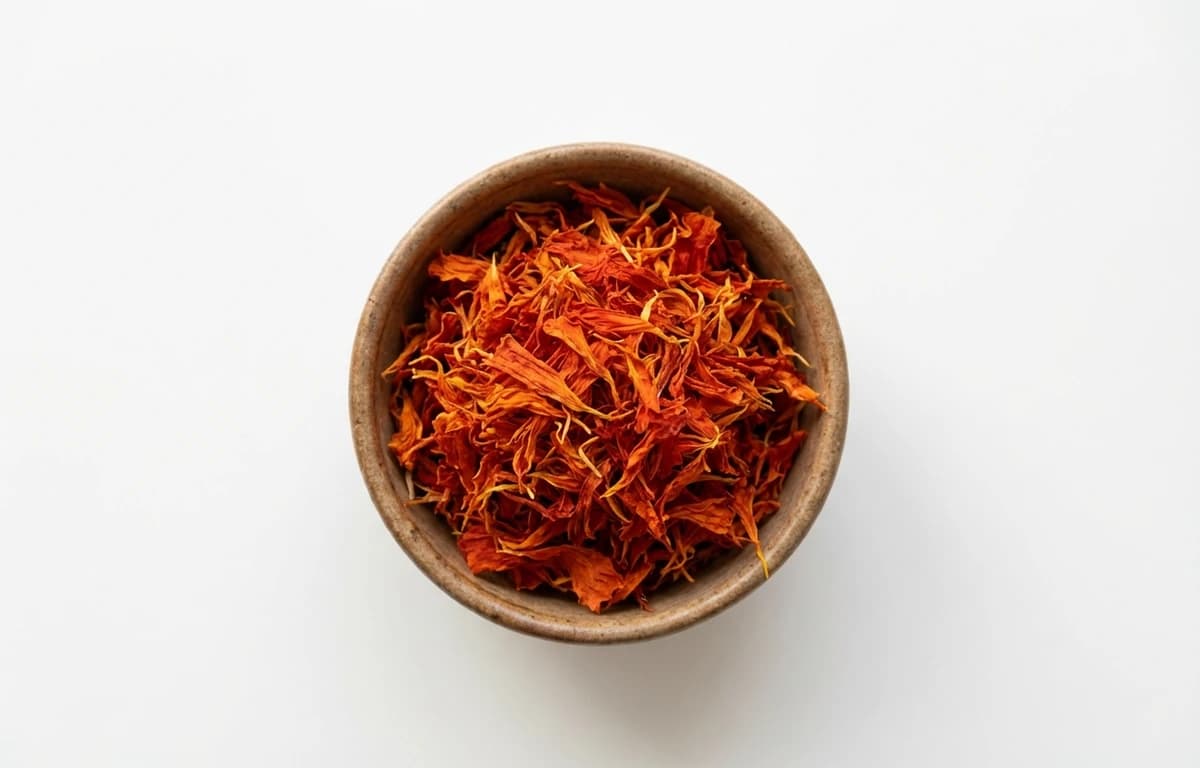
No, Imeretian saffron is made from dried marigold petals (Tagetes patula), while true saffron comes from the Crocus sativus flower. They have very different flavor profiles.
It has a unique earthy, floral, and slightly fruity flavor with subtle notes of hay and honey.
Turmeric can mimic the yellow color, but it lacks the specific floral and earthy aroma of Imeretian saffron. A mix of turmeric and a pinch of mild paprika is a closer substitute.
When stored in an airtight container in a cool, dark place, it will maintain its potency for about 12 months.
Yes, it is a critical component of the famous Georgian spice blend known as Khmeli Suneli.
You can either grind the dried petals into a powder using a spice grinder or soak them in hot water to create a colored infusion.
It is generally safe, but individuals with allergies to the Asteraceae/Compositae family (like ragweed or daisies) should use it with caution.
It is named after the Imereti region in Western Georgia, where the tradition of using marigolds as a spice is most prominent.
Only if they are the specific Tagetes patula or Tagetes erecta varieties and have been grown without pesticides. The flavor develops significantly during the drying process.
Imeretian Saffron is a versatile ingredient found in cuisines around the world. With 300 calories per 100g and 11.2 grams of protein, it's a nutritious addition to many dishes.
Explore more ingredients in the spice category with complete nutrition information.
View all spice →Discover 1 recipes featuring imeretian saffron with step-by-step instructions.
Browse recipes →