
Other
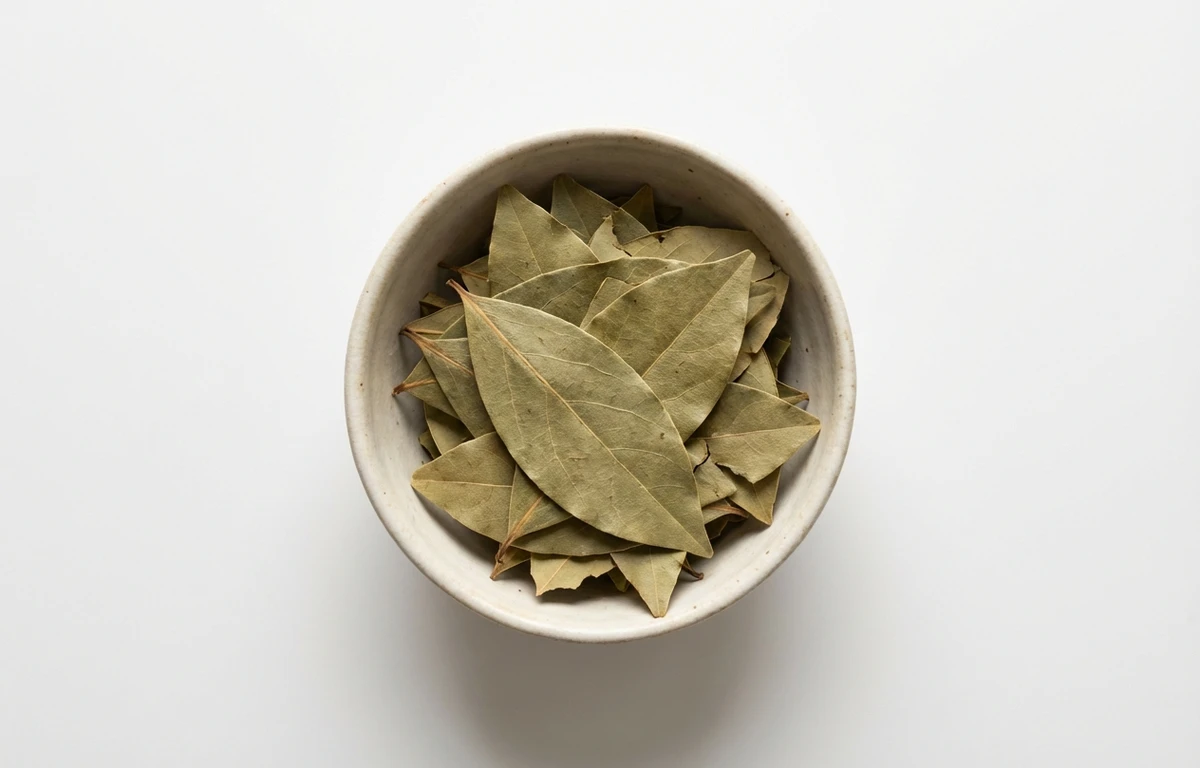
indian bay leaves.
VegetarianVeganGluten-freeDairy-freeNut-freePeanut-freeSoy-freeEgg-freeShellfish-freeHoney-freeAlcohol-free
ALSO KNOWN AS
tejpattatej pattacinnamomum tamalamalabathrumindian cassia leafbiryani leaftamalpatra
SERVING
CALORIES
406
PROTEIN
7.6g
CARBS
75g
FAT
8.4g
FIBER
26.3g
This ingredient is flagged as naturally gluten-free.
NUTRITION PROFILE · per 100 g
Everything in this ingredient.
MACRONUTRIENTS
Calories406kcal—
Protein7.6g15%
Carbohydrates75g27%
Fiber26.3g94%
Total fat8.4g11%
Saturated fat2.3g12%
Trans fat0g—
Cholesterol0mg0%
Water5.4g—
MINERALS
Sodium23mg1%
Potassium529mg11%
Calcium834mg64%
Iron43mg239%
Magnesium120mg29%
Phosphorus113mg9%
Zinc3.7mg34%
Copper0.40mg44%
Manganese8.2mg357%
Selenium2.8µg5%
VITAMINS
Vitamin A309µg34%
Vitamin C46.5mg52%
Vitamin D0µg0%
Thiamin (B1)0.01mg1%
Riboflavin (B2)0.42mg32%
Niacin (B3)2.0mg13%
Vitamin B61.7mg100%
Folate (B9)180µg45%
Vitamin B120µg0%
%DV based on a 2,000 cal diet. Source: USDA FoodData Central. A dash in the %DV column means there’s no established Daily Value for that nutrient.
MEASUREMENT CONVERSIONS
How much is what.
1 cup25g
1 tablespoon7.5g
1 teaspoon2.5g
1 oz28.4g
1 lb453.6g
1 piece1.5g
HEALTH BENEFITS
Why eat it.
- ✓Aids digestion and reduces flatulence
- ✓Traditionally used for respiratory relief
COOKING TIPS
In the kitchen.
- 1Add to hot oil or ghee at the start of cooking to release aroma
- 2Remove the whole leaves before serving as they are tough and inedible
- 3Lightly crush the leaf before adding to intensify the flavor
STORAGE
Keep it fresh.
- Store in an airtight container in a cool, dark place
- Keep away from direct sunlight to preserve essential oils
- Replace after 12 months as the aroma fades over time
FAQ
Frequently asked questions.
What is the difference between Indian bay leaves and Laurel bay leaves?
Indian bay leaves (Tejpatta) come from the cassia tree and have three longitudinal veins, whereas Laurel bay leaves have one central vein. Indian bay leaves have a cinnamon-like aroma.
Can I eat the leaf after it is cooked?
No, the leaves remain very tough even after long cooking and can be a choking hazard or cause small cuts in the digestive tract. They are used only for infusion.
How do I pick high-quality Indian bay leaves?
Look for leaves that are olive green rather than brown. They should be relatively intact and have a strong, spicy, clove-and-cinnamon-like fragrance when slightly torn.
What is a good substitute for Indian bay leaves?
A combination of a standard Laurel bay leaf and a small piece of cinnamon stick is the best substitute to mimic the flavor profile.
How long do dried Indian bay leaves last?
They last about 1 year in an airtight container. If they turn brown or lose their scent, they should be replaced.
Are Indian bay leaves used in sweet dishes?
Yes, they are occasionally used in Indian milk-based desserts like Kheer (rice pudding) to add a subtle aromatic depth.
Can I use ground bay leaf instead of whole?
Yes, but use it sparingly (about 1/8 tsp per leaf) as the flavor is much more concentrated and it will remain in the dish.
Are they the same as curry leaves?
No, they are completely different. Curry leaves are smaller, used fresh, and have a citrusy, nutty flavor, while bay leaves are used dried and have a spicy aroma.
Do they contain any allergens?
Indian bay leaves are generally allergen-free, but people with sensitivities to cinnamon or cassia should use them with caution.



















