
Other10 recipes
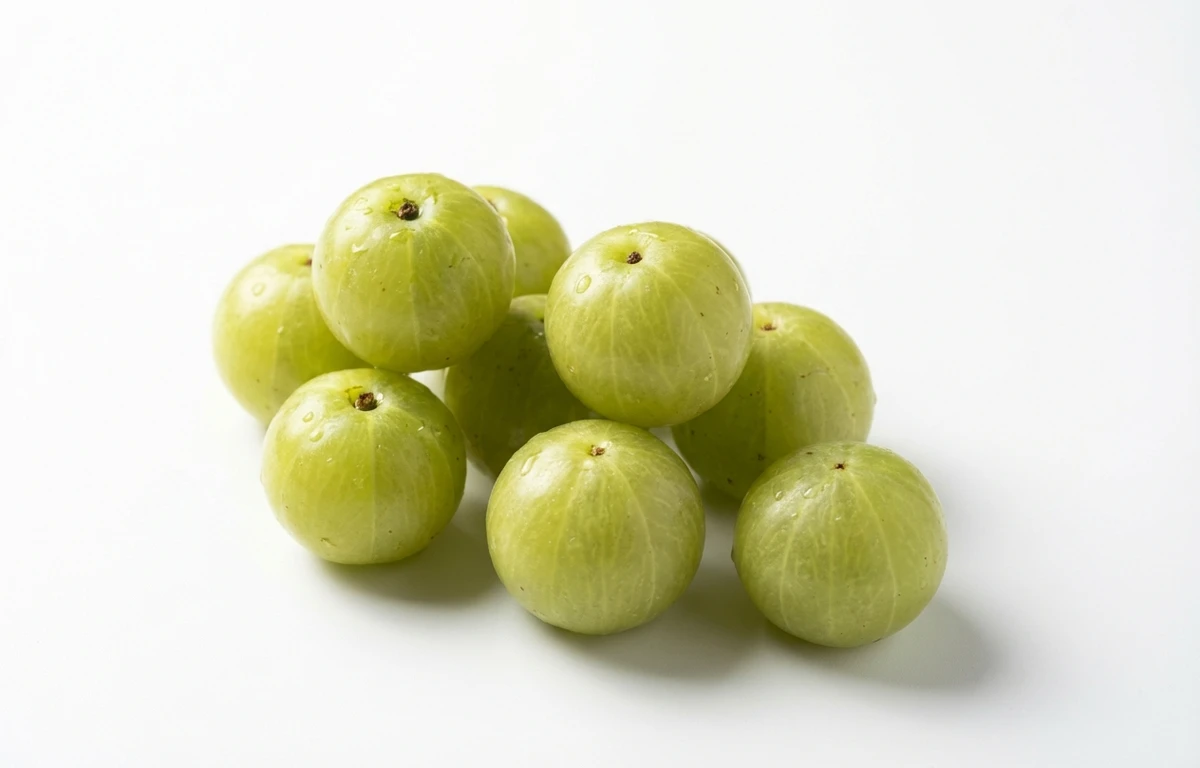
indian gooseberry.
VegetarianVeganGluten-freeDairy-freeNut-freePeanut-freeSoy-freeEgg-freeShellfish-freeHoney-freeAlcohol-free
ALSO KNOWN AS
amlaaamla
SERVING
CALORIES
44
PROTEIN
0.90g
CARBS
10.2g
FAT
0.60g
FIBER
4.3g
This ingredient is flagged as naturally gluten-free. Per 100 g, it provides 0 µg of vitamin K.
NUTRITION PROFILE · per 100 g
Everything in this ingredient.
MACRONUTRIENTS
Calories44kcal—
Protein0.90g2%
Carbohydrates10.2g4%
Fiber4.3g15%
Sugar4.1g8%
Total fat0.60g1%
Saturated fat0.10g1%
Trans fat0g—
Cholesterol0mg0%
Water86g—
MINERALS
Sodium1.0mg0%
Potassium198mg4%
Calcium25mg2%
Iron1.2mg7%
Magnesium10mg2%
Phosphorus27mg2%
Zinc0.10mg1%
Copper0.07mg8%
Manganese0.14mg6%
Selenium0.60µg1%
VITAMINS
Vitamin A15µg2%
Vitamin C445mg494%
Vitamin D0µg0%
Vitamin E0.37mg2%
Vitamin K0µg0%
Thiamin (B1)0.04mg3%
Riboflavin (B2)0.03mg2%
Niacin (B3)0.30mg2%
Pantothenic acid (B5)0.29mg6%
Vitamin B60.08mg5%
Folate (B9)6.0µg2%
Vitamin B120µg0%
%DV based on a 2,000 cal diet. Source: USDA FoodData Central. A dash in the %DV column means there’s no established Daily Value for that nutrient.
MEASUREMENT CONVERSIONS
How much is what.
1 cup150g
1 tablespoon9.4g
1 teaspoon3.1g
1 ml0.6g
1 liter625g
1 piece20g
HEALTH BENEFITS
Why eat it.
- ✓Supports digestive health due to its high fiber content, which aids in regulating bowel movements.
- ✓Traditionally used in Ayurvedic medicine to improve hair health by strengthening follicles and promoting growth.
COOKING TIPS
In the kitchen.
- 1To mellow its intense sour and astringent flavor, boil or steam the fruit for a few minutes until it softens slightly.
- 2Commonly used to make pickles (achaar), sweet preserves (murabba), and tangy chutneys, which balance its tartness.
- 3Grate fresh amla into lentil dishes (dals), rice, or salads for a zesty flavor and a nutritional boost.
- 4Juice the berries and dilute with water, often adding ginger and a sweetener like honey or jaggery for a revitalizing drink.
STORAGE
Keep it fresh.
- Store fresh gooseberries in a perforated bag in the refrigerator's crisper drawer for up to two weeks.
- For long-term storage, wash, dry, and freeze whole gooseberries in an airtight container for up to a year.
- Dried amla powder should be kept in an airtight container in a cool, dark, and dry place to maintain its potency.
FAQ
Frequently asked questions.
Is Indian gooseberry vegan and gluten-free?
Yes, as a natural fruit, Indian gooseberry is inherently vegan and gluten-free. It's suitable for individuals following plant-based diets or those with gluten sensitivities, as it contains no animal products or gluten-containing grains.
How do you eat or prepare Indian gooseberry?
Indian gooseberry can be eaten raw, pickled, juiced, or dried. It's often used in chutneys, jams, and traditional Ayurvedic preparations like Chyawanprash. For raw consumption, some people prefer to sprinkle it with salt to reduce its tartness.
How do you store Indian gooseberry?
Fresh Indian gooseberries can be stored in the refrigerator for up to 1-2 weeks. For longer storage, they can be frozen whole or as a paste, or dried. Ensure they are kept in an airtight container to maintain freshness.
What are the traditional uses of Indian gooseberry?
In Ayurvedic medicine, Indian gooseberry (Amla) is highly revered for its rejuvenating properties. It's traditionally used to improve hair health, boost immunity, support digestion, and enhance overall vitality. It's a key ingredient in many herbal formulations.
RECIPES
Cook with indian gooseberry.
10 recipes · sorted by what’s quick
RELATED GUIDES



















