
Other10 recipes
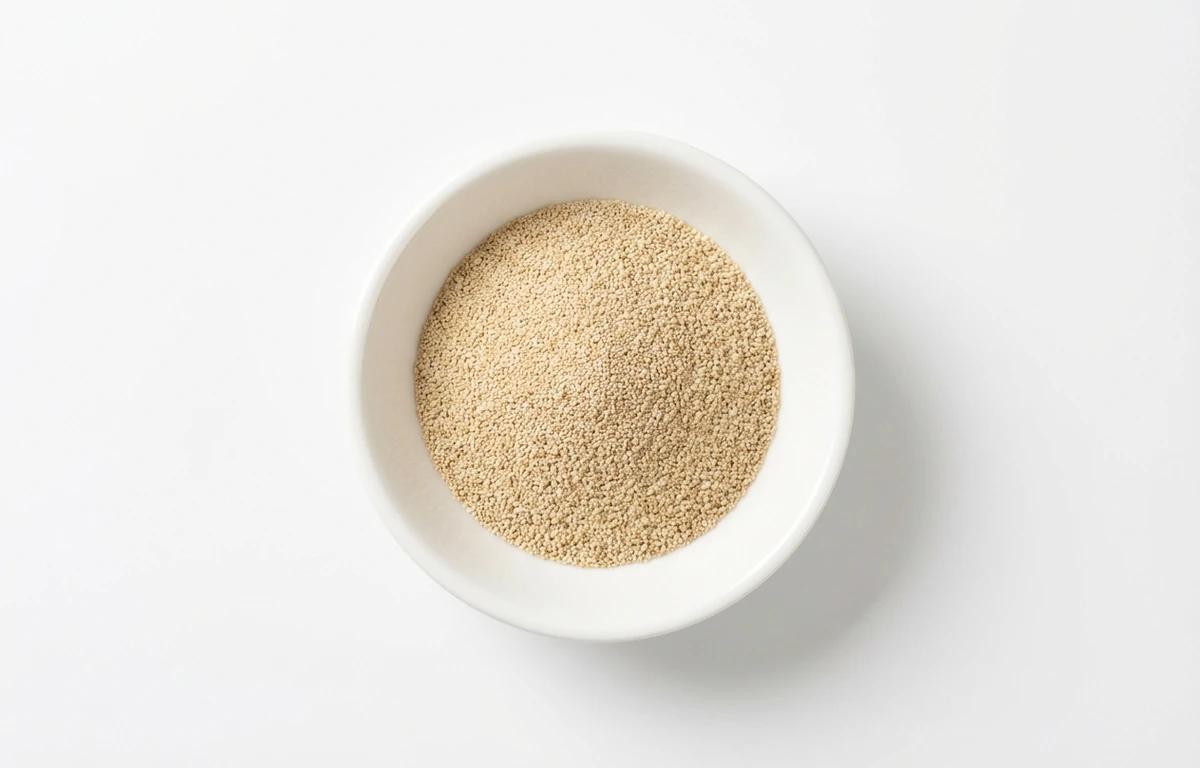
instant yeast.
VegetarianVeganGluten-freeDairy-freeNut-freePeanut-freeSoy-freeEgg-freeShellfish-freeHoney-freeAlcohol-free
ALSO KNOWN AS
rapid rise yeastquick rise yeastfast acting yeast
SERVING
CALORIES
325
PROTEIN
38.3g
CARBS
41g
FAT
5.4g
FIBER
27.3g
This ingredient is flagged as naturally gluten-free. Per 100 g, it provides 0 µg of vitamin K.
NUTRITION PROFILE · per 100 g
Everything in this ingredient.
MACRONUTRIENTS
Calories325kcal—
Protein38.3g77%
Carbohydrates41g15%
Fiber27.3g98%
Sugar0g0%
Total fat5.4g7%
Saturated fat1.0g5%
Cholesterol0mg0%
Water5.2g—
MINERALS
Sodium50mg2%
Potassium1800mg38%
Calcium30mg2%
Iron4.3mg24%
Magnesium54mg13%
Phosphorus1290mg103%
Zinc7.8mg71%
Copper0.40mg44%
Manganese0.50mg22%
Selenium79µg144%
VITAMINS
Vitamin A0µg0%
Vitamin C0mg0%
Vitamin D0µg0%
Vitamin E0mg0%
Vitamin K0µg0%
Thiamin (B1)10.8mg900%
Riboflavin (B2)3.6mg277%
Niacin (B3)40mg250%
Pantothenic acid (B5)10mg200%
Vitamin B62.5mg147%
Folate (B9)2340µg585%
Vitamin B120.07µg3%
%DV based on a 2,000 cal diet. Source: USDA FoodData Central. A dash in the %DV column means there’s no established Daily Value for that nutrient.
MEASUREMENT CONVERSIONS
How much is what.
1 cup144g
1 tablespoon9g
1 teaspoon3g
1 ml0.8g
1 liter600g
HEALTH BENEFITS
Why eat it.
- ✓Source of B-vitamins like thiamin (B1), riboflavin (B2), and niacin (B3), which are essential for converting food into energy.
- ✓Acts as a natural leavening agent, making baked goods lighter and more easily digestible.
COOKING TIPS
In the kitchen.
- 1Instant yeast can be mixed directly with dry ingredients like flour and salt without needing to be proofed in warm water first.
- 2Use warm liquids (around 120-130°F or 49-54°C) in your dough to ensure optimal activation. Liquid that is too hot can kill the yeast.
- 3Instant yeast is more potent than active dry yeast; when substituting, use about 25% less instant yeast than the amount of active dry yeast called for in a recipe.
- 4Due to its fast-acting nature, instant yeast often reduces proofing time and may only require one rise before shaping and baking.
STORAGE
Keep it fresh.
- Store unopened packages in a cool, dry place away from direct sunlight. It will remain stable until the expiration date.
- Once opened, transfer the yeast to an airtight container and store it in the refrigerator for up to 4 months or in the freezer for up to 6 months to maintain its potency.
FAQ
Frequently asked questions.
How many calories and carbs are in instant yeast?
Per 100g, instant yeast contains approximately 325 calories and 41g of carbohydrates. However, the amount of yeast typically used in most baking recipes is very small, so its contribution to the overall nutritional profile of the final baked goods is minimal.
Is instant yeast gluten-free?
Yes, instant yeast itself is naturally gluten-free. It is a single-celled fungus and does not contain wheat, barley, or rye. However, always check product labels for potential cross-contamination if you have severe gluten sensitivities.
Is instant yeast vegan?
Yes, instant yeast is vegan. It is a microorganism and not an animal product or derived from animal products. It is widely used in vegan baking as a leavening agent to help dough rise.
How do I use instant yeast in baking?
Instant yeast can be mixed directly into dry ingredients without prior proofing, unlike active dry yeast. It activates quickly upon contact with liquid and warmth, making it convenient for many recipes. Always follow your recipe's specific instructions for the best results.
Can I substitute instant yeast for active dry yeast?
Yes, you can generally substitute instant yeast for active dry yeast. Use about 25% less instant yeast than active dry yeast (e.g., if a recipe calls for 1 packet of active dry, use ¾ packet of instant). You can also skip the proofing step and add instant yeast directly to dry ingredients.
How do I store instant yeast?
For optimal freshness and to prolong its shelf life, store instant yeast in an airtight container in the refrigerator or freezer. This helps maintain its potency. Once opened, it's best to use it within a few months if refrigerated, or up to a year if frozen.
How do I know if instant yeast is still good?
While instant yeast doesn't require proofing, you can test its viability by dissolving a teaspoon in ¼ cup of warm water (105-115°F or 40-46°C) with a pinch of sugar. If it becomes foamy and bubbly within 5-10 minutes, it's active and ready to use.
Does instant yeast expire?
Yes, instant yeast does expire and loses its potency over time, even if unopened. The expiration date is usually printed on the package. Storing it properly in the refrigerator or freezer can extend its shelf life beyond the printed date, but it's always best to test its activity if unsure.
RECIPES
Cook with instant yeast.
10 recipes · sorted by what’s quick



















