
Condiment
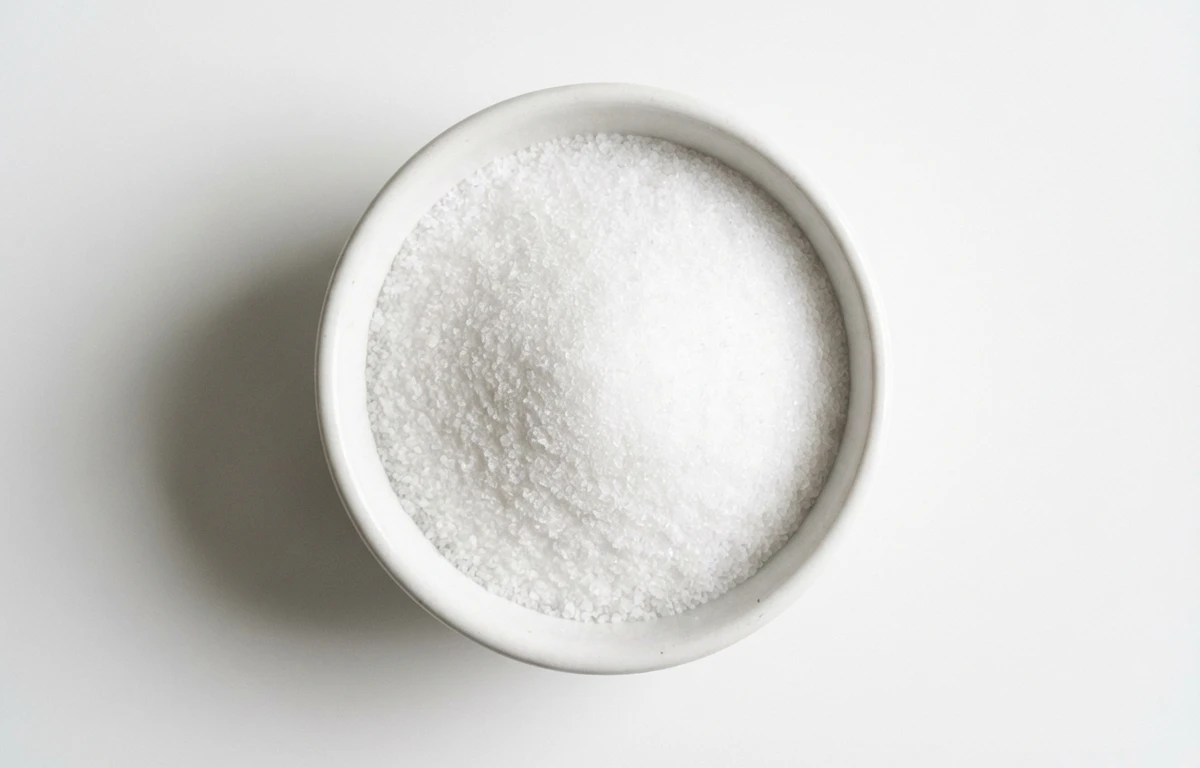
iodized table salt.
VegetarianVeganGluten-freeDairy-freeNut-freePeanut-freeSoy-freeEgg-freeShellfish-freeHoney-freeAlcohol-freeHalalKosher
SERVING
CALORIES
0
PROTEIN
0g
CARBS
0g
FAT
0g
FIBER
0g
NUTRITION PROFILE · per 100 g
Everything in this ingredient.
MACRONUTRIENTS
Calories0kcal—
Protein0g0%
Carbohydrates0g0%
Fiber0g0%
Sugar0g0%
Total fat0g0%
Saturated fat0g0%
Trans fat0g—
Cholesterol0mg0%
Water0.20g—
MINERALS
Sodium38758mg1685%
Potassium8.0mg0%
Calcium24mg2%
Iron0.30mg2%
Magnesium1.0mg0%
Phosphorus0mg0%
Zinc0.10mg1%
Copper0.03mg3%
Manganese0.10mg4%
Selenium0.10µg0%
VITAMINS
Vitamin A0µg0%
Vitamin C0mg0%
Vitamin D0µg0%
Vitamin E0mg0%
Vitamin K0µg0%
Thiamin (B1)0mg0%
Riboflavin (B2)0mg0%
Niacin (B3)0mg0%
Pantothenic acid (B5)0mg0%
Vitamin B60mg0%
Folate (B9)0µg0%
Vitamin B120µg0%
%DV based on a 2,000 cal diet. Source: USDA FoodData Central. A dash in the %DV column means there’s no established Daily Value for that nutrient.
MEASUREMENT CONVERSIONS
How much is what.
1 cup292g
1 tablespoon18g
1 teaspoon6g
1 ml1.2g
1 liter1200g
HEALTH BENEFITS
Why eat it.
- ✓Essential for Thyroid Function: The added iodine is crucial for the production of thyroid hormones, which regulate metabolism.
- ✓Maintains Fluid Balance: Sodium is a key electrolyte that helps maintain the body's fluid balance and blood pressure.
- ✓Supports Nerve and Muscle Function: Sodium is vital for transmitting nerve impulses and enabling muscle contraction and relaxation.
- ✓Prevents Iodine Deficiency Disorders: Regular consumption helps prevent goiter and other iodine deficiency-related health issues like developmental problems.
COOKING TIPS
In the kitchen.
- 1Add salt in stages throughout the cooking process to build layers of flavor, rather than all at once at the end.
- 2When boiling pasta or vegetables, salt the water generously to season the food from the inside out.
- 3Use for brining meats like chicken or pork to increase moisture, tenderness, and flavor.
- 4Due to its fine grains, it dissolves quickly and is best for baking where precise measurements are critical.
STORAGE
Keep it fresh.
- Store in a cool, dry place, such as a pantry or cupboard, away from moisture to prevent clumping.
- Keep in a sealed, airtight container (like a salt shaker or salt cellar) to protect it from humidity and absorbing odors.
FAQ
Frequently asked questions.
Is iodized table salt healthy?
Iodized table salt is essential for health due to its iodine content, which supports thyroid function and prevents deficiency disorders. However, it's primarily sodium chloride, and excessive sodium intake can contribute to high blood pressure and other health issues. Therefore, it should be consumed in moderation as part of a balanced diet.
What are the specific health benefits of the iodine in iodized salt?
The iodine in iodized salt is crucial for the production of thyroid hormones, which regulate metabolism, growth, and development. Regular consumption helps prevent iodine deficiency disorders like goiter and supports cognitive function, especially important during pregnancy and childhood. It's a simple and effective public health measure.
How much sodium is in iodized table salt, and is it different from other salts?
Iodized table salt is almost entirely sodium chloride, with about 38-40% sodium by weight. This means one teaspoon (approx. 5g) contains roughly 2300mg of sodium. While the iodine content is unique, its sodium level is comparable to other pure sodium chloride salts like non-iodized table salt, kosher salt, or fine sea salt.
Is iodized table salt suitable for a low-sodium diet or for individuals with high blood pressure?
No, iodized table salt is not suitable for a low-sodium diet, nor is it recommended for individuals with high blood pressure, as it is a primary source of sodium. People on sodium-restricted diets should limit all forms of salt, including iodized salt, and consult a healthcare professional for guidance.
Is iodized table salt vegan, gluten-free, or keto-friendly?
Yes, iodized table salt is inherently vegan, gluten-free, and keto-friendly. It is a mineral compound with added iodine, containing no animal products, gluten, or carbohydrates. It fits well into most dietary patterns that allow for salt consumption.
What is the primary use of iodized table salt in cooking?
Iodized table salt is primarily used as a general seasoning to enhance the flavor of food. Its fine, uniform crystals dissolve quickly, making it suitable for everyday cooking, baking, and seasoning dishes at the table. It also serves as a convenient way to ensure adequate iodine intake.
Can iodized table salt be used for baking or pickling?
While it can be used for general baking, some bakers prefer non-iodized salt as the iodine can sometimes impart a slightly metallic taste or affect yeast activity in very sensitive recipes. For pickling and canning, non-iodized salt (like pickling salt) is generally recommended because the anti-caking agents and iodine in table salt can sometimes cloud the brine or affect the color and texture of the pickled items.
How should iodized table salt be stored to maintain its quality and iodine content?
Iodized table salt should be stored in a cool, dry place, away from direct sunlight and moisture. Keeping it in an airtight container helps prevent clumping and protects the iodine from degradation due to exposure to air and light, which can cause it to dissipate over time.
Does iodized table salt expire or lose its iodine over time?
While salt itself does not expire, the iodine added to iodized salt can degrade and dissipate over time, especially when exposed to heat, light, and humidity. Most manufacturers recommend using it within 5 years for optimal iodine content, though it remains safe to consume as salt indefinitely.
What is the main difference between iodized table salt and sea salt or kosher salt?
The main difference is the addition of iodine to iodized table salt, which is a crucial micronutrient for thyroid health. Sea salt and kosher salt are typically non-iodized and differ in crystal size, texture, and mineral trace amounts (for sea salt). Table salt also often contains anti-caking agents, which are less common in kosher or some sea salts.



















