Other2 recipes
israeli couscous.
VegetarianVeganGluten-freeDairy-freeNut-freePeanut-freeSoy-freeEgg-freeShellfish-freeHoney-freeAlcohol-free
ALSO KNOWN AS
pearl couscousptitimIsraeli couscousgiant couscous
SERVING
CALORIES
360
PROTEIN
12.5g
CARBS
76g
FAT
1.5g
FIBER
2.5g
NUTRITION PROFILE · per 100 g
Everything in this ingredient.
MACRONUTRIENTS
Calories360kcal—
Protein12.5g25%
Carbohydrates76g28%
Fiber2.5g9%
Sugar0.50g1%
Total fat1.5g2%
Saturated fat0.20g1%
Trans fat0g—
Cholesterol0mg0%
Water9.0g—
MINERALS
Sodium10mg0%
Potassium160mg3%
Calcium20mg2%
Iron1.4mg8%
Magnesium44mg10%
Phosphorus170mg14%
Zinc1.2mg11%
Copper0.15mg17%
Manganese0.60mg26%
Selenium27.5µg50%
VITAMINS
Vitamin A0µg0%
Vitamin C0mg0%
Vitamin D0µg0%
Vitamin E0.10mg1%
Vitamin K0.10µg0%
Thiamin (B1)0.40mg33%
Riboflavin (B2)0.10mg8%
Niacin (B3)3.5mg22%
Pantothenic acid (B5)0.50mg10%
Vitamin B60.10mg6%
Folate (B9)20µg5%
Vitamin B120µg0%
%DV based on a 2,000 cal diet. Source: USDA FoodData Central. A dash in the %DV column means there’s no established Daily Value for that nutrient.
MEASUREMENT CONVERSIONS
How much is what.
1 cup173g
1 tablespoon10.8g
1 teaspoon3.6g
1 ml0.7g
1 liter720.8g
HEALTH BENEFITS
Why eat it.
- ✓Provides carbohydrates for sustained energy release.
- ✓Contains selenium, an antioxidant that helps protect cells from damage.
- ✓A source of plant-based protein, contributing to muscle maintenance and repair.
- ✓Naturally low in fat and cholesterol-free, making it a heart-healthy carbohydrate choice.
COOKING TIPS
In the kitchen.
- 1For enhanced flavor, toast the dry couscous in a pan with a little olive oil or butter for 2-3 minutes until golden brown before adding liquid.
- 2Use a ratio of approximately 1 part couscous to 1.5 parts liquid (like broth or water). Bring to a boil, then cover and simmer for 8-10 minutes.
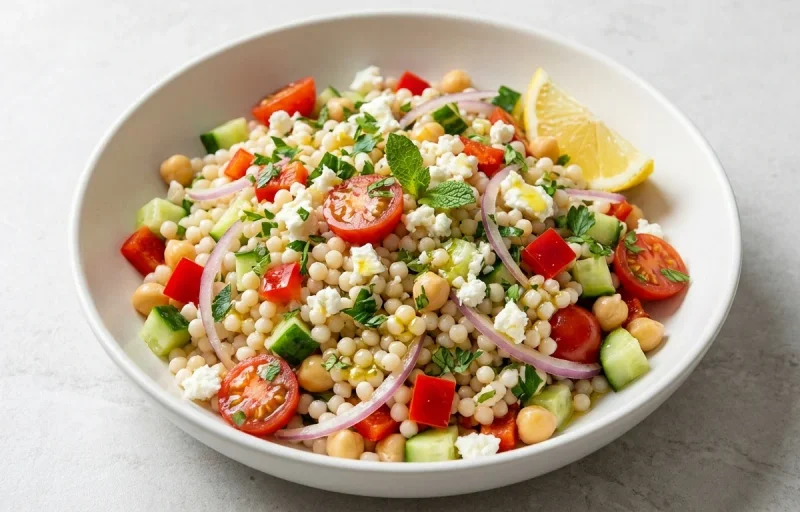
- 3Its pearl-like shape and chewy texture make it excellent for cold salads as it doesn't clump together like smaller couscous varieties.
- 4Fluff with a fork after cooking to separate the pearls before serving or mixing with other ingredients.
STORAGE
Keep it fresh.
- Store uncooked Israeli couscous in an airtight container in a cool, dry pantry for up to 12 months.
- Keep cooked couscous in a sealed container in the refrigerator for up to 4 days.
FAQ
Frequently asked questions.
Is Israeli couscous healthy?
Yes, Israeli couscous is a healthy carbohydrate source, providing sustained energy. It's naturally low in fat, cholesterol-free, and contains selenium, an antioxidant that helps protect cells from damage. It also offers plant-based protein, contributing to muscle maintenance.
How much protein, calories, and carbs are in Israeli couscous?
Per 100g of dry Israeli couscous, it contains approximately 360 calories, 12.5g of protein, and 76g of carbohydrates. It serves as a good source of energy and contributes to your daily protein intake.
Is Israeli couscous good for weight loss?
While Israeli couscous is a good source of complex carbohydrates and protein, it is calorie-dense. For weight loss, it should be consumed in moderation as part of a balanced diet, focusing on appropriate portion sizes and pairing it with plenty of vegetables and lean protein to increase satiety.
Is Israeli couscous gluten-free?
No, Israeli couscous is not gluten-free. It is made from wheat semolina, which contains gluten, making it unsuitable for individuals with celiac disease or gluten sensitivity.
Can diabetics eat Israeli couscous?
Diabetics can eat Israeli couscous in moderation, but it's important to monitor portion sizes due to its carbohydrate content, which can impact blood sugar levels. Pairing it with fiber-rich vegetables and lean proteins can help mitigate its glycemic effect.
Is Israeli couscous vegan?
Yes, Israeli couscous is typically vegan. It is made from wheat semolina and water, containing no animal products. Always check the ingredient list on specific brands to ensure no unexpected additives.
How do you cook Israeli couscous?
Israeli couscous is usually cooked by first toasting it lightly in a pan with a little oil or butter, then simmering it in a liquid (like water or broth) until it absorbs the liquid and becomes tender. The typical ratio is 1 part couscous to 1.5-2 parts liquid, cooked for about 10-15 minutes.
What does Israeli couscous taste like and how is it used?
Israeli couscous has a mild, slightly nutty flavor and a satisfyingly chewy texture, similar to al dente pasta. It's incredibly versatile and can be used in salads, as a side dish, in soups, or as a base for stews, readily absorbing the flavors of the ingredients it's cooked with.
How do you store Israeli couscous?
Uncooked Israeli couscous should be stored in an airtight container in a cool, dry, dark place, where it can last for up to 1-2 years. Cooked Israeli couscous should be refrigerated in an airtight container and consumed within 3-4 days for best quality and safety.
What is the difference between Israeli couscous and regular couscous?
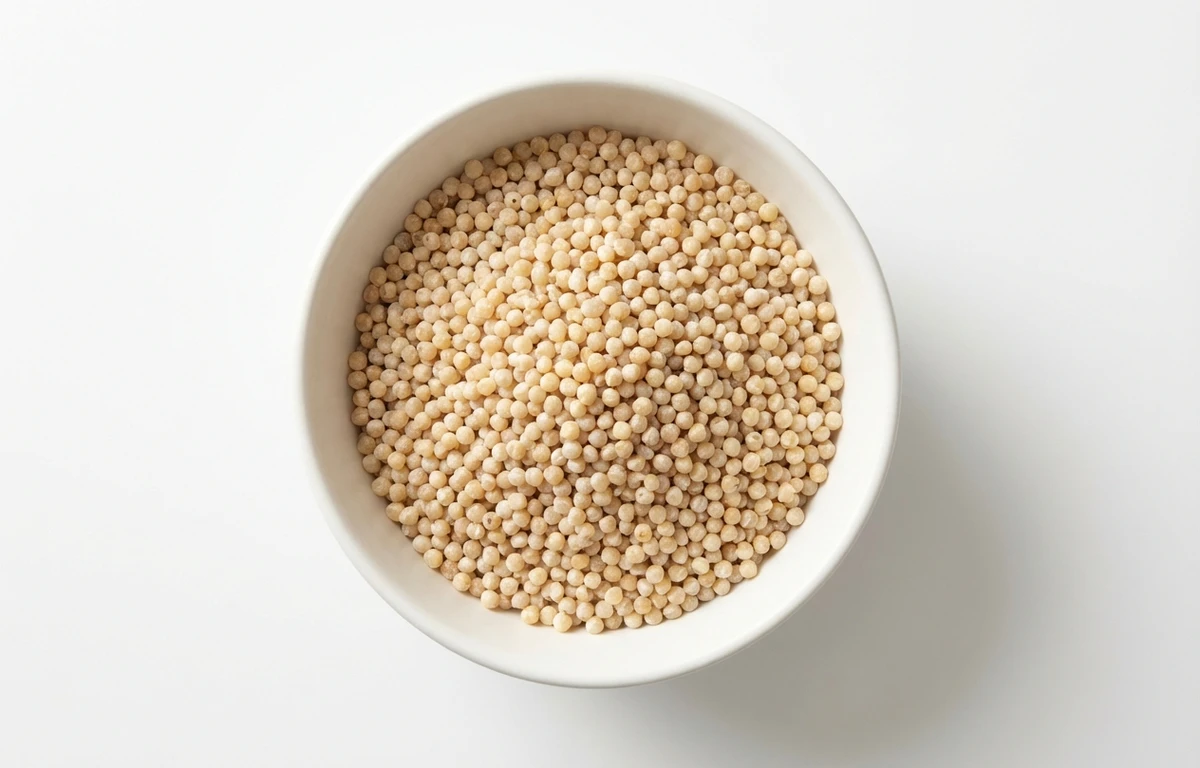
Israeli couscous, also known as pearl couscous or ptitim, has larger, spherical grains compared to the much smaller, finer grains of traditional couscous. This gives it a chewier texture and requires a longer cooking time, making it more akin to a small pasta than a grain.
RECIPES
Cook with israeli couscous.
2 recipes · sorted by what’s quick