
Grain
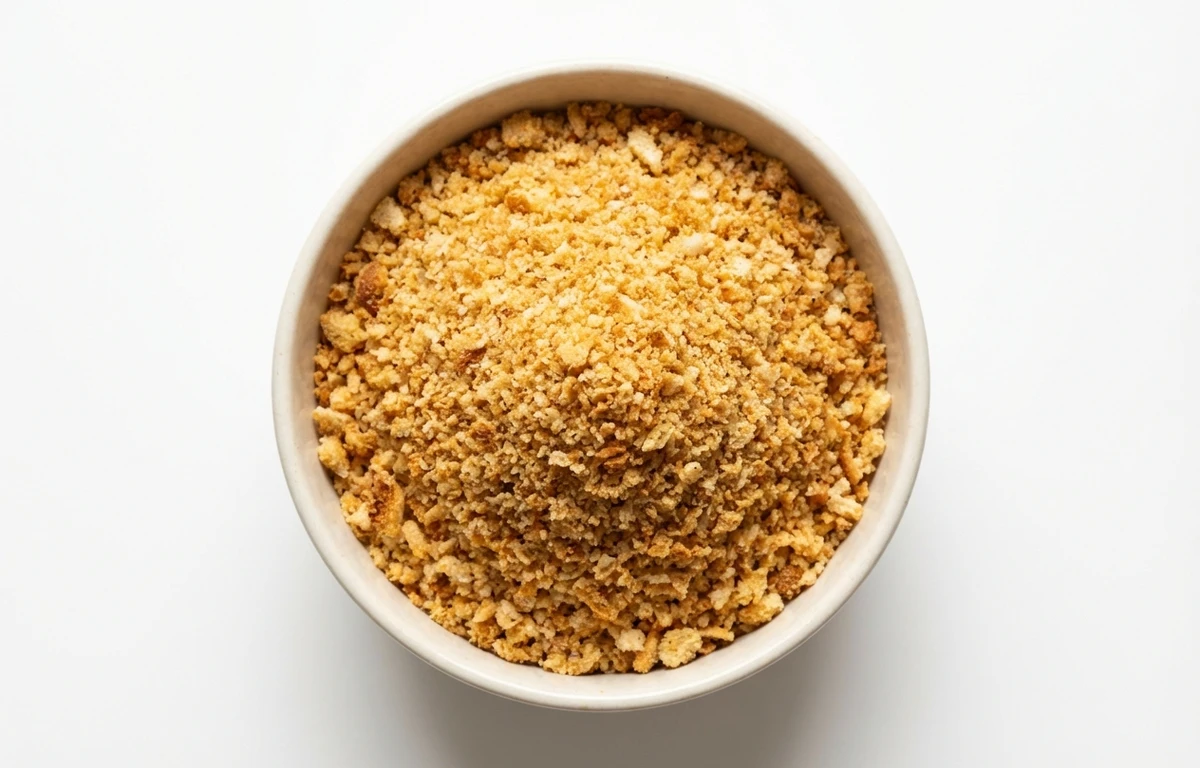
italian breadcrumbs.
VegetarianVeganGluten-freeDairy-freeNut-freePeanut-freeSoy-freeEgg-freeShellfish-freeHoney-freeAlcohol-freeFermented
ALSO KNOWN AS
Italian style breadcrumbsSeasoned breadcrumbsitalian breadcrumbsherbed breadcrumbsseasoned bread crumbs
SERVING
CALORIES
398
PROTEIN
13.5g
CARBS
75.1g
FAT
4.5g
FIBER
3.5g
NUTRITION PROFILE · per 100 g
Everything in this ingredient.
MACRONUTRIENTS
Calories398kcal—
Protein13.5g27%
Carbohydrates75.1g27%
Fiber3.5g13%
Sugar6.0g12%
Total fat4.5g6%
Saturated fat0.80g4%
Trans fat0.02g—
Cholesterol0mg0%
Water6.5g—
MINERALS
Sodium660mg29%
Potassium180mg4%
Calcium100mg8%
Iron4.0mg22%
Magnesium26mg6%
Phosphorus95mg8%
Zinc0.79mg7%
Copper0.12mg13%
Manganese0.49mg21%
Selenium17.2µg31%
VITAMINS
Vitamin A0µg0%
Vitamin C0mg0%
Vitamin D0µg0%
Vitamin E0.29mg2%
Vitamin K3.0µg3%
Thiamin (B1)0.58mg48%
Riboflavin (B2)0.32mg25%
Niacin (B3)4.5mg28%
Pantothenic acid (B5)0.37mg7%
Vitamin B60.10mg6%
Folate (B9)102µg26%
Vitamin B120µg0%
%DV based on a 2,000 cal diet. Source: USDA FoodData Central. A dash in the %DV column means there’s no established Daily Value for that nutrient.
MEASUREMENT CONVERSIONS
How much is what.
1 cup96g
1 tablespoon6g
1 teaspoon2g
1 ml0.4g
1 liter400g
HEALTH BENEFITS
Why eat it.
- ✓Adds satisfying texture and crunch to foods, which can increase meal satisfaction.
- ✓Acts as a binder in recipes like meatballs and meatloaf, helping to retain moisture and reducing the need for added fats.
- ✓If made from enriched bread, can be a source of B vitamins (thiamin, niacin, riboflavin) and iron.
COOKING TIPS
In the kitchen.
- 1Toast breadcrumbs in a dry skillet or with a little olive oil over medium heat until golden brown to enhance their nutty flavor before using as a topping.
- 2Mix with melted butter or olive oil before sprinkling over casseroles or vegetables to ensure even browning and a crispier crust.
- 3Use as a coating for fried or baked foods like chicken cutlets or fish fillets. For best adhesion, dredge the protein in flour, then egg, then breadcrumbs.
- 4Combine with grated Parmesan cheese, fresh herbs like parsley, and garlic powder to create a flavorful topping for pasta, baked fish, or stuffed vegetables.
STORAGE
Keep it fresh.
- Store in an airtight container in a cool, dark, and dry place like a pantry for up to 6 months.
- For long-term storage, freeze in a sealed bag or container for up to a year to prevent staleness and rancidity, especially if they contain cheese.
FAQ
Frequently asked questions.
Is Italian breadcrumbs healthy?
Italian breadcrumbs can add satisfying texture and act as a binder in recipes, potentially increasing meal satisfaction and reducing the need for added fats. If made from enriched bread, they can also provide B vitamins and iron. However, they are calorie and carb-dense, so moderation is key, especially for those monitoring intake.
How many calories, protein, and carbs are in Italian breadcrumbs?
Per 100g, Italian breadcrumbs typically contain around 398 calories, 13.5g of protein, and 75.1g of carbohydrates. They also contain about 4.5g of fat. These values can vary slightly by brand and specific ingredients.
Are Italian breadcrumbs good for weight loss?
Due to their high calorie and carbohydrate content, Italian breadcrumbs are not inherently ideal for weight loss when consumed in large quantities. However, using them sparingly to add texture or as a binder can enhance meal satisfaction without significantly impacting calorie goals. Portion control is essential.
Are Italian breadcrumbs gluten-free?
No, traditional Italian breadcrumbs are not gluten-free. They are made from wheat bread, which contains gluten. However, many brands now offer gluten-free versions made from alternative flours like rice or corn, so always check the label if you have a gluten sensitivity.
Are Italian breadcrumbs vegan?
Traditional Italian breadcrumbs are often not vegan because they can contain dairy products like Parmesan cheese or sometimes eggs as binders. However, many plain or unseasoned breadcrumbs are vegan, and some brands specifically market vegan Italian breadcrumbs. Always check the ingredient list to be sure.
What are the best uses for Italian breadcrumbs?
Italian breadcrumbs are incredibly versatile. They are commonly used for breading meats (like chicken cutlets or veal parmesan), fish, and vegetables, providing a crispy coating. They also serve as an excellent binder in meatballs, meatloaf, and crab cakes, and can be sprinkled over casseroles or baked pasta dishes for a crunchy topping.
What is the difference between Italian breadcrumbs and plain breadcrumbs?
The primary difference is the seasoning. Italian breadcrumbs are pre-seasoned with a blend of herbs and spices, typically including oregano, basil, parsley, garlic powder, and sometimes grated Parmesan cheese. Plain breadcrumbs are unseasoned, offering a neutral base that can be flavored as desired.
How should I store Italian breadcrumbs?
Italian breadcrumbs should be stored in an airtight container in a cool, dry place, away from direct sunlight and moisture. This helps prevent them from becoming stale or absorbing odors. Refrigeration is not typically necessary unless specified by the manufacturer or if you live in a very humid climate.
How long do Italian breadcrumbs last?
Unopened, Italian breadcrumbs can last for 6-12 months past their best-by date if stored properly. Once opened, they are best used within 3-6 months for optimal freshness and flavor. Discard them if you notice any signs of mold, an off smell, or significant clumping.
Can I make my own Italian breadcrumbs at home?
Yes, making your own Italian breadcrumbs is simple and a great way to use stale bread. Simply process dried bread slices in a food processor until fine crumbs form, then mix with your favorite Italian seasonings like dried oregano, basil, garlic powder, onion powder, and a pinch of salt and pepper. You can also add grated Parmesan cheese.



















