
Spice5 recipes
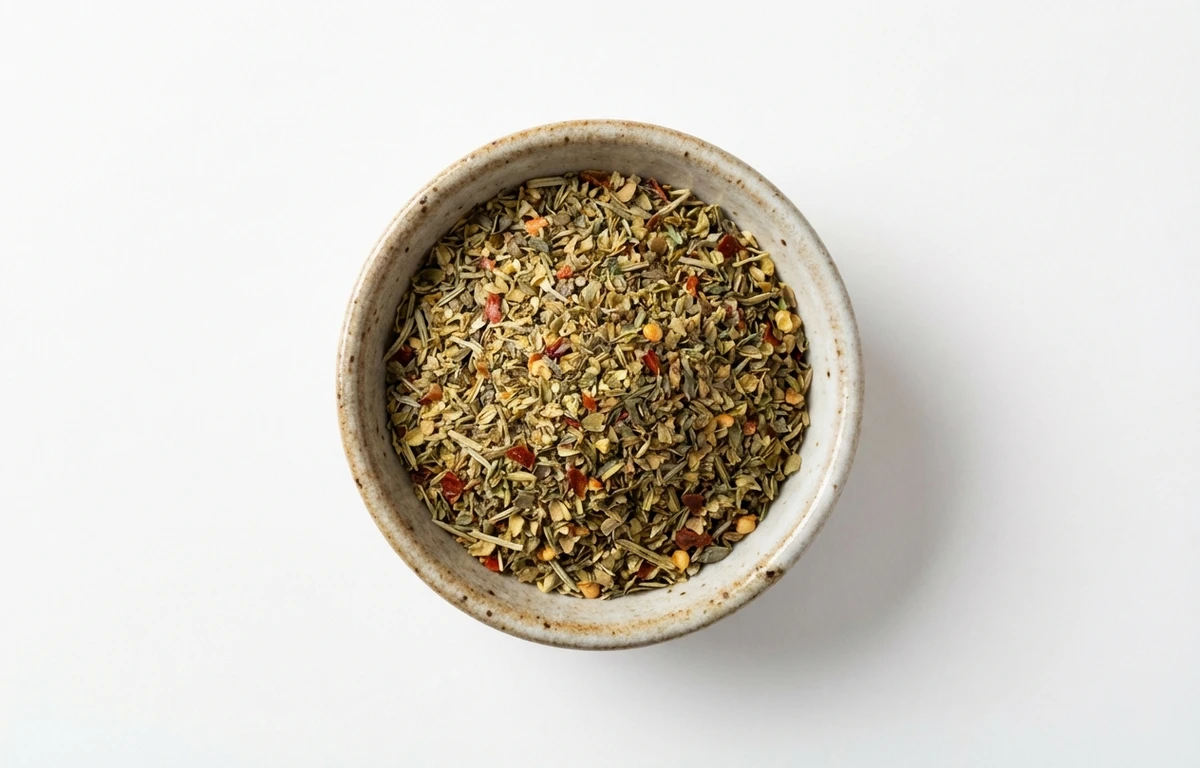
italian seasoning.
VegetarianVeganGluten-freeDairy-freeNut-freePeanut-freeSoy-freeEgg-freeShellfish-freeHoney-freeAlcohol-free
ALSO KNOWN AS
dried italian herbsitalian herb mixitalian herb blenddried italian seasoning
SERVING
CALORIES
374
PROTEIN
10.5g
CARBS
60.2g
FAT
10.1g
FIBER
38.5g
NUTRITION PROFILE · per 100 g
Everything in this ingredient.
MACRONUTRIENTS
Calories374kcal—
Protein10.5g21%
Carbohydrates60.2g22%
Fiber38.5g138%
Sugar1.8g4%
Total fat10.1g13%
Saturated fat2.5g13%
Trans fat0g—
Cholesterol0mg0%
Water7.5g—
MINERALS
Sodium65mg3%
Potassium1550mg33%
Calcium1590mg122%
Iron42.5mg236%
Magnesium320mg76%
Phosphorus210mg17%
Zinc4.2mg38%
Copper0.90mg100%
Manganese7.8mg339%
Selenium4.5µg8%
VITAMINS
Vitamin A185µg21%
Vitamin C12mg13%
Vitamin D0µg0%
Vitamin E10.5mg70%
Vitamin K1710µg1425%
Thiamin (B1)0.30mg25%
Riboflavin (B2)0.50mg38%
Niacin (B3)4.8mg30%
Pantothenic acid (B5)0.80mg16%
Vitamin B61.1mg65%
Folate (B9)210µg53%
Vitamin B120µg0%
%DV based on a 2,000 cal diet. Source: USDA FoodData Central. A dash in the %DV column means there’s no established Daily Value for that nutrient.
MEASUREMENT CONVERSIONS
How much is what.
1 cup96g
1 tablespoon6g
1 teaspoon2g
1 oz28.4g
1 lb453.6g
HEALTH BENEFITS
Why eat it.
- ✓High in Vitamin K which supports bone health and blood clotting
- ✓Contains potent antioxidants from oregano and rosemary
- ✓Anti-inflammatory properties from various dried herbs
- ✓May aid digestion and reduce bloating
- ✓Antimicrobial properties that help fight harmful bacteria
COOKING TIPS
In the kitchen.
- 1Crush the herbs between your palms before adding to release trapped oils
- 2Add early in the cooking process for stews and sauces to allow flavors to meld
- 3Mix with olive oil and balsamic vinegar for a quick bread dip or marinade
STORAGE
Keep it fresh.
- Store in a cool, dark, and dry place away from direct sunlight
- Keep in an airtight glass container to preserve volatile oils
- Avoid storing above the stove as heat and steam degrade flavor
FAQ
Frequently asked questions.
What herbs are typically in Italian seasoning?
It is usually a blend of dried oregano, basil, rosemary, thyme, and marjoram. Some variations may include savory or sage.
How long does Italian seasoning last?
When stored properly, it maintains peak flavor for 1-3 years. It doesn't 'spoil' but loses its aromatic potency over time.
Does Italian seasoning contain salt?
Standard Italian seasoning is a salt-free herb blend. However, always check the label as some brands may add salt or garlic salt.
What is the best substitute for Italian seasoning?
You can make your own by mixing equal parts dried basil and oregano, or use 'Herbes de Provence' for a similar profile.
Is Italian seasoning gluten-free?
Yes, pure dried herbs are naturally gluten-free. Ensure the manufacturer does not use anti-caking agents containing gluten.
Can I use Italian seasoning as a dry rub?
Yes, it works excellently as a dry rub for chicken, pork, or roasted vegetables when combined with salt and pepper.
How can I tell if my Italian seasoning has gone bad?
Rub a small amount in your palm and sniff; if the aroma is weak or smells like hay rather than herbs, it should be replaced.
Does it contain garlic or onion?
Traditional Italian seasoning is strictly herbs. If it contains garlic or onion, it is usually labeled as 'Italian Seasoning with Garlic' or similar.
Can I freeze Italian seasoning?
Freezing is not recommended for dried spices as it can introduce moisture, which leads to clumping and flavor degradation.
RECIPES
Cook with italian seasoning.
5 recipes · sorted by what’s quick



















