
Loading...
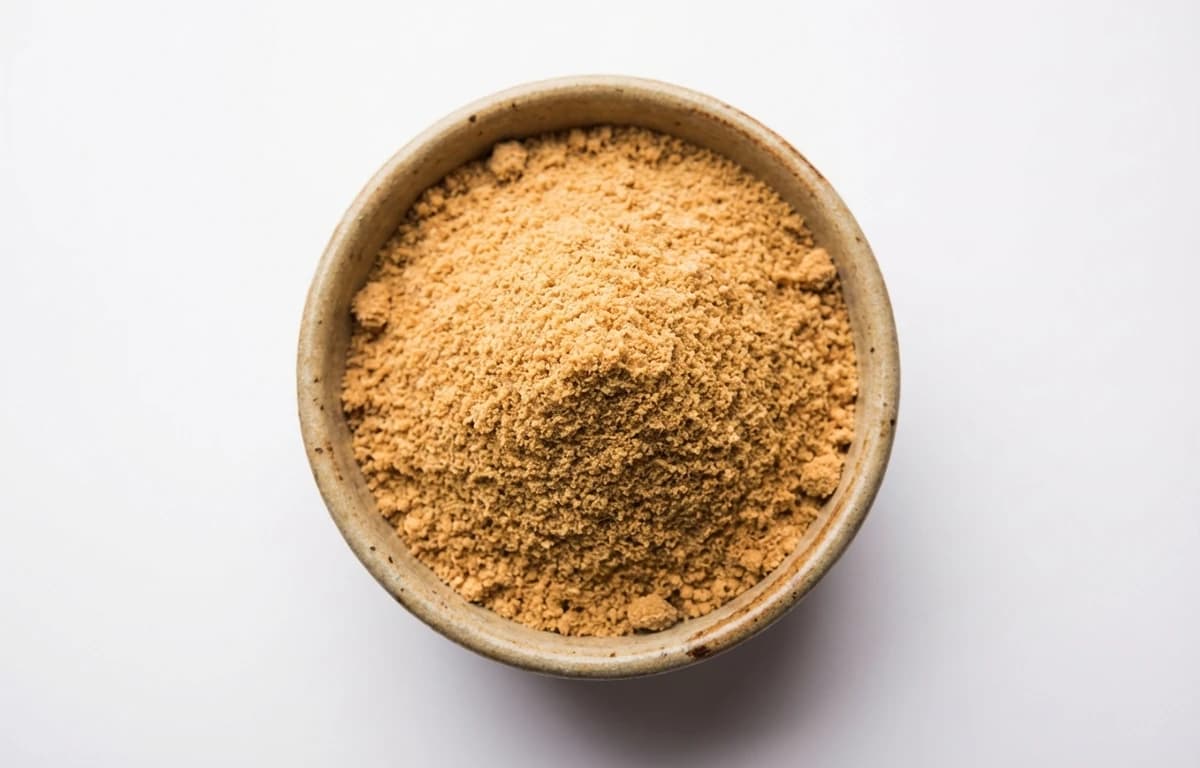
Also known as: Gur powder, Shakkar, Panela powder, Unrefined cane sugar powder, Desi Shakkar, Nattu Sakkarai
Per 100g
Nutrition data source: USDA FoodData Central
Common measurement equivalents in grams
When stored in an airtight container in a cool, dry place, jaggery powder can last for 6 to 12 months.
While it can be frozen, it is not recommended as it may absorb moisture upon thawing, leading to clumping or spoilage.
Look for a darker brown color, which usually indicates less chemical processing. Avoid powder that looks very light or yellow, as it may contain bleaching agents.
Coconut sugar, brown sugar, or muscovado sugar are the best alternatives due to their similar caramel-like flavor profile.
No, unlike jaggery blocks, the powder form is ready to use and dissolves easily in liquids and batters.
Yes, it is unrefined and retains minerals like iron, potassium, and magnesium, whereas white sugar provides only empty calories.
Yes, it is a popular sweetener for tea (chai) and coffee, though it may slightly alter the traditional flavor profile.
Jaggery is slightly acidic. To prevent curdling, always add jaggery powder to milk-based dishes after the heat has been turned off.
While it contains more nutrients than white sugar, it is still high in sucrose and should be consumed in moderation by diabetics.
Jaggery Powder is a versatile ingredient found in cuisines around the world. With 383 calories per 100g and 0.4 grams of protein, it's a nutritious addition to many dishes.
Explore more ingredients in the sweetener category with complete nutrition information.
View all sweetener →Discover 10 recipes featuring jaggery powder with step-by-step instructions.
Browse recipes →Explore more ingredients similar to Jaggery Powder.
The most-searched ingredients on CraftMyMeals.