
Condiment
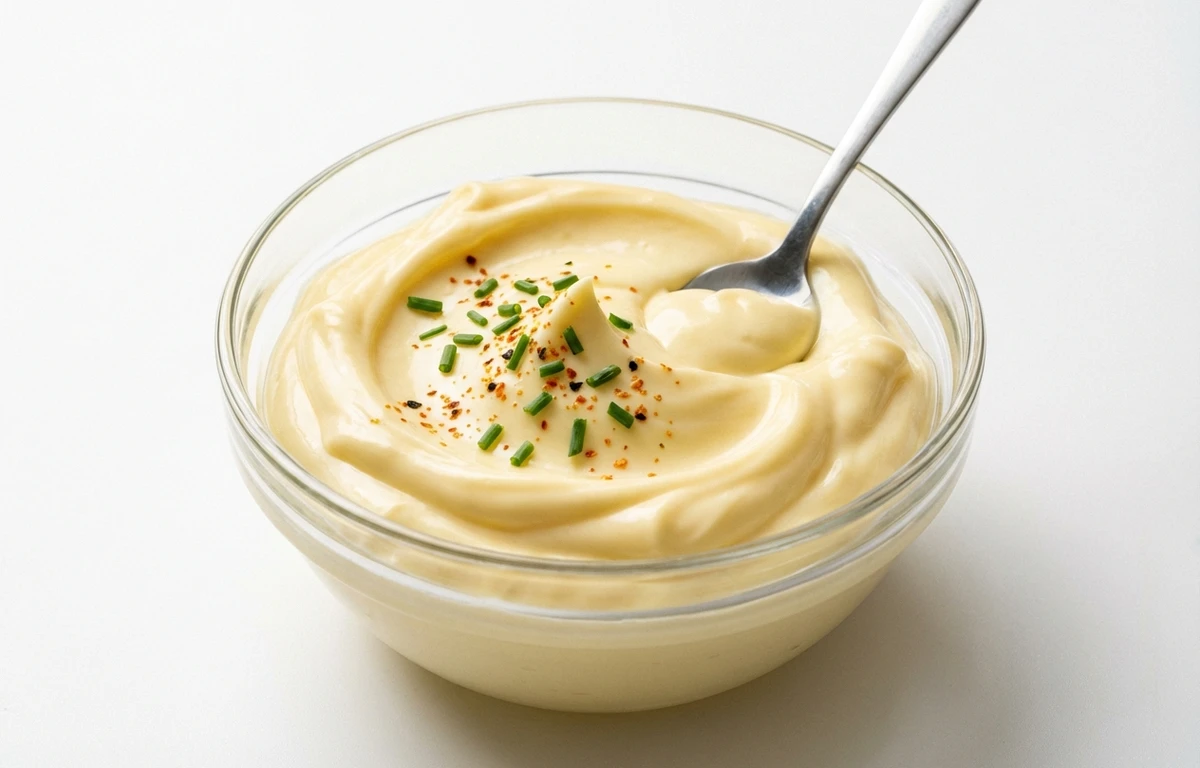
japanese mayonnaise.
VegetarianVeganGluten-freeDairy-freeNut-freePeanut-freeSoy-freeEgg-freeShellfish-freeHoney-freeAlcohol-free
ALSO KNOWN AS
kewpie mayojapanese mayo
SERVING
CALORIES
687
PROTEIN
2.5g
CARBS
1.5g
FAT
75g
FIBER
0g
NUTRITION PROFILE · per 100 g
Everything in this ingredient.
MACRONUTRIENTS
Calories687kcal—
Protein2.5g5%
Carbohydrates1.5g1%
Fiber0g0%
Sugar1.2g2%
Total fat75g96%
Saturated fat11.5g57%
Trans fat0.50g—
Cholesterol160mg53%
Water18g—
MINERALS
Sodium650mg28%
Potassium35mg1%
Calcium15mg1%
Iron0.40mg2%
Magnesium2.0mg0%
Phosphorus45mg4%
Zinc0.20mg2%
Copper0.02mg2%
Manganese0.01mg0%
Selenium5.5µg10%
VITAMINS
Vitamin A45µg5%
Vitamin C0mg0%
Vitamin D0.80µg4%
Vitamin E4.5mg30%
Vitamin K65µg54%
Thiamin (B1)0.01mg1%
Riboflavin (B2)0.05mg4%
Niacin (B3)0.02mg0%
Pantothenic acid (B5)0.30mg6%
Vitamin B60.02mg1%
Folate (B9)5.0µg1%
Vitamin B120.25µg10%
%DV based on a 2,000 cal diet. Source: USDA FoodData Central. A dash in the %DV column means there’s no established Daily Value for that nutrient.
MEASUREMENT CONVERSIONS
How much is what.
1 cup232g
1 tablespoon14.5g
1 teaspoon4.8g
1 ml1g
1 liter966.7g
1 piece50g
HEALTH BENEFITS
Why eat it.
- ✓Source of Vitamin E, an antioxidant that helps protect cells from damage.
- ✓Provides unsaturated fats, including omega-3 and omega-6 fatty acids, from vegetable oils.
- ✓Contains choline from egg yolks, which is important for brain health and nerve function.
COOKING TIPS
In the kitchen.
- 1Use as a rich, creamy base for dressings and dips, such as spicy sriracha mayo or sauces for okonomiyaki and takoyaki.
- 2Spread a thin layer on the outside of bread instead of butter for an exceptionally crispy and evenly browned grilled cheese sandwich.
- 3Add to marinades for meat or fish to help keep them moist and tender during cooking due to its high oil content.
- 4Its unique umami flavor from MSG (in many brands) and rice vinegar enhances the taste of potato salads, egg salads, and slaws.
STORAGE
Keep it fresh.
- Refrigerate immediately after opening to maintain quality and prevent spoilage.
- For best flavor and texture, consume within one month of opening.
- Do not freeze, as freezing will break the emulsion, resulting in a separated and watery texture.
FAQ
Frequently asked questions.
Is Japanese mayonnaise healthy?
Japanese mayonnaise, while delicious, is high in calories and fat (75g fat, 687 calories per 100g). It provides some beneficial unsaturated fats, Vitamin E, and choline from egg yolks. However, due to its high fat content, it should be consumed in moderation as part of a balanced diet.
How does Japanese mayonnaise compare nutritionally to regular mayonnaise?
Japanese mayonnaise typically uses only egg yolks, leading to a richer flavor and often a higher fat content compared to many regular mayonnaises that use whole eggs. Per 100g, it contains about 75g fat and 687 calories, which can be higher than some standard varieties. It also tends to have a slightly lower carbohydrate and protein content.
Is Japanese mayonnaise good for weight loss?
Due to its high calorie and fat content (687 calories, 75g fat per 100g), Japanese mayonnaise is not ideal for weight loss when consumed in large quantities. While it contains beneficial fats, moderation is key for those managing their weight.
Is Japanese mayonnaise vegan?
No, traditional Japanese mayonnaise is not vegan. It is made with egg yolks, which are an animal product. There are, however, vegan-friendly mayonnaise alternatives available that mimic its flavor profile.
Is Japanese mayonnaise gluten-free?
Most brands of Japanese mayonnaise are naturally gluten-free, as their primary ingredients (oil, egg yolks, vinegar, salt, MSG) do not contain gluten. However, it's always best to check the ingredient label for specific brands to confirm, especially if you have a severe gluten allergy.
Can diabetics eat Japanese mayonnaise?
Japanese mayonnaise is very low in carbohydrates (1.5g per 100g), which is generally favorable for blood sugar management. However, it is high in fat and calories, so portion control is important for diabetics, especially those managing weight or cardiovascular health.
What does Japanese mayonnaise taste like?
Japanese mayonnaise has a distinct rich, creamy, and slightly sweeter taste compared to Western mayonnaise, with a pronounced umami flavor. This is largely due to the use of only egg yolks, rice vinegar, and often MSG, giving it a unique tangy and savory profile.
What are common uses for Japanese mayonnaise?
Japanese mayonnaise is incredibly versatile and a staple in Japanese cuisine. It's commonly used as a topping for sushi, takoyaki, okonomiyaki, and yakisoba. It's also popular in sandwiches, salads, and as a dipping sauce for fried foods like karaage.
How do you store Japanese mayonnaise?
Unopened Japanese mayonnaise can be stored in a cool, dark pantry. Once opened, it must be refrigerated to maintain freshness and prevent spoilage. Ensure the cap is tightly sealed after each use.
What makes Japanese mayonnaise different from regular mayonnaise?
The key differences lie in the ingredients: Japanese mayonnaise typically uses only egg yolks (not whole eggs), rice vinegar (instead of distilled white vinegar), and often contains MSG, which enhances its umami flavor. This results in a richer, creamier texture and a more savory, slightly sweeter taste.



















