
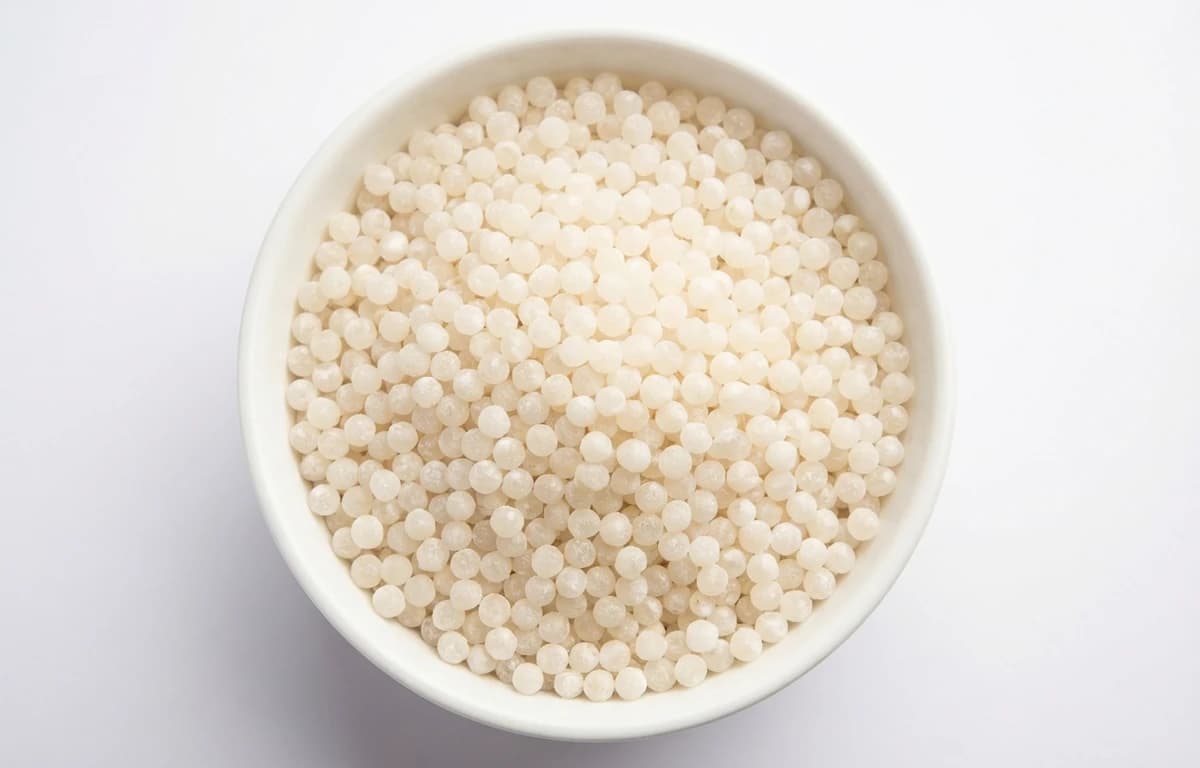
javvarisi
Also known as: Sago, Sabudana, Tapioca Pearls
Loading...
Also known as: Sago, Sabudana, Tapioca Pearls
Per 100g
Nutrition data source: USDA FoodData Central
Javvarisi (sago/tapioca pearls) is primarily a source of carbohydrates, providing quick energy. It's naturally gluten-free and easy to digest, making it suitable for sensitive stomachs. However, it's low in protein, fiber, and essential vitamins, so it should be consumed as part of a balanced diet.
Per 100g, javvarisi contains approximately 358 calories, 88.69g of carbohydrates, 0.19g of protein, and 0.02g of fat. It is almost entirely composed of starch, offering a significant energy boost without much protein or fat.
Due to its high carbohydrate and calorie density, javvarisi can be beneficial for healthy weight gain when incorporated into a calorie-surplus diet. It is not ideal for weight loss as it provides concentrated energy with minimal fiber or protein to promote satiety.
Yes, javvarisi is naturally gluten-free. It is derived from tapioca (cassava root) or sago palm, both of which are gluten-free starches, making it a safe option for individuals with celiac disease or gluten sensitivity.
Yes, javvarisi is vegan. It is a plant-based starch product, typically made from the pith of the sago palm or the root of the cassava plant, with no animal-derived ingredients.
Javvarisi is very high in carbohydrates and has a high glycemic index, meaning it can cause a rapid rise in blood sugar levels. Therefore, individuals with diabetes should consume javvarisi in very small portions and with caution, ideally paired with fiber and protein to mitigate blood sugar spikes.
Javvarisi pearls are typically soaked in water for several hours or overnight until softened, then boiled in water or milk until translucent and tender. They are commonly used to make puddings, porridges, or savory dishes like upma or khichdi.
javvarisi is a versatile ingredient found in cuisines around the world. With 358 calories per 100g and 0.19 grams of protein, it's a nutritious addition to many dishes.
Explore more ingredients in the flour category with complete nutrition information.
View all flour →Javvarisi itself has a neutral taste, allowing it to absorb the flavors of other ingredients. It provides a unique chewy, gelatinous texture. It's widely used in Indian cuisine for desserts like payasam (pudding), kheer, and savory items like vada or upma, especially during fasting periods.
Javvarisi should be stored in an airtight container in a cool, dry, and dark place, away from direct sunlight and moisture. When stored properly, it can last for several months to a year.
Javvarisi refers to sago or tapioca pearls. Sago pearls are extracted from the pith of various sago palm species, while tapioca pearls are derived from the starch of the cassava root. Both are processed into small, spherical pearls.