
Other3 recipes
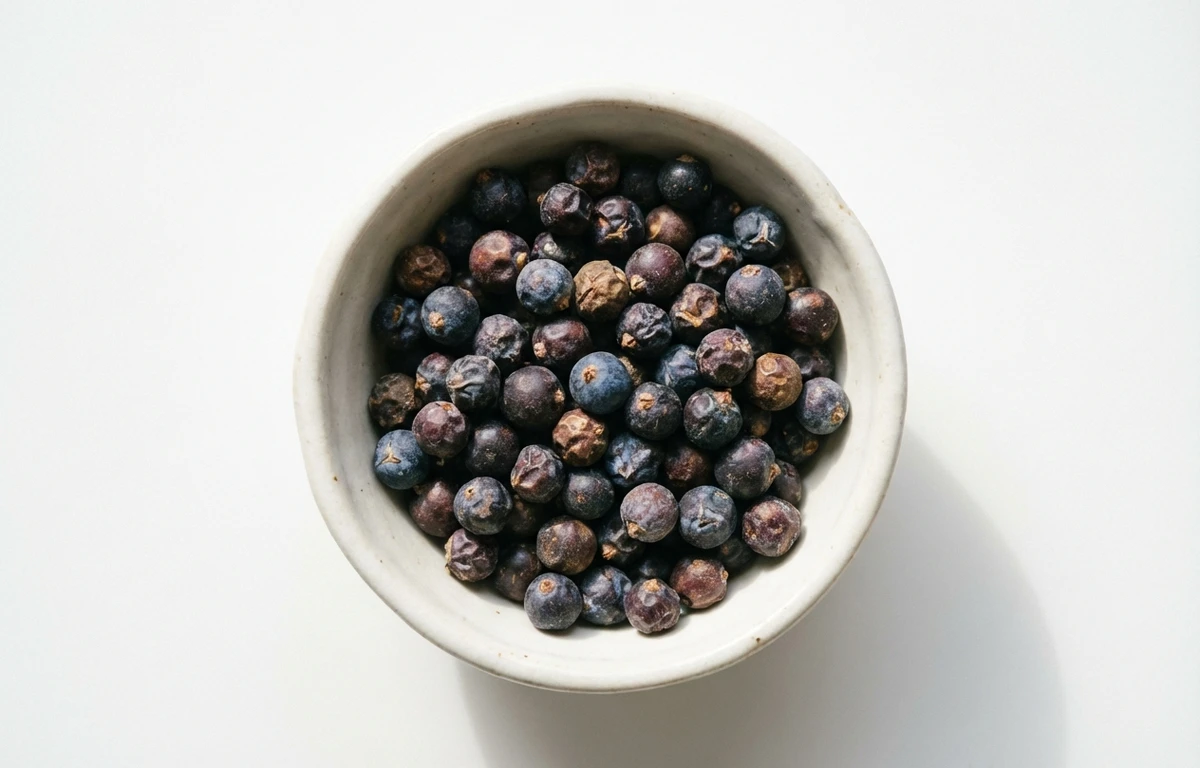
juniper berries.
VegetarianVeganGluten-freeDairy-freeNut-freePeanut-freeSoy-freeEgg-freeShellfish-freeHoney-freeAlcohol-free
ALSO KNOWN AS
dried juniper berriesjuniperus communisgin berriesjuniper fruit
SERVING
CALORIES
352
PROTEIN
19.8g
CARBS
37.4g
FAT
14.6g
FIBER
12g
This ingredient is flagged as naturally gluten-free. Per 100 g, it provides 5.0 µg of vitamin K.
NUTRITION PROFILE · per 100 g
Everything in this ingredient.
MACRONUTRIENTS
Calories352kcal—
Protein19.8g40%
Carbohydrates37.4g14%
Fiber12g43%
Sugar7.5g15%
Total fat14.6g19%
Saturated fat0.50g3%
Trans fat0g—
Cholesterol0mg0%
Water10g—
MINERALS
Sodium15mg1%
Potassium1000mg21%
Calcium120mg9%
Iron8.0mg44%
Magnesium45mg11%
Phosphorus60mg5%
Zinc1.2mg11%
Copper0.30mg33%
Manganese0.80mg35%
Selenium2.5µg5%
VITAMINS
Vitamin A15µg2%
Vitamin C12mg13%
Vitamin D0µg0%
Vitamin E1.5mg10%
Vitamin K5.0µg4%
Thiamin (B1)0.10mg8%
Riboflavin (B2)0.10mg8%
Niacin (B3)1.2mg8%
Pantothenic acid (B5)0.40mg8%
Vitamin B60.20mg12%
Folate (B9)10µg3%
Vitamin B120µg0%
%DV based on a 2,000 cal diet. Source: USDA FoodData Central. A dash in the %DV column means there’s no established Daily Value for that nutrient.
MEASUREMENT CONVERSIONS
How much is what.
1 cup120g
1 tablespoon7.5g
1 teaspoon2.5g
1 oz28.4g
1 lb453.6g
1 ml0.5g
1 liter500g
1 piece0.3g
HEALTH BENEFITS
Why eat it.
- ✓Acts as a mild diuretic to help reduce water retention
- ✓Contains antimicrobial and antifungal properties
- ✓May aid digestion and reduce bloating
COOKING TIPS
In the kitchen.
- 1Lightly crush the berries with a mortar and pestle before adding to release oils
- 2Use sparingly as the piney, peppery flavor is very intense
- 3Pairs exceptionally well with game meats like venison, duck, and wild boar
STORAGE
Keep it fresh.
- Store in an airtight glass container to preserve volatile oils
- Keep in a cool, dark, and dry place away from direct sunlight
- Whole berries stay fresh for up to 2 years; ground berries lose flavor quickly
FAQ
Frequently asked questions.
How long do dried juniper berries last?
When stored in an airtight container in a cool, dark place, whole dried juniper berries can maintain their potency for 1 to 2 years.
What is the best substitute for juniper berries?
Rosemary is the best herbal substitute. Alternatively, a splash of gin (which is flavored with juniper) or caraway seeds can work in some recipes.
How do I select high-quality juniper berries?
Look for berries that are dark purple or blue-black, plump, and slightly oily. Avoid berries that look dusty, grey, or shriveled.
Are juniper berries safe to eat raw?
While technically edible, they are very bitter and pungent when raw. They are almost always used as a spice or infusion rather than eaten whole.
Can I freeze juniper berries?
Yes, you can freeze them in an airtight bag to extend their shelf life, though it is usually unnecessary if kept in a cool pantry.
Are there any safety concerns with juniper berries?
Juniper berries should be avoided during pregnancy as they may act as a uterine stimulant. People with kidney issues should also consult a doctor before consuming large amounts.
How do I prepare juniper berries for cooking?
Place them in a mortar and pestle or under the flat side of a chef's knife and press down to crack the outer skin before adding to your dish.
What common dishes use juniper berries?
They are a staple in European cuisine for flavoring sauerkraut, marinades for game meats, pâtés, and pickling brines.
Are all juniper berries edible?
No, only certain species like Juniperus communis are safe for consumption. Some ornamental juniper species produce toxic berries.
RECIPES
Cook with juniper berries.
3 recipes · sorted by what’s quick



















