
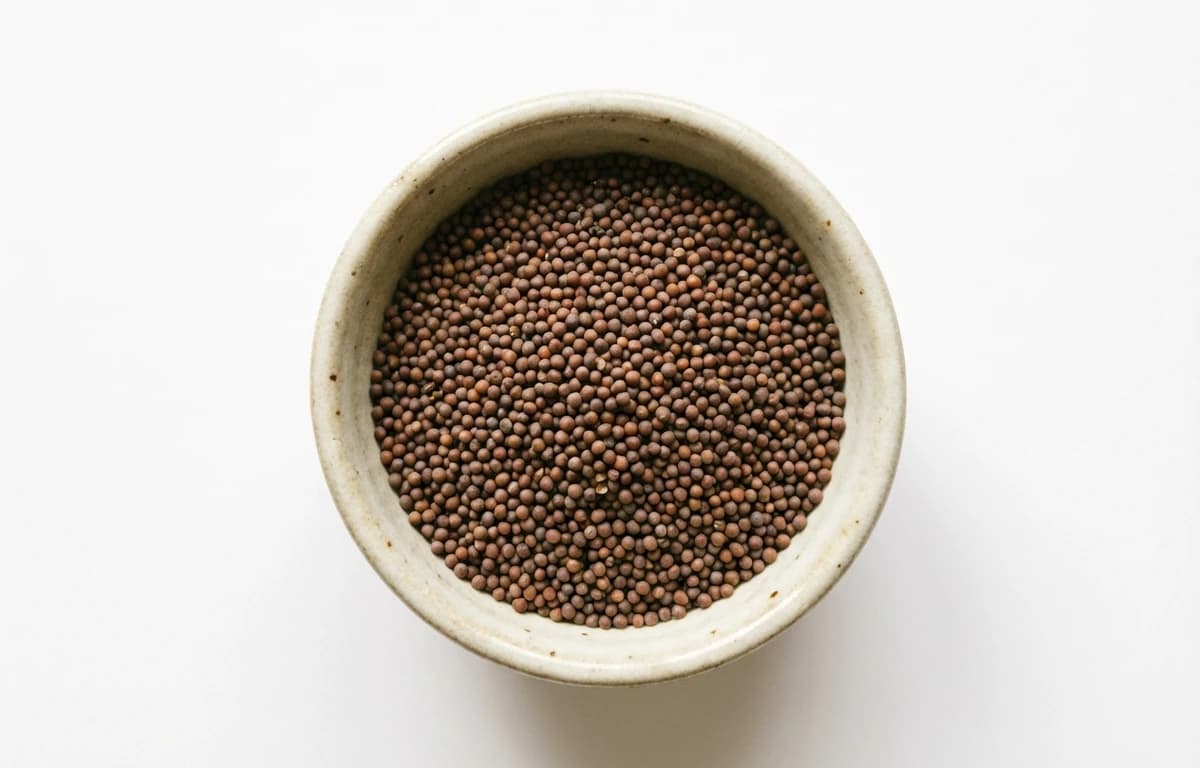
kadugu
Also known as:
Loading...
Also known as:
Per 100g
Nutrition data source: USDA FoodData Central
Yes, kadugu (mustard seeds) are very healthy. They are rich in beneficial compounds like selenium, magnesium, and omega-3 fatty acids (ALA), which support thyroid function, reduce inflammation, and promote cardiovascular health. They also contain glucosinolates, studied for potential anti-cancer properties.
Kadugu provides a good source of protein (26.08g per 100g) and healthy fats, including omega-3 ALA, which is good for heart health. They are also packed with minerals like selenium and magnesium, vital for thyroid function and reducing inflammation, and contain compounds like glucosinolates with potential health protective effects.
100 grams of kadugu (mustard seeds) contains approximately 508 calories. They are also a good source of protein (26.08g), healthy fats (36.24g), and dietary fiber, making them energy-dense and nutritious.
Yes, kadugu (mustard seeds) are naturally gluten-free. They are a safe ingredient for individuals following a gluten-free diet, though it's always wise to check for cross-contamination if purchasing processed mustard products.
Yes, kadugu (mustard seeds) are 100% vegan. They are a plant-based seed and do not contain any animal products or by-products, making them suitable for vegan diets.
While kadugu contains fats, its carbohydrate content of 28.09g per 100g might be high for strict keto diets if consumed in large quantities. However, mustard seeds are typically used in small amounts as a spice, so they can generally be incorporated into a keto diet without significantly impacting carb limits.
kadugu is a versatile ingredient found in cuisines around the world. With 508 calories per 100g and 26.08 grams of protein, it's a nutritious addition to many dishes.
Explore more ingredients in the seed category with complete nutrition information.
View all seed →Kadugu (mustard seeds) are commonly used in Indian cuisine, especially for tempering or 'tadka.' They are typically fried in hot oil until they splutter, releasing their pungent aroma and flavor, then added to curries, dals, chutneys, and vegetable dishes. They can also be ground into a paste for marinades or sauces.
When raw, kadugu (mustard seeds) have a slightly bitter and pungent taste. When cooked, especially when tempered in hot oil, they develop a nutty, slightly spicy, and earthy flavor with a distinct aroma. The flavor can vary slightly between black, brown, and yellow mustard seeds.
Kadugu (mustard seeds) should be stored in an airtight container in a cool, dark, and dry place, away from direct sunlight and heat. Proper storage helps preserve their flavor and potency for a longer period.
Whole kadugu (mustard seeds) can last for up to 2-3 years if stored properly in an airtight container. Ground mustard seeds, however, lose their potency and flavor more quickly, typically lasting about 6 months to a year. It's best to buy whole seeds and grind them as needed for optimal flavor.