
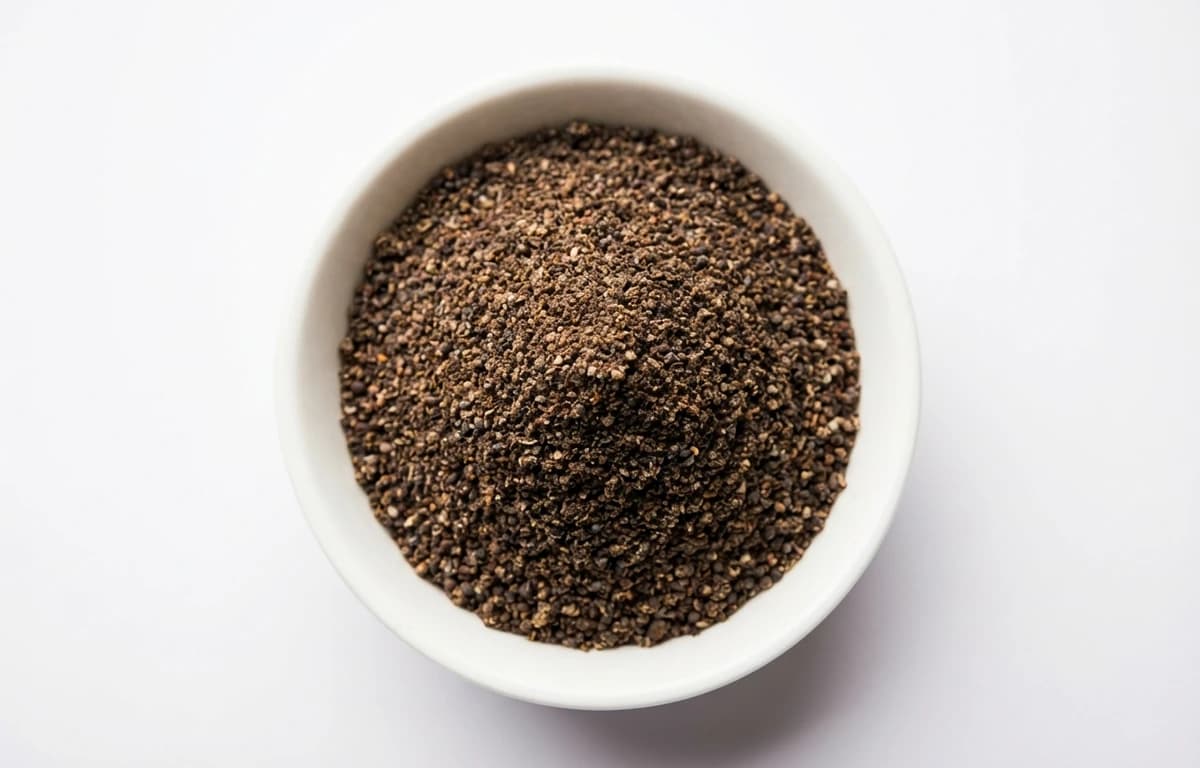
kalo shorshe
Also known as:
Loading...
Also known as:
Per 100g
Nutrition data source: USDA FoodData Central
Yes, kalo shorshe (black mustard seeds) offers several health benefits. It's rich in selenium and magnesium, known for anti-inflammatory properties, and contains compounds like glucosinolates that may have anti-cancer effects. It also provides omega-3 fatty acids for heart health and dietary fiber for digestion.
Per 100g, kalo shorshe contains approximately 508 calories, 26.08g protein, 28.09g carbohydrates, and 36.24g fat. While calorie-dense, it's typically consumed in small amounts as a spice, contributing beneficial micronutrients rather than significant macronutrients to a meal.
While kalo shorshe is nutrient-dense and can support overall health, it's calorie and fat-rich (508 calories, 36.24g fat per 100g). As a spice, it's used in very small quantities, so its direct impact on weight loss is minimal. Its fiber content can aid satiety, but moderation is key due to its caloric density.
Yes, kalo shorshe (black mustard seeds) are naturally gluten-free. However, always check product labels for certification if you have severe gluten sensitivity or celiac disease, as cross-contamination can occur during processing in facilities that handle gluten-containing grains.
Yes, kalo shorshe (black mustard seeds) are entirely plant-based and therefore suitable for a vegan diet. They are a common ingredient in many vegan dishes, especially in Indian cuisine, adding flavor and nutritional value.
Yes, diabetics can generally consume kalo shorshe. While it contains carbohydrates (28.09g per 100g), it's used in very small amounts as a spice, so its impact on blood sugar levels is negligible. Its fiber content may even offer some benefits for blood sugar regulation.
kalo shorshe is a versatile ingredient found in cuisines around the world. With 508 calories per 100g and 26.08 grams of protein, it's a nutritious addition to many dishes.
Explore more ingredients in the spice category with complete nutrition information.
View all spice →Discover 1 recipes featuring kalo shorshe with step-by-step instructions.
Browse recipes →Kalo shorshe is often used whole, tempered in hot oil (known as 'tadka' or 'phoran') to release its pungent, nutty flavor. It's a staple in Bengali, South Indian, and other regional Indian cuisines, used in curries, vegetable dishes, pickles, and chutneys. It can also be ground into a paste for marinades or sauces.
When whole and tempered, kalo shorshe has a pungent, slightly bitter, and nutty flavor with a distinct aroma. When ground into a paste, especially with water, it develops a sharp, sinus-clearing heat similar to horseradish or wasabi, which mellows slightly with cooking.
Store whole kalo shorshe in an airtight container in a cool, dark, and dry place, away from direct sunlight and heat. Proper storage helps retain its flavor and potency for a longer period, preventing it from becoming stale.
While kalo shorshe doesn't truly 'expire' in the sense of becoming unsafe, it does lose its potency and flavor over time. Whole seeds can last for 2-3 years if stored correctly. Ground mustard seeds have a shorter shelf life, typically 6-12 months, as their volatile oils dissipate faster.