
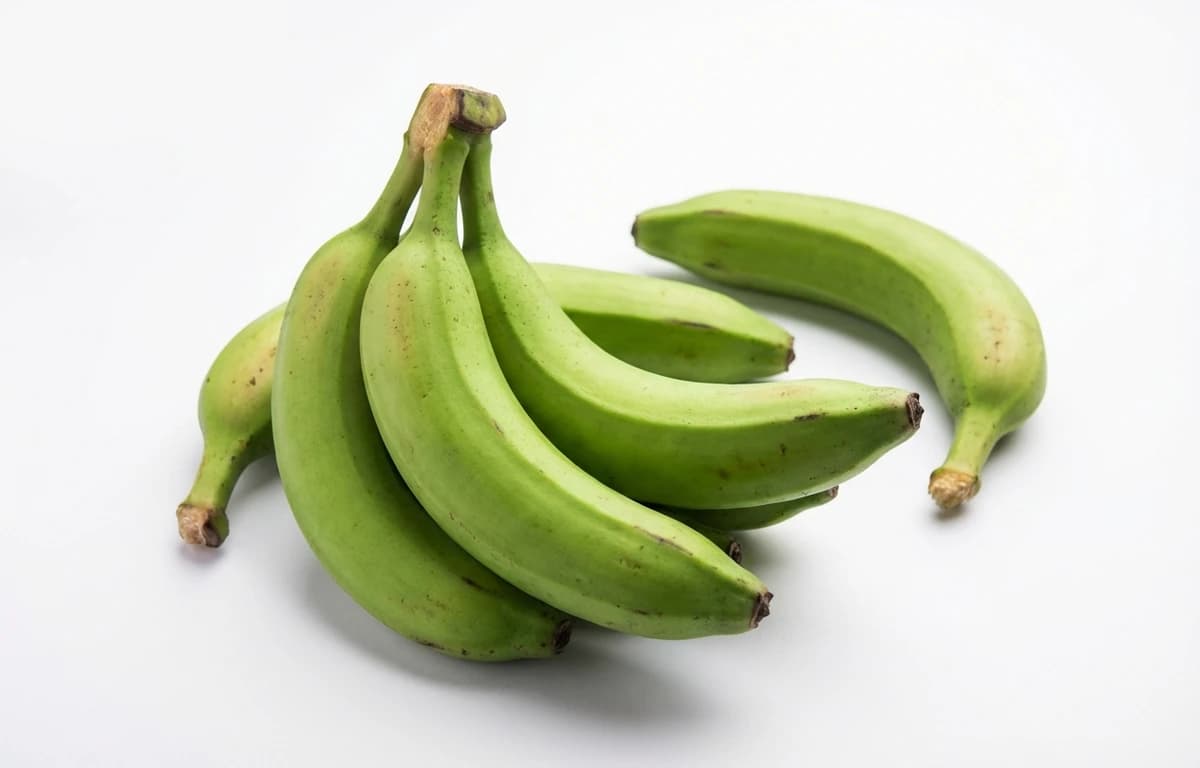
kanchkola
Also known as:
Loading...
Also known as:
Per 100g
Nutrition data source: USDA FoodData Central
Yes, kanchkola is very healthy. It's rich in resistant starch, dietary fiber, potassium, Vitamin C, and Vitamin B6. These nutrients support gut health, regulate blood pressure, aid digestion, and provide antioxidant benefits.
Kanchkola is notable for its resistant starch, which acts as a prebiotic for gut health and can improve insulin sensitivity. It's also an excellent source of potassium for heart health and high in dietary fiber for digestion and satiety.
Per 100g, kanchkola contains approximately 122 calories and 31.9g of carbohydrates. It also provides 1.3g of protein and 0.4g of fat, making it a low-fat, carb-rich vegetable.
Yes, kanchkola can be beneficial for weight loss. Its high fiber content promotes satiety, helping you feel full longer and potentially reducing overall calorie intake. The resistant starch also contributes to better metabolic health.
Kanchkola contains resistant starch, which can help improve insulin sensitivity and may lead to a slower rise in blood sugar compared to other high-carb foods. However, due to its carbohydrate content, diabetics should consume it in moderation and monitor their blood sugar levels.
Yes, as a natural vegetable, kanchkola is inherently gluten-free and suitable for a vegan diet. It's a plant-based food that can be incorporated into various dietary plans.
Kanchkola is typically cooked before consumption. It can be boiled, steamed, fried, or added to curries and stews. Often, it's peeled and cut into pieces, then cooked until tender.
kanchkola is a versatile ingredient found in cuisines around the world. With 122 calories per 100g and 1.3 grams of protein, it's a nutritious addition to many dishes.
Explore more ingredients in the vegetable category with complete nutrition information.
View all vegetable →Kanchkola has a mild, slightly starchy, and earthy flavor, similar to other root vegetables or unripe plantains. It readily absorbs the flavors of spices and other ingredients it's cooked with.
Store fresh, uncooked kanchkola in a cool, dry place, away from direct sunlight, similar to potatoes or other root vegetables. It can also be stored in the refrigerator's crisper drawer for a longer shelf life, typically up to a week.
While some vegetables can be eaten raw, kanchkola is generally not consumed raw. It has a starchy texture and is best cooked to improve its palatability and digestibility.