
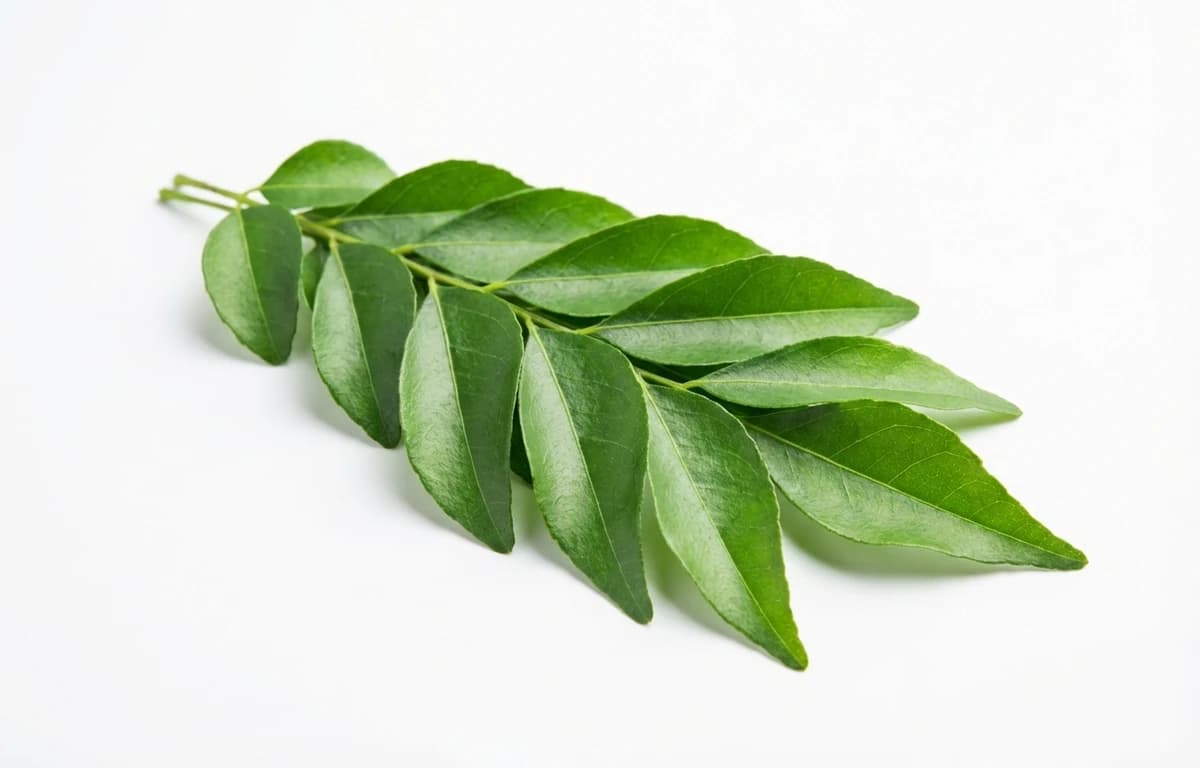
karivepaku
Also known as:
Loading...
Also known as:
Per 100g
Nutrition data source: USDA FoodData Central

A fiery Andhra chicken fry packed with the aromatic punch of fresh curry leaves. Tender chicken pieces are coated in a vibrant green masala and stir-fried to perfection. A must-try for spice lovers!
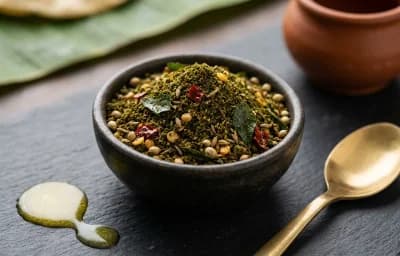
A fragrant and spicy South Indian spice powder, also known as curry leaf powder. Made with roasted curry leaves, lentils, and spices, it's a versatile condiment perfect for mixing with hot rice and ghee, or sprinkling over idli and dosa.
Yes, karivepaku is very healthy. It's packed with antioxidants like carotenoids and flavonoids, which protect cells from damage. It also provides essential vitamins (A, B, C, E) and minerals like iron and calcium, supporting overall well-being.
Karivepaku is low in calories (108 cal per 100g) and fat (1g per 100g), while offering a good amount of protein (6.1g per 100g) and carbohydrates (18.7g per 100g). It's particularly rich in vitamins A, B, C, E, and minerals such as iron and calcium, contributing to eye health, bone strength, and immune function.
Yes, karivepaku has traditionally been used to support digestive health. Its compounds may help alleviate indigestion and promote healthy gut function. It's often added to dishes not just for flavor but also for its perceived digestive benefits.
Yes, karivepaku (curry leaves) are naturally vegan as they are a plant-based herb. They are also inherently gluten-free, making them suitable for individuals following vegan or gluten-free diets.
Karivepaku may be beneficial for diabetics due to its potential anti-diabetic properties, attributed to compounds like carbazole alkaloids. While it's low in sugar and carbohydrates, it should be consumed as part of a balanced diet and not as a substitute for medical treatment.
Karivepaku is a staple in South Indian cuisine, typically used in tempering (tadka) by frying them in hot oil with mustard seeds and other spices. This releases their aromatic flavor into curries, dals, chutneys, and rice dishes. They can also be added fresh to salads or ground into spice blends.
karivepaku is a versatile ingredient found in cuisines around the world. With 108 calories per 100g and 6.1 grams of protein, it's a nutritious addition to many dishes.
Explore more ingredients in the herb category with complete nutrition information.
View all herb →Karivepaku has a unique, slightly nutty, citrusy, and pungent aroma with a mild, peppery, and somewhat bitter taste. When fried, their flavor becomes more pronounced and aromatic, adding a distinctive depth to dishes that is hard to replicate with other herbs.
To store fresh karivepaku, wash and pat them completely dry. Then, place them in an airtight container or a zip-top bag lined with a paper towel in the refrigerator. This method helps them stay fresh for up to two weeks.
When stored properly in the refrigerator, fresh karivepaku can last for about 1-2 weeks. For longer storage, you can freeze them in an airtight bag for several months, though their aroma might slightly diminish over time.
While karivepaku is typically cooked to release its full aroma and flavor, it can be eaten raw. Some people chew a few raw leaves for their health benefits, particularly for digestion. However, they have a stronger, more bitter taste when raw compared to when cooked.