
Loading...
Per 100g
Nutrition data source: USDA FoodData Central
Common measurement equivalents in grams
When stored in an airtight container in a cool, dry place, they can last for up to 12 months. After this, they may lose their color and potency.
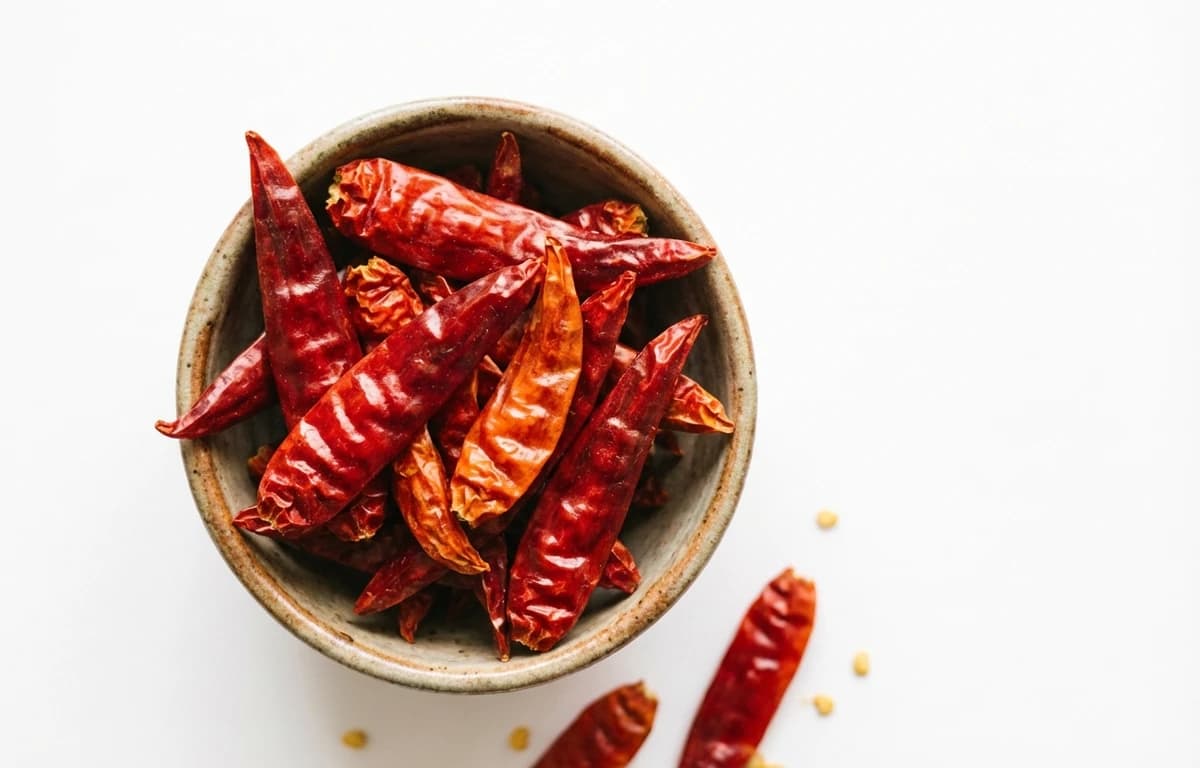
Look for chilies that are deep red in color, have a wrinkled skin, and are not broken. Avoid those with grey or black spots which indicate mold.
Byadgi chilies are the closest substitute. Alternatively, a mix of paprika (for color) and a small amount of cayenne (for heat) can work.
No, they are known for being mild. They are prized more for the intense red color they provide to dishes rather than their heat level.
Remove the stems, deseed if desired, and soak in hot water for 15-20 minutes until soft before blending into a paste.
Yes, freezing them in a vacuum-sealed or airtight bag is an excellent way to preserve their color and flavor for over a year.
This is usually due to exposure to light or heat. While they are still safe to eat, the flavor and coloring ability will be significantly reduced.
Yes, dried red chilies are not root vegetables and are considered acceptable in a Jain diet.
They are essential for Rogan Josh, Tandoori Chicken, and various Indian gravies where a bright red color is desired.
Kashmiri Dried Red Chili is a versatile ingredient found in cuisines around the world. With 324 calories per 100g and 10.6 grams of protein, it's a nutritious addition to many dishes.
Explore more ingredients in the spice category with complete nutrition information.
View all spice →Discover 1 recipes featuring kashmiri dried red chili with step-by-step instructions.
Browse recipes →