
Loading...
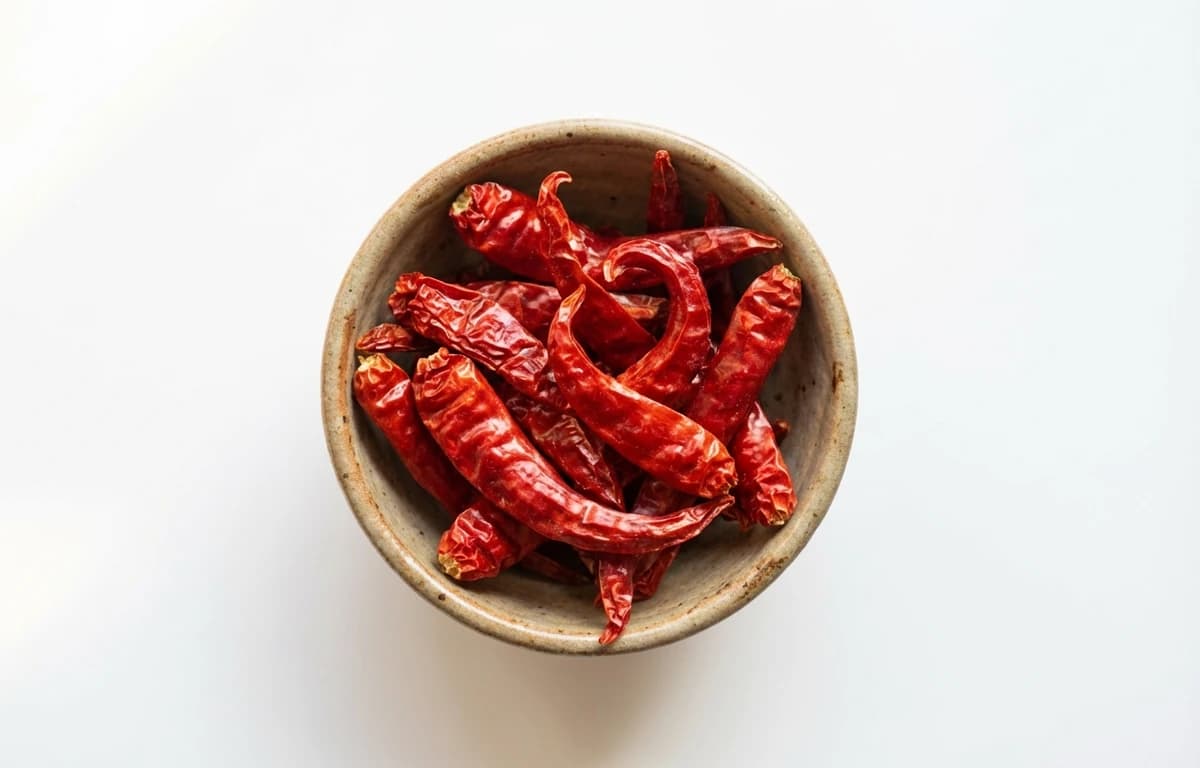
Also known as: Kashmiri Dried Red Chillies, dried Kashmiri mirch, sukhi Kashmiri mirch, Kashmiri lal mirch, dried Kashmiri chili peppers
Per 100g
Nutrition data source: USDA FoodData Central
Common measurement equivalents in grams
When stored in an airtight container in a cool, dry place, they maintain peak flavor for 6-12 months.
No, they are known for their mild heat and intense red color rather than pungency, ranking low on the Scoville scale.
A mix of paprika (for color) and a small amount of cayenne pepper (for heat) is the best alternative.
Look for chilies that are deep red, have wrinkled skin, and are not brittle or broken.
Yes, freezing them in an airtight bag helps preserve their color and oils for up to 2 years.
They provide the signature deep red color and mild warmth that defines the dish without making it overly spicy.
It is recommended to wipe them with a damp cloth or rinse quickly before soaking to remove any surface dust.
Remove stems and seeds, soak in hot water for 20 minutes, then blend with a little soaking liquid until smooth.
They are similar in color and low heat, but Byadgi chilies are typically more crinkled and have a slightly different flavor profile.
Kashmiri Dried Red Chilies is a versatile ingredient found in cuisines around the world. With 324 calories per 100g and 12.3 grams of protein, it's a nutritious addition to many dishes.
Explore more ingredients in the spice category with complete nutrition information.
View all spice →Discover 9 recipes featuring kashmiri dried red chilies with step-by-step instructions.
Browse recipes →Explore more ingredients similar to Kashmiri Dried Red Chilies.
The most-searched ingredients on CraftMyMeals.