
Other1 recipes
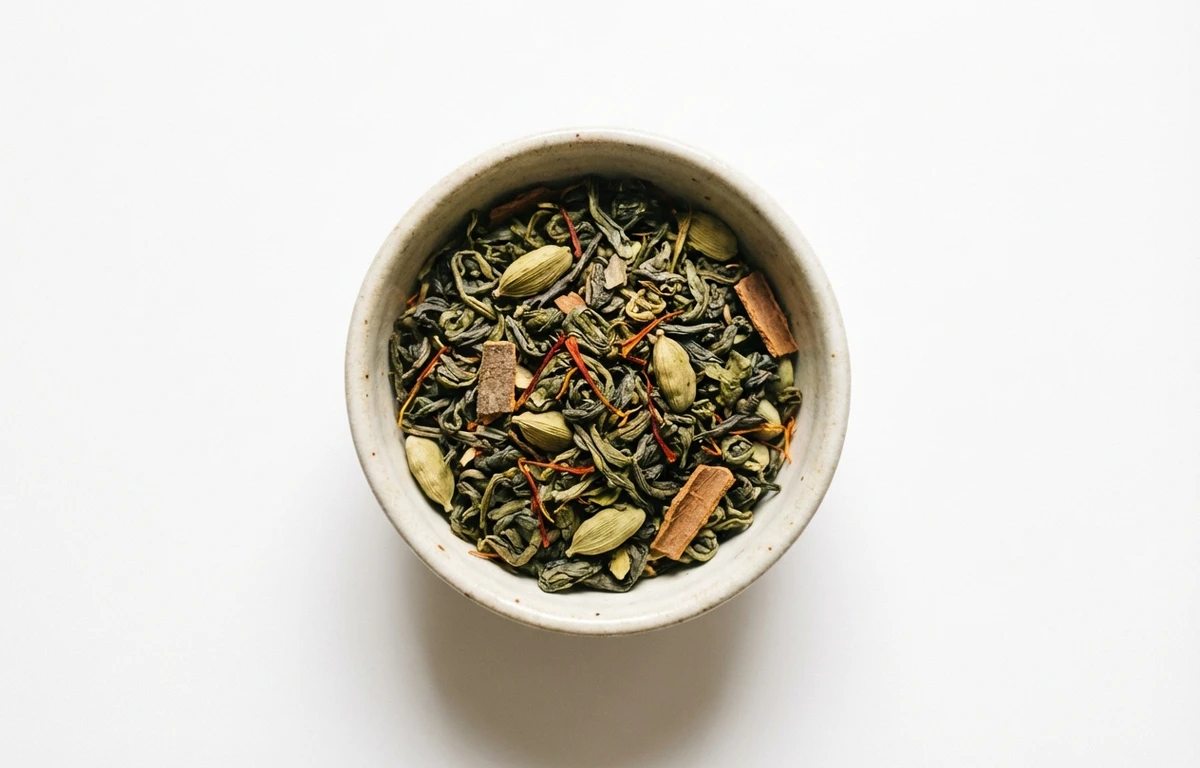
kashmiri green tea leaves.
VegetarianVeganGluten-freeDairy-freeNut-freePeanut-freeSoy-freeEgg-freeShellfish-freeHoney-freeAlcohol-free
ALSO KNOWN AS
Kahwa LeavesKashmiri TeaKashmiri Green Tea
SERVING
CALORIES
304
PROTEIN
24.4g
CARBS
58.7g
FAT
3.6g
FIBER
37.3g
This ingredient is flagged as naturally gluten-free. Per 100 g, it provides 1.0 µg of vitamin K.
NUTRITION PROFILE · per 100 g
Everything in this ingredient.
MACRONUTRIENTS
Calories304kcal—
Protein24.4g49%
Carbohydrates58.7g21%
Fiber37.3g133%
Sugar1.6g3%
Total fat3.6g5%
Saturated fat0.60g3%
Cholesterol0mg0%
Water5.3g—
MINERALS
Sodium12mg1%
Potassium2260mg48%
Calcium360mg28%
Iron11.3mg63%
Magnesium330mg79%
Phosphorus450mg36%
Zinc3.5mg32%
VITAMINS
Vitamin A150µg17%
Vitamin C150mg167%
Vitamin D0µg0%
Vitamin K1.0µg1%
Thiamin (B1)2.0mg167%
Riboflavin (B2)1.4mg108%
Niacin (B3)6.5mg41%
Vitamin B60.60mg35%
%DV based on a 2,000 cal diet. Source: USDA FoodData Central. A dash in the %DV column means there’s no established Daily Value for that nutrient.
MEASUREMENT CONVERSIONS
How much is what.
1 cup32g
1 tablespoon2g
1 teaspoon0.7g
1 ml0.1g
1 liter133.3g
HEALTH BENEFITS
Why eat it.
- ✓May aid digestion and boost metabolism, often consumed after meals in Kashmiri culture.
- ✓Contains L-theanine, an amino acid that can promote relaxation and mental focus without causing drowsiness.
- ✓Supports cardiovascular health by potentially helping to lower LDL cholesterol and improve blood vessel function.
COOKING TIPS
In the kitchen.
- 1To brew traditional Kashmiri Kahwa, simmer the tea leaves with whole spices like green cardamom, cinnamon, and cloves. Add saffron strands and slivered almonds before serving.
- 2Use hot, but not boiling, water (around 80-85°C or 175-185°F) to steep the leaves for 2-3 minutes to avoid bitterness.
- 3Kashmiri green tea is traditionally served without milk and is often sweetened with a small amount of sugar or honey.
- 4The same leaves can be used for a second or third infusion, with each steep offering a slightly different flavor profile.
STORAGE
Keep it fresh.
- Store in a cool, dark, and dry place, away from direct sunlight and heat.
- Keep in an airtight, opaque container to protect the leaves from moisture, light, and strong odors which they can easily absorb.
FAQ
Frequently asked questions.
Is Kashmiri green tea vegan and gluten-free?
Yes, pure Kashmiri green tea leaves are naturally vegan and gluten-free. As a plant-based product, it contains no animal derivatives or gluten-containing ingredients. However, always check for any added ingredients if purchasing flavored or blended varieties.
How do you prepare Kashmiri green tea (Kahwa)?
To prepare traditional Kashmiri Kahwa, boil water with green tea leaves, cardamom pods, cinnamon sticks, and sometimes saffron strands. Simmer for a few minutes, then strain. It's often served with a few slivered almonds and, optionally, a touch of honey or sugar.
What does Kashmiri green tea taste like?
Kashmiri green tea has a distinct, delicate, and aromatic flavor profile. It's typically less grassy than other green teas, often described as having a mild, slightly sweet, and floral taste with warm spice notes from traditional Kahwa preparations. It's smooth and refreshing.
How should I store Kashmiri green tea leaves?
Store Kashmiri green tea leaves in an airtight container, away from direct sunlight, heat, and strong odors. A cool, dark pantry is ideal. Proper storage helps preserve its delicate flavor and aromatic compounds.
How long do Kashmiri green tea leaves last?
When stored correctly in an airtight container, Kashmiri green tea leaves can retain their quality for 12-18 months. While they don't truly 'spoil' like food, their flavor and aroma will diminish over time, so it's best to consume them within this period for optimal taste.
Does Kashmiri green tea contain caffeine?
Yes, like all true teas derived from the Camellia sinensis plant, Kashmiri green tea contains caffeine. The caffeine content is generally moderate, typically less than black tea but more than herbal infusions, providing a gentle stimulant effect.
RECIPES
Cook with kashmiri green tea leaves.
1 recipes · sorted by what’s quick



















