
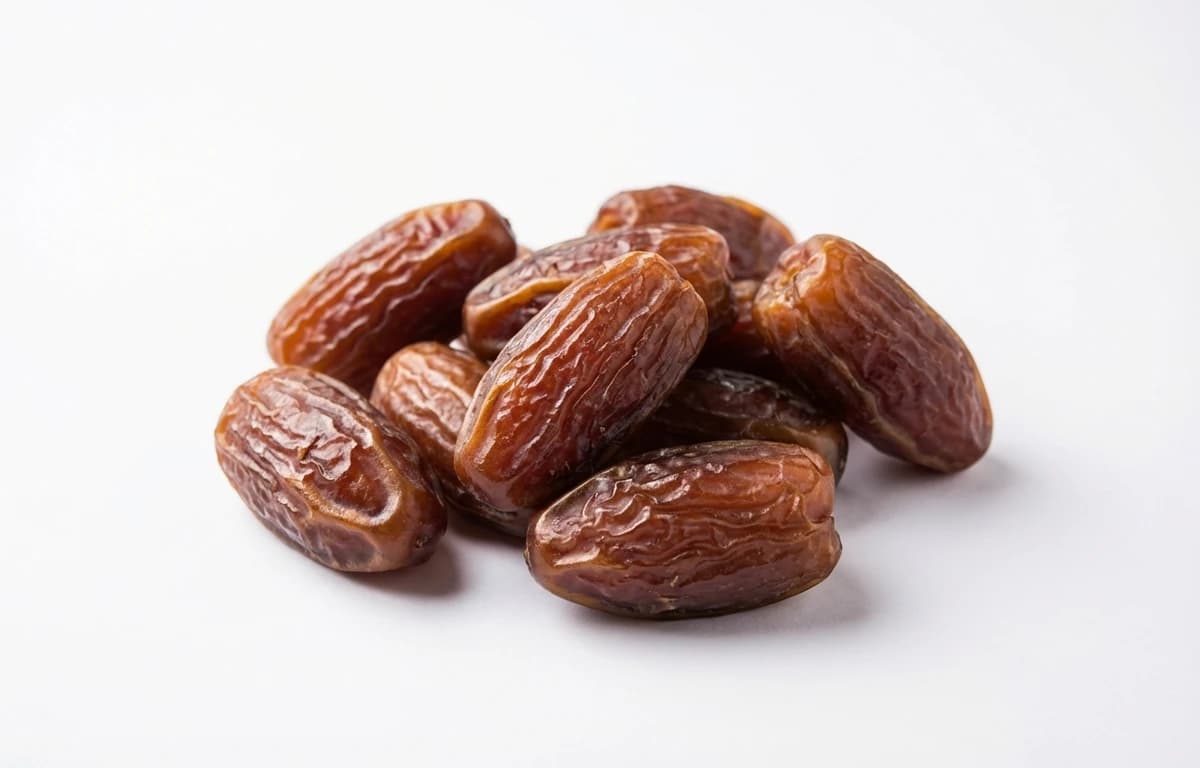
khajur
Also known as:
Loading...
Also known as:
Per 100g
Nutrition data source: USDA FoodData Central
Yes, khajur (dates) are very healthy. They are rich in dietary fiber, aiding digestion and preventing constipation. Dates also provide natural energy from fructose and glucose, and are packed with antioxidants that help reduce inflammation. Additionally, they are a good source of essential minerals like potassium, magnesium, and copper, supporting heart and bone health.
Per 100 grams, khajur contains approximately 277 calories and about 75 grams of carbohydrates. This high carbohydrate content primarily comes from natural sugars, making them a concentrated source of energy.
While khajur is nutritious and high in fiber, its high calorie and sugar content means it should be consumed in moderation for weight loss. The fiber can help with satiety, but excessive intake can contribute to a calorie surplus.
Yes, khajur (dates) are naturally vegan. They are a fruit harvested from date palm trees and do not involve any animal products or by-products in their production.
Diabetics can consume khajur in very small, controlled portions due to their high natural sugar content and moderate to high glycemic index. It's best to pair them with protein or fat to slow sugar absorption and always consult a healthcare professional or dietitian.
No, khajur is not keto-friendly. With approximately 75 grams of carbohydrates per 100 grams, dates are far too high in carbs to fit into a typical ketogenic diet, which severely restricts carbohydrate intake.
Khajur can be used in various ways: as a natural sweetener in smoothies, energy bars, and desserts, or chopped and added to oatmeal, salads, and yogurt. They also pair well with nuts and cheese for a healthy snack.
khajur is a versatile ingredient found in cuisines around the world. With 277 calories per 100g and 1.81 grams of protein, it's a nutritious addition to many dishes.
Explore more ingredients in the fruit category with complete nutrition information.
View all fruit →Dried khajur should be stored in an airtight container in a cool, dry place, where they can last for several months. For longer storage, especially in warmer climates, refrigeration can extend their shelf life up to a year.
Yes, khajur is beneficial for digestion due to its high dietary fiber content. Fiber adds bulk to stool, which helps promote regular bowel movements and can prevent constipation, contributing to overall gut health.
Khajur has a distinctly sweet, caramel-like flavor with a chewy, slightly sticky texture. Depending on the variety, it can also have notes of honey, butterscotch, or brown sugar, making it a popular natural sweetener.