
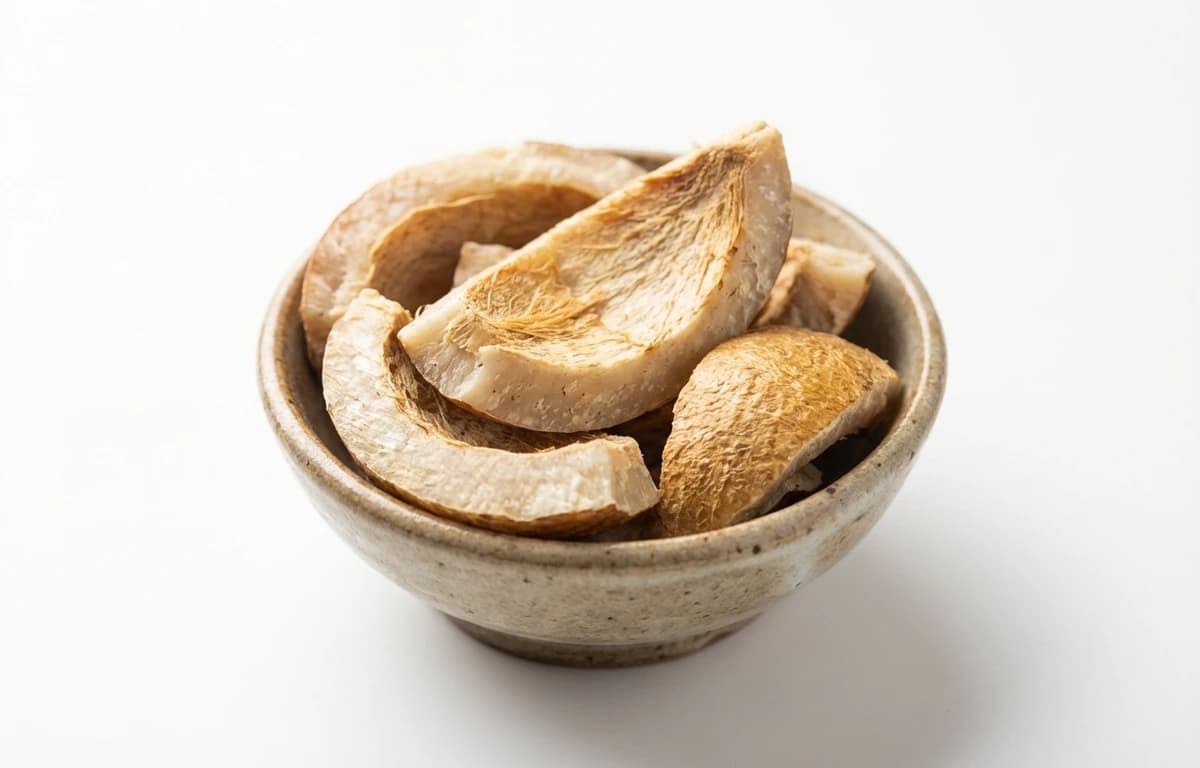
kopra
Also known as: dried coconut, copra
Loading...
Also known as: dried coconut, copra
Per 100g
Nutrition data source: USDA FoodData Central
Kopra, or dried coconut meat, offers several health benefits. It's rich in dietary fiber, supporting digestion, and contains beneficial medium-chain triglycerides (MCTs) that provide quick energy. It also supplies essential minerals like manganese, copper, and selenium. However, it is very high in calories and saturated fat, so it should be consumed in moderation.
Per 100 grams, kopra is quite calorie-dense, providing approximately 660 calories. It contains about 6.88g of protein, 23.65g of carbohydrates (much of which is fiber), and a significant 64.53g of fat, primarily saturated fats including MCTs.
While kopra's high fiber content can promote satiety and its MCTs may boost metabolism, its high calorie and fat content means it should be consumed sparingly if weight loss is the goal. Portion control is crucial to avoid excessive calorie intake.
Yes, kopra is naturally both vegan and gluten-free. It is simply the dried meat of the coconut fruit, containing no animal products or gluten-containing grains.
Diabetics can consume kopra in moderation. While it contains carbohydrates, its high fiber content can help slow sugar absorption. However, its calorie density means portion control is essential to manage overall carbohydrate and calorie intake.
Yes, kopra can be suitable for a ketogenic diet. It is very high in fat (64.53g per 100g) and relatively low in net carbs due to its high fiber content, making it a good source of healthy fats for those following a keto lifestyle.
Kopra is widely used in various cuisines, especially in South Asian dishes. It can be grated and added to curries, chutneys, and gravies for a rich, nutty flavor and thickening. It's also a popular ingredient in desserts, sweets, and snacks.
kopra is a versatile ingredient found in cuisines around the world. With 660 calories per 100g and 6.88 grams of protein, it's a nutritious addition to many dishes.
Explore more ingredients in the fruit category with complete nutrition information.
View all fruit →Kopra has an intense, rich, and sweet coconut flavor with a distinct nutty undertone. Its dried nature concentrates the flavors, making it more potent than fresh coconut meat.
To maintain its freshness and prevent spoilage, kopra should be stored in an airtight container in a cool, dry, and dark place. This protects it from moisture, air, and light, which can cause it to go rancid.
When stored properly in an airtight container in a cool, dry place, kopra can last for several months, typically up to 6-12 months. If it develops an off smell, discoloration, or mold, it should be discarded.