
Spice10 recipes
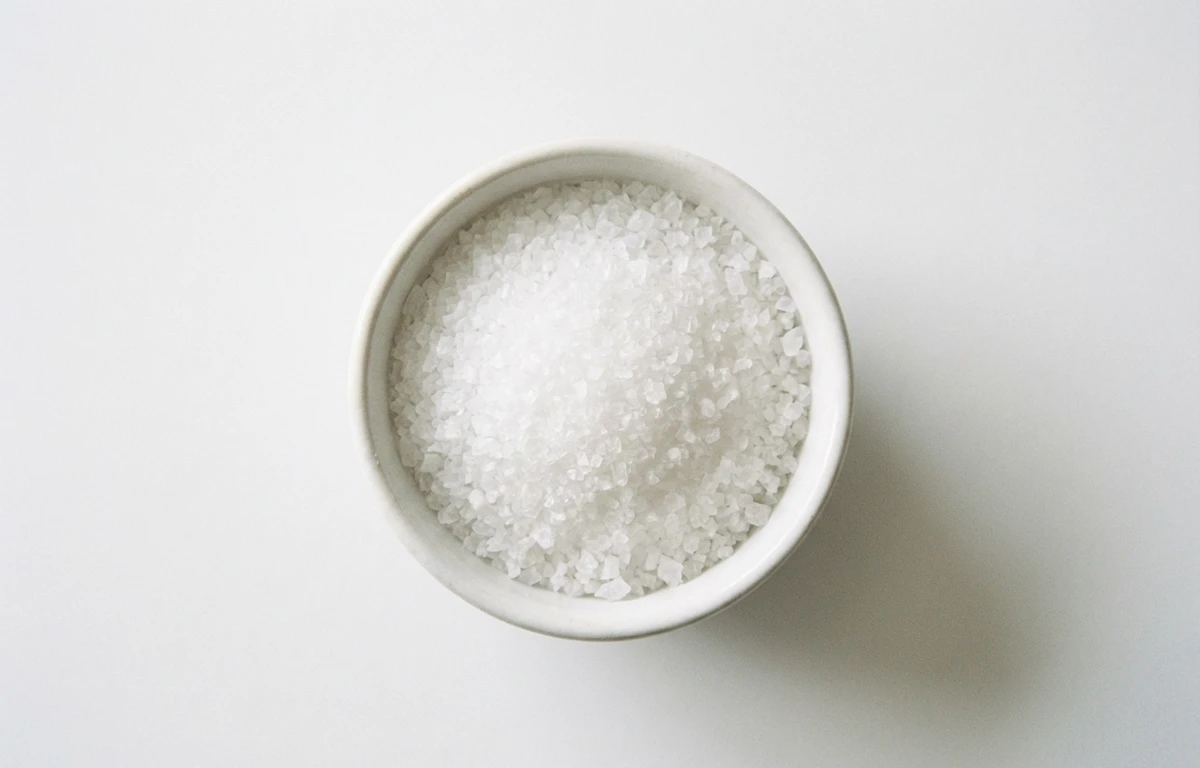
kosher salt.
VegetarianVeganGluten-freeDairy-freeNut-freePeanut-freeSoy-freeEgg-freeShellfish-freeHoney-freeAlcohol-freeKosher
ALSO KNOWN AS
coarse saltrock saltkosher saltcoarse sea saltmota namaksea salt crystals
SERVING
CALORIES
0
PROTEIN
0g
CARBS
0g
FAT
0g
FIBER
0g
NUTRITION PROFILE · per 100 g
Everything in this ingredient.
MACRONUTRIENTS
Calories0kcal—
Protein0g0%
Carbohydrates0g0%
Fiber0g0%
Sugar0g0%
Total fat0g0%
Saturated fat0g0%
Trans fat0g—
Cholesterol0mg0%
Water0.20g—
MINERALS
Sodium38758mg1685%
Potassium8.0mg0%
Calcium24mg2%
Iron0.30mg2%
Magnesium1.0mg0%
Zinc0.10mg1%
Copper0.03mg3%
Manganese0.10mg4%
Selenium0.10µg0%
VITAMINS
Vitamin A0µg0%
Vitamin C0mg0%
Vitamin D0µg0%
Vitamin E0mg0%
Vitamin K0µg0%
Thiamin (B1)0mg0%
Riboflavin (B2)0mg0%
Niacin (B3)0mg0%
Pantothenic acid (B5)0mg0%
Vitamin B60mg0%
Folate (B9)0µg0%
Vitamin B120µg0%
%DV based on a 2,000 cal diet. Source: USDA FoodData Central. A dash in the %DV column means there’s no established Daily Value for that nutrient.
MEASUREMENT CONVERSIONS
How much is what.
1 cup192g
1 tablespoon12g
1 teaspoon4g
1 oz28.4g
1 lb453.6g
1 ml0.8g
1 liter800g
HEALTH BENEFITS
Why eat it.
- ✓Essential for maintaining fluid balance in the body
- ✓Crucial for proper nerve transmission
- ✓Supports muscle contraction and relaxation
- ✓Typically lacks additives like anti-caking agents found in table salt
- ✓Easier to control sodium intake due to larger crystal size
COOKING TIPS
In the kitchen.
- 1Use for brining meats as it dissolves efficiently and seasons deeply
- 2The coarse texture makes it easy to pinch and sprinkle by hand
- 3Ideal for rimming cocktail glasses or as a finishing salt for texture
STORAGE
Keep it fresh.
- Store in a cool, dry place to prevent clumping
- Keep in an airtight container to protect from moisture and odors
- Avoid storing directly above the stove where steam can reach it
FAQ
Frequently asked questions.
How long does kosher salt last?
Kosher salt has an indefinite shelf life if kept dry, as it is a mineral that does not support bacterial growth.
Can kosher salt be frozen?
While it can be frozen, there is no benefit to doing so; it is best stored at room temperature in a dry environment.
What is the best way to store kosher salt?
The best method is in a salt pig or an airtight ceramic or glass container in a dry pantry.
How do I pick a high-quality kosher salt?
Look for brands with consistent flake size and no added anti-caking agents or yellow prussiate of soda.
What is the best substitute for kosher salt?
Coarse sea salt is the best 1:1 substitute. If using table salt, use only half the volume requested.
Why do chefs prefer kosher salt over table salt?
Its large, flaky crystals are easier to pick up and distribute evenly, and it lacks the metallic taste of iodized salt.
How should I prepare or use it in cooking?
Use your fingers to 'pinch' the salt from a bowl, which allows for better tactile control over seasoning levels.
Is kosher salt healthier than table salt?
Nutritionally they are similar, but kosher salt usually lacks iodine and anti-caking additives.
What are common dishes that use kosher salt?
It is the standard for seasoning steaks, roasting chickens, brining poultry, and seasoning pasta water.
Is kosher salt always 'Kosher' certified?
The name refers to its use in the 'koshering' process of meat; however, most major brands are also certified Kosher.
RECIPES
Cook with kosher salt.
10 recipes · sorted by what’s quick



















