
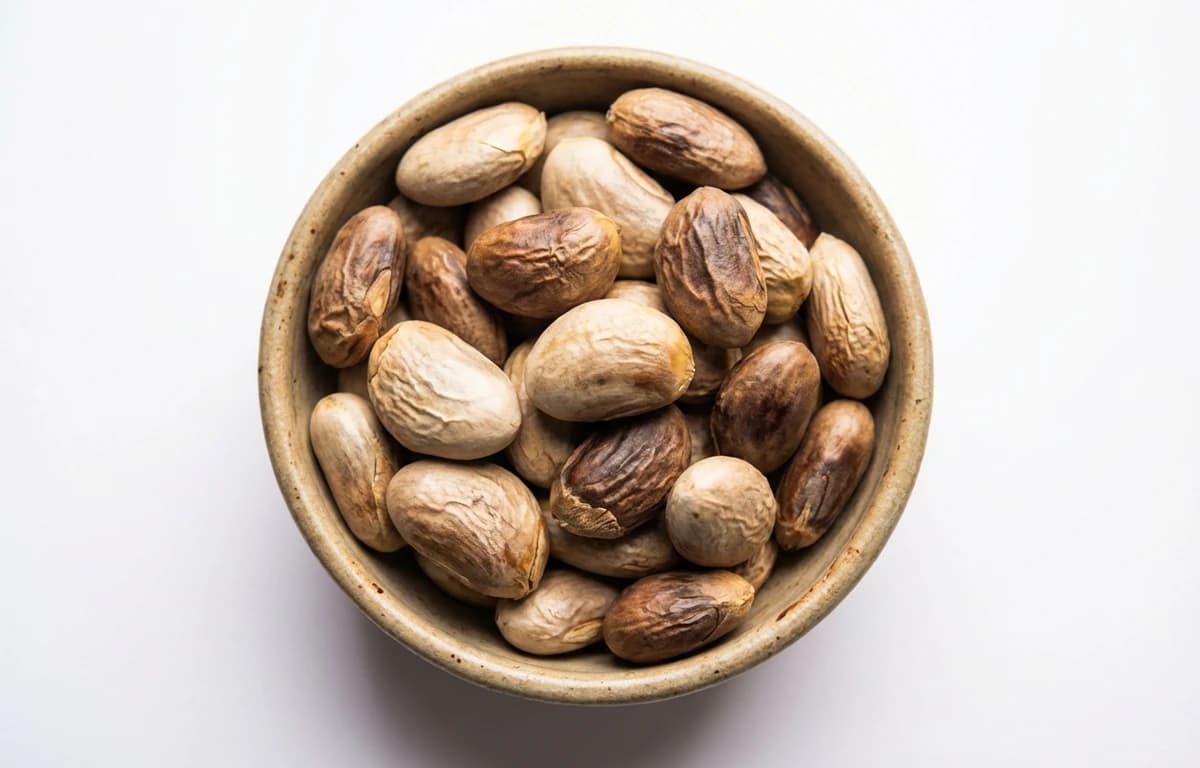
kothal guti
Also known as:
Loading...
Also known as:
Per 100g
Nutrition data source: USDA FoodData Central
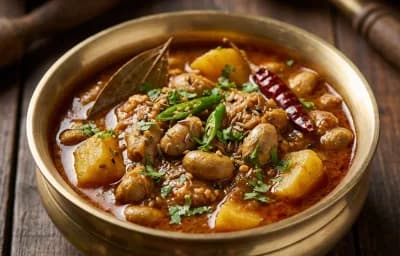
A rustic and flavorful Bengali curry made with tender jackfruit seeds and potatoes in a simple spice blend. This traditional dish is a wonderful way to use the often-discarded seeds, turning them into a comforting and hearty meal.
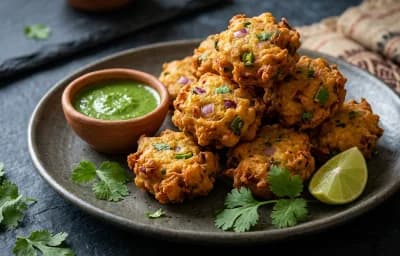
Crispy fritters from Assam made with mashed jackfruit seeds, pungent mustard oil, and fresh herbs. A unique and delicious way to use an often-discarded ingredient, perfect as a tea-time snack.
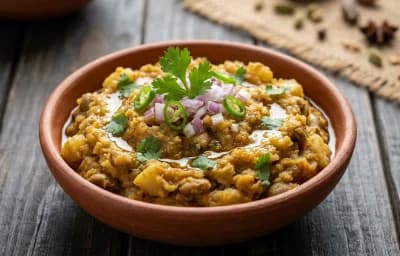
A rustic and flavorful Assamese mash made from boiled jackfruit seeds. This simple side dish gets its signature pungent kick from raw mustard oil, fresh chilies, and onions, perfect with a plate of hot rice and dal.
Yes, kothal guti is considered healthy due to its rich nutritional profile. It's an excellent source of complex carbohydrates and dietary fiber, which supports digestive health and provides sustained energy. It also contains essential minerals like potassium, magnesium, and iron, along with beneficial antioxidants and B-complex vitamins.
Per 100g, kothal guti provides approximately 185 calories, 6.6g of protein, 38.4g of complex carbohydrates, and a very low 0.4g of fat. It's also rich in dietary fiber, potassium, magnesium, iron, and B-complex vitamins like thiamine and riboflavin.
Yes, kothal guti is beneficial for digestion primarily due to its high dietary fiber content. Fiber aids in promoting regular bowel movements, preventing constipation, and supporting a healthy gut microbiome. This contributes to overall digestive wellness and satiety.
Yes, kothal guti, being a seed, is naturally gluten-free. This makes it a suitable ingredient for individuals with celiac disease or gluten sensitivity, offering a nutritious option for various dietary needs.
Kothal guti contains a significant amount of complex carbohydrates, which are digested slowly, helping to prevent rapid spikes in blood sugar. Its fiber content also contributes to better glycemic control. However, individuals with diabetes should consume it in moderation and monitor their portion sizes as part of a balanced diet.
Yes, kothal guti is entirely vegan. As a plant-based seed, it contains no animal products or by-products, making it a suitable and nutritious ingredient for vegan diets.
kothal guti is a versatile ingredient found in cuisines around the world. With 185 calories per 100g and 6.6 grams of protein, it's a nutritious addition to many dishes.
Explore more ingredients in the seed category with complete nutrition information.
View all seed →Discover 0 recipes featuring kothal guti with step-by-step instructions.
Browse recipes →Kothal guti typically needs to be boiled or roasted before consumption. After boiling, the outer skin can be peeled off. It can then be added to curries, stir-fries, or mashed and used in various savory dishes, often absorbing the flavors of the spices it's cooked with.
Kothal guti has a mild, slightly nutty, and starchy flavor, often compared to chestnuts or potatoes. It's commonly used in South Asian cuisine, particularly in curries, stews, and vegetable mixes, where it adds a unique texture and helps thicken dishes.
Uncooked kothal guti should be stored in a cool, dry, and well-ventilated place, away from direct sunlight, similar to other seeds or nuts. Once cooked, it should be refrigerated in an airtight container and consumed within 2-3 days.
No, kothal guti should not be eaten raw. It requires cooking, typically boiling or roasting, to make it palatable and digestible. Raw consumption may lead to digestive discomfort and is not recommended.