
Protein4 recipes
lamb or goat fat.
VegetarianVeganGluten-freeDairy-freeNut-freePeanut-freeSoy-freeEgg-freeShellfish-freeHoney-freeAlcohol-free
ALSO KNOWN AS
mutton fat
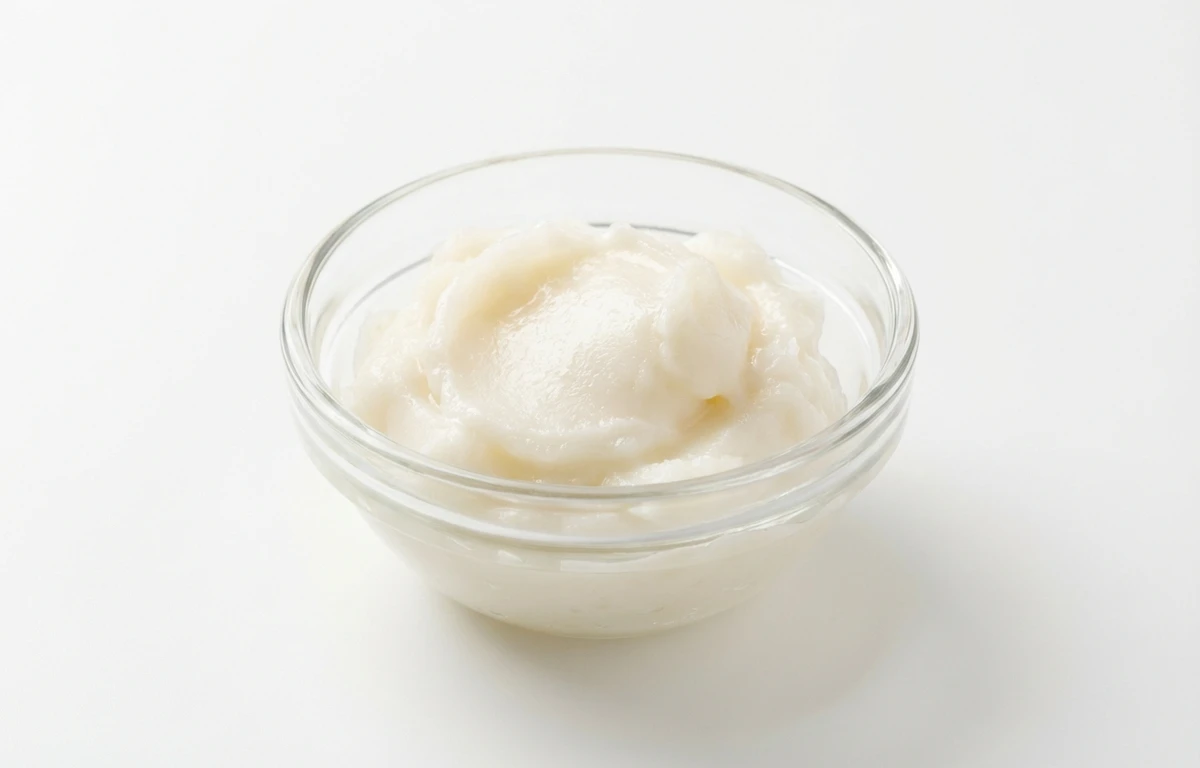
SERVING
CALORIES
898
PROTEIN
0g
CARBS
0g
FAT
99.8g
FIBER
0g
NUTRITION PROFILE · per 100 g
Everything in this ingredient.
MACRONUTRIENTS
Calories898kcal—
Protein0g0%
Carbohydrates0g0%
Fiber0g0%
Sugar0g0%
Total fat99.8g128%
Saturated fat50.1g251%
Trans fat3.6g—
Cholesterol100mg33%
Water0.10g—
MINERALS
Sodium0mg0%
Potassium0mg0%
Calcium0mg0%
Iron0mg0%
Magnesium0mg0%
Phosphorus0mg0%
Zinc0mg0%
Copper0mg0%
Manganese0mg0%
Selenium0µg0%
VITAMINS
Vitamin A0µg0%
Vitamin C0mg0%
Vitamin D0µg0%
Vitamin E0mg0%
Vitamin K0µg0%
Thiamin (B1)0mg0%
Riboflavin (B2)0mg0%
Niacin (B3)0mg0%
Pantothenic acid (B5)0mg0%
Vitamin B60mg0%
Folate (B9)0µg0%
Vitamin B120µg0%
%DV based on a 2,000 cal diet. Source: USDA FoodData Central. A dash in the %DV column means there’s no established Daily Value for that nutrient.
MEASUREMENT CONVERSIONS
How much is what.
1 cup220.8g
1 tablespoon13.8g
1 teaspoon4.6g
1 ml0.9g
1 liter920g
HEALTH BENEFITS
Why eat it.
- ✓High smoke point (around 400°F / 205°C) makes it stable for high-heat cooking, reducing the formation of harmful free radicals.
- ✓A good source of conjugated linoleic acid (CLA), particularly from grass-fed animals, which is linked to anti-inflammatory properties.
- ✓Provides fat-soluble vitamins such as Vitamin A, D, E, and K, which are essential for immune function, bone health, and vision.
- ✓Rich in monounsaturated fats like oleic acid, the same type found in olive oil, which supports cardiovascular health.
- ✓Provides a concentrated source of energy, essential for metabolic functions and physical activity.
COOKING TIPS
In the kitchen.
- 1Render raw fat by slowly heating it in a heavy-bottomed pot until the liquid separates from the solids (cracklings), then strain through cheesecloth for a pure cooking fat.
- 2Use as a cooking medium for searing meats, frying potatoes, or roasting vegetables to impart a rich, savory flavor.
- 3Incorporate into savory pastry doughs, like for meat pies or empanadas, as a substitute for butter or lard to create an exceptionally flaky crust.
- 4Add small amounts to lean ground meats, like venison or beef, to increase moisture and flavor during cooking.
STORAGE
Keep it fresh.
- Store rendered fat (tallow) in an airtight container in the refrigerator for up to three months or in the freezer for over a year.
- Keep raw, unrendered fat refrigerated and use within 2-3 days, or freeze for up to six months before rendering.
FAQ
Frequently asked questions.
Is lamb or goat fat healthy?
Lamb and goat fat can offer several health benefits when consumed in moderation. It's a good source of conjugated linoleic acid (CLA), especially from grass-fed animals, which is linked to anti-inflammatory properties. It also provides fat-soluble vitamins (A, D, E, K) and monounsaturated fats like oleic acid, similar to olive oil, which supports cardiovascular health.
What are the nutritional facts for lamb or goat fat?
Per 100g, lamb or goat fat contains approximately 898 calories and 99.8g of fat. It has virtually no protein or carbohydrates, making it a pure fat source. It provides a concentrated source of energy.
Is lamb or goat fat good for weight loss?
Due to its high calorie density (nearly 900 calories per 100g), lamb or goat fat is not inherently 'good for weight loss' if consumed in large quantities. However, as a satiating fat source, small amounts can be part of a balanced diet that supports weight management by promoting fullness, especially in low-carb or ketogenic diets.
Is lamb or goat fat vegan or vegetarian?
No, lamb or goat fat is neither vegan nor vegetarian. It is an animal product derived directly from lamb or goat meat, making it unsuitable for plant-based diets.
Is lamb or goat fat keto-friendly?
Yes, lamb or goat fat is highly keto-friendly. It is composed almost entirely of fat with zero carbohydrates and protein, making it an excellent energy source for individuals following a ketogenic diet to maintain ketosis.
How do you cook with lamb or goat fat?
Lamb or goat fat has a high smoke point, around 400°F (205°C), making it excellent for high-heat cooking methods like searing, roasting, and deep-frying. It imparts a rich, savory flavor to dishes, particularly good for vegetables, potatoes, or pan-frying meats.
What does lamb or goat fat taste like?
Lamb or goat fat has a distinct, rich, and savory flavor that can be described as 'gamey' or 'muttony.' The intensity varies depending on the animal's diet and age. It adds a deep, earthy aroma and a satisfying mouthfeel to cooked foods.
How do you store lamb or goat fat?
Rendered lamb or goat fat should be stored in an airtight container to prevent oxidation and absorption of other odors. It can be kept in the refrigerator for several months or frozen for longer-term storage.
How long does lamb or goat fat last?
Properly rendered and stored lamb or goat fat can last for several months (typically 3-6 months) in the refrigerator. If stored in the freezer, it can maintain its quality for up to a year or even longer.
What is the smoke point of lamb or goat fat?
The smoke point of rendered lamb or goat fat is relatively high, typically around 400°F (205°C). This makes it a stable cooking fat suitable for various high-temperature applications without breaking down and forming harmful compounds.
RECIPES
Cook with lamb or goat fat.
4 recipes · sorted by what’s quick



















