Protein3 recipes
lamb shanks.
VegetarianVeganGluten-freeDairy-freeNut-freePeanut-freeSoy-freeEgg-freeShellfish-freeHoney-freeAlcohol-free
SERVING
CALORIES
201
PROTEIN
18.2g
CARBS
0g
FAT
14.3g
FIBER
0g
NUTRITION PROFILE · per 100 g
Everything in this ingredient.
MACRONUTRIENTS
Calories201kcal—
Protein18.2g36%
Carbohydrates0g0%
Fiber0g0%
Sugar0g0%
Total fat14.3g18%
Saturated fat6.1g31%
Trans fat0.80g—
Cholesterol75mg25%
Water66.5g—
MINERALS
Sodium62mg3%
Potassium245mg5%
Calcium12mg1%
Iron1.9mg11%
Magnesium21mg5%
Phosphorus165mg13%
Zinc4.8mg44%
Copper0.12mg13%
Manganese0.02mg1%
Selenium22.4µg41%
VITAMINS
Vitamin A0µg0%
Vitamin C0mg0%
Vitamin D0.10µg1%
Vitamin E0.20mg1%
Vitamin K3.2µg3%
Thiamin (B1)0.11mg9%
Riboflavin (B2)0.22mg17%
Niacin (B3)5.8mg36%
Pantothenic acid (B5)0.65mg13%
Vitamin B60.14mg8%
Folate (B9)3.0µg1%
Vitamin B122.3µg96%
%DV based on a 2,000 cal diet. Source: USDA FoodData Central. A dash in the %DV column means there’s no established Daily Value for that nutrient.
MEASUREMENT CONVERSIONS
How much is what.
1 oz28.4g
1 lb453.6g
1 piece400g
HEALTH BENEFITS
Why eat it.
- ✓Excellent source of high-quality complete protein
- ✓Rich in Vitamin B12 for nerve function and blood health
- ✓High Zinc content supports immune system health
- ✓Provides bioavailable Heme Iron to prevent anemia
- ✓Contains Selenium, a powerful antioxidant
COOKING TIPS
In the kitchen.
- 1Best prepared using low and slow methods like braising or slow cooking
- 2Do not remove the bone during cooking as it provides deep flavor and gelatin
- 3Brown the meat thoroughly on all sides before adding liquid to enhance flavor
STORAGE
Keep it fresh.
- Store in the coldest part of the refrigerator for 3 to 5 days
- Freeze in airtight, moisture-proof packaging for up to 9 months
- Keep raw shanks on the bottom shelf to prevent cross-contamination
FAQ
Frequently asked questions.
How long do raw lamb shanks last in the refrigerator?
Raw lamb shanks can be safely stored in the refrigerator for 3 to 5 days if kept in their original packaging or an airtight container.
Can lamb shanks be frozen?
Yes, lamb shanks freeze very well. Wrap them tightly in plastic wrap and then foil or a freezer bag; they will maintain quality for 6 to 9 months.
What is the best cooking method for lamb shanks?
Braising is the ideal method. Because shanks are a hardworking muscle with lots of connective tissue, slow cooking in liquid breaks down the collagen, making the meat fall-off-the-bone tender.
How do I choose a good quality lamb shank?
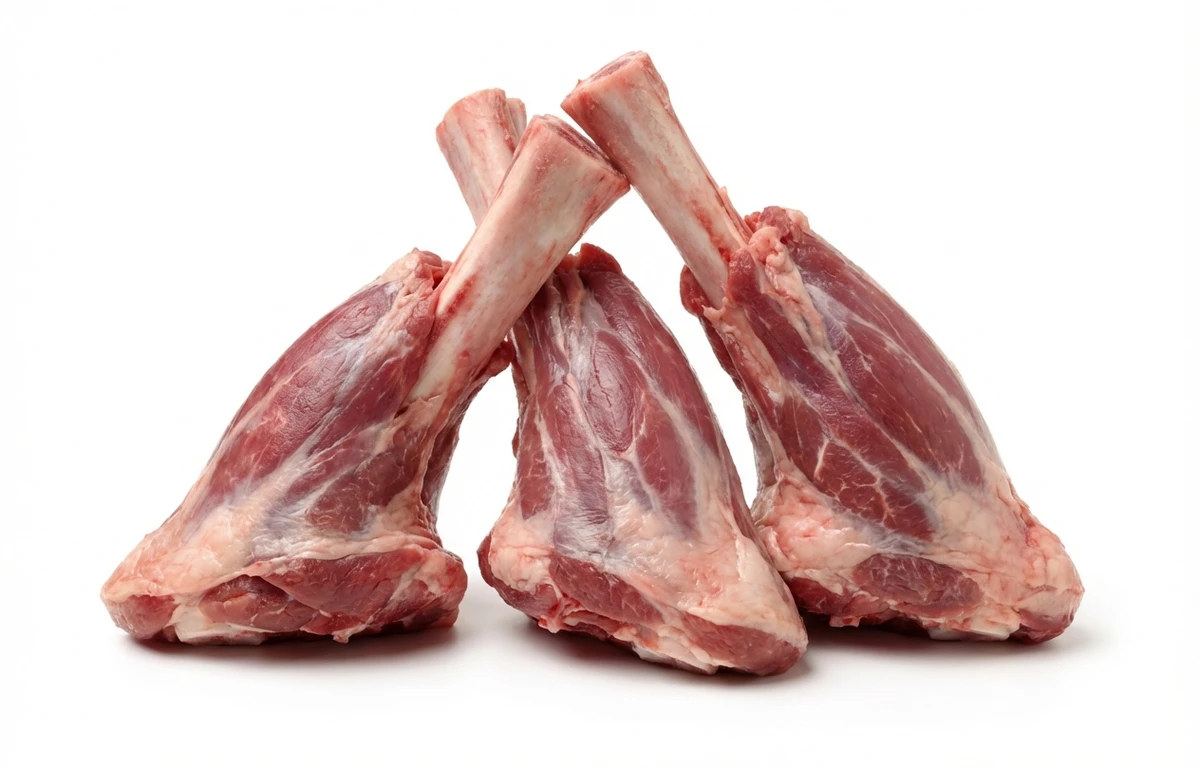
Look for meat that is fine-grained and pinkish-red in color. The fat should be white and firm, not yellow or greasy.
What can I use as a substitute for lamb shanks?
Beef shanks, veal shanks (Osso Buco), or pork shanks are the best substitutes as they have similar connective tissue and bone-in structure.
Do I need to trim the fat off lamb shanks before cooking?
You can trim excess thick layers of external fat, but leave some behind as it renders during the long cooking process and adds significant flavor and moisture.
How many lamb shanks should I serve per person?
Typically, one medium lamb shank (approx. 400g-450g with bone) is considered a generous single serving for one person.
What is the difference between a lamb shank and a leg of lamb?
The shank is the lower part of the leg (the shin). It is much tougher and contains more connective tissue than the leg, requiring longer cooking times.
What are common flavor pairings for lamb shanks?
Lamb shanks pair excellently with robust flavors like rosemary, garlic, red wine, thyme, tomatoes, and root vegetables.
Is the bone in the lamb shank edible?
The bone itself is not edible, but the marrow inside is highly nutritious and flavorful, and the bone should be left in during cooking to release gelatin into the sauce.
RECIPES
Cook with lamb shanks.
3 recipes · sorted by what’s quick