
Protein10 recipes
large egg yolks.
VegetarianVeganGluten-freeDairy-freeNut-freePeanut-freeSoy-freeEgg-freeShellfish-freeHoney-freeAlcohol-free
ALSO KNOWN AS
YolkEgg YolkAnde ki zardiegg yellowanda zardiraw egg yolkegg yolkslarge egg yolk
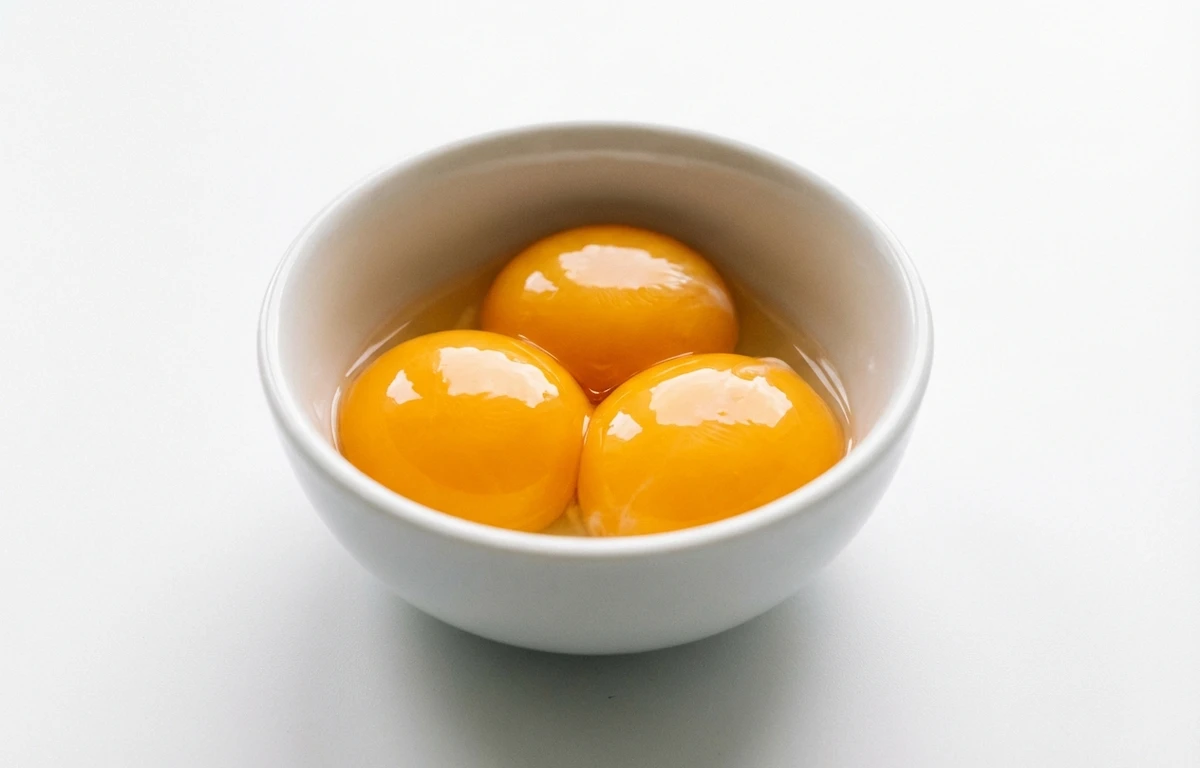
SERVING
CALORIES
322
PROTEIN
15.9g
CARBS
3.6g
FAT
26.5g
FIBER
0g
NUTRITION PROFILE · per 100 g
Everything in this ingredient.
MACRONUTRIENTS
Calories322kcal—
Protein15.9g32%
Carbohydrates3.6g1%
Fiber0g0%
Sugar0.56g1%
Total fat26.5g34%
Saturated fat9.6g48%
Trans fat0g—
Cholesterol1085mg362%
Water52.3g—
MINERALS
Sodium48mg2%
Potassium109mg2%
Calcium129mg10%
Iron2.7mg15%
Magnesium5.0mg1%
Phosphorus390mg31%
Zinc2.3mg21%
Copper0.08mg9%
Manganese0.06mg3%
Selenium56µg102%
VITAMINS
Vitamin A381µg42%
Vitamin C0mg0%
Vitamin D5.4µg27%
Vitamin E2.6mg17%
Vitamin K0.70µg1%
Thiamin (B1)0.18mg15%
Riboflavin (B2)0.53mg41%
Niacin (B3)0.02mg0%
Pantothenic acid (B5)3.0mg60%
Vitamin B60.35mg21%
Folate (B9)146µg37%
Vitamin B121.9µg81%
%DV based on a 2,000 cal diet. Source: USDA FoodData Central. A dash in the %DV column means there’s no established Daily Value for that nutrient.
MEASUREMENT CONVERSIONS
How much is what.
1 cup243g
1 tablespoon15g
1 teaspoon5g
1 oz28.4g
1 lb453.6g
1 ml1g
1 liter1030g
1 piece18g
HEALTH BENEFITS
Why eat it.
- ✓Excellent source of choline for brain health and development
- ✓Contains lutein and zeaxanthin which support eye health
- ✓Rich in fat-soluble vitamins A, D, E, and K
- ✓Provides high-quality protein and essential fatty acids
- ✓Contains significant amounts of Vitamin B12 and Selenium
COOKING TIPS
In the kitchen.
- 1Temper yolks by slowly adding hot liquid to them before mixing into a hot sauce to prevent curdling
- 2Use a gentle heat (double boiler) when making yolk-based sauces like Hollandaise
- 3Whisk thoroughly with sugar until 'ribbon stage' for the richest custards and cakes
STORAGE
Keep it fresh.
- Store in an airtight container in the refrigerator for up to 2 days
- Cover yolks with a thin layer of cold water or milk to prevent them from drying out
- To freeze, whisk with a pinch of salt or sugar to prevent the yolk from becoming gelatinous
FAQ
Frequently asked questions.
How long do raw egg yolks last in the fridge?
Raw egg yolks last about 2 days in the refrigerator if stored in an airtight container. To prevent them from drying out, cover them with a small amount of water which can be drained before use.
Can you freeze egg yolks?
Yes, but they require special handling. Because yolks thicken into a gel when frozen, you must whisk in either 1/8 teaspoon of salt or 1.5 teaspoons of sugar per 4 yolks before freezing.
How many yolks are in 100g?
There are approximately 5 to 6 large egg yolks in 100 grams, as a single large yolk typically weighs about 17-18 grams.
What is the best way to separate yolks from whites?
The easiest way is to crack the egg into your clean hand and let the white slip through your fingers, or use the shell-to-shell method. It is easiest to separate eggs when they are cold.
Why are some egg yolks darker than others?
The color of the yolk depends entirely on the diet of the hen. Hens that eat feed rich in carotenoids (like marigold petals or yellow corn) produce darker orange yolks, though the nutritional value is very similar.
What can I use as a substitute for egg yolks in baking?
For thickening, you can use cornstarch or agar-agar. For richness, heavy cream or silken tofu can sometimes work, though the texture of the final product will differ.
Are egg yolks high in cholesterol?
Yes, egg yolks are high in dietary cholesterol (about 185-200mg per large yolk). However, for most people, dietary cholesterol has a smaller impact on blood cholesterol than saturated and trans fats.
What are common uses for leftover egg yolks?
Leftover yolks are perfect for making Hollandaise sauce, Mayonnaise, Crème Brûlée, Lemon Curd, Carbonara pasta, or enriching bread doughs like Brioche.
RECIPES
Cook with large egg yolks.
10 recipes · sorted by what’s quick



















