
Protein10 recipes
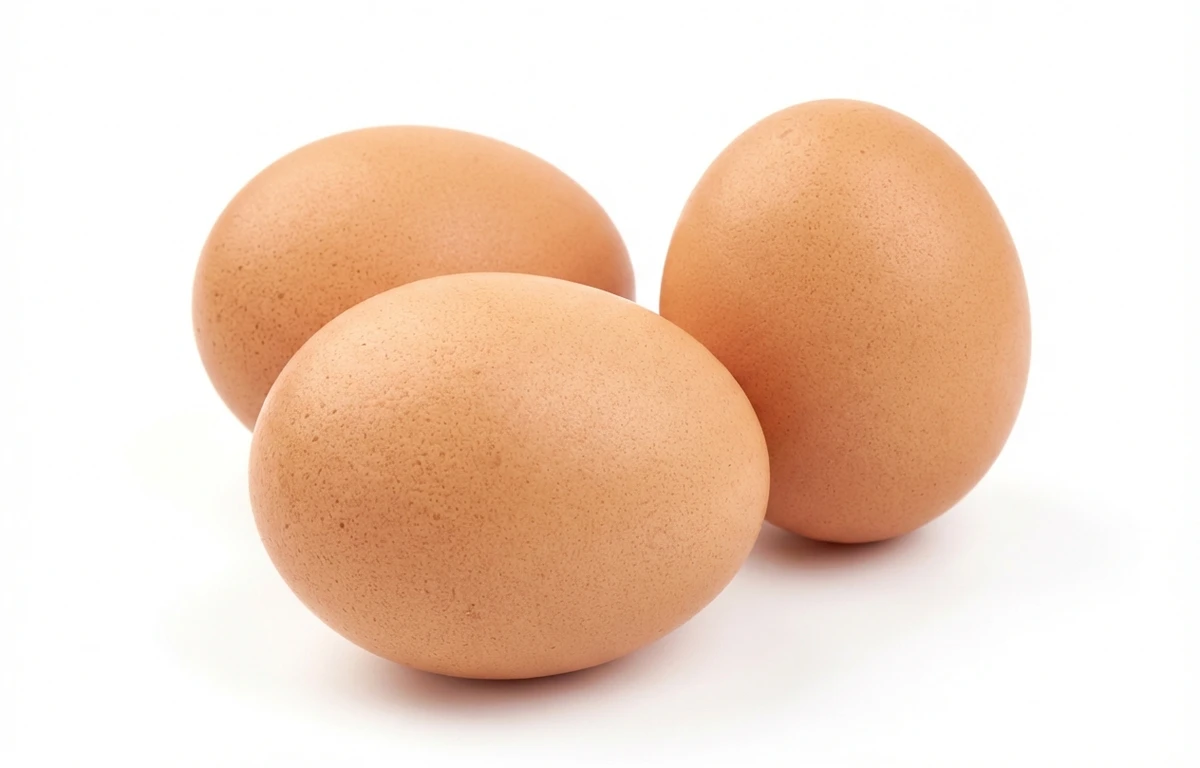
large eggs.
VegetarianVeganGluten-freeDairy-freeNut-freePeanut-freeSoy-freeEgg-freeShellfish-freeHoney-freeAlcohol-free
ALSO KNOWN AS
egglarge eggeggsraw eggraw fresh eggchicken eggsanda
SERVING
CALORIES
143
PROTEIN
12.6g
CARBS
0.70g
FAT
9.5g
FIBER
0g
NUTRITION PROFILE · per 100 g
Everything in this ingredient.
MACRONUTRIENTS
Calories143kcal—
Protein12.6g25%
Carbohydrates0.70g0%
Fiber0g0%
Sugar0.40g1%
Total fat9.5g12%
Saturated fat3.1g16%
Trans fat0g—
Cholesterol372mg124%
Water76.1g—
MINERALS
Sodium142mg6%
Potassium138mg3%
Calcium56mg4%
Iron1.8mg10%
Magnesium12mg3%
Phosphorus198mg16%
Zinc1.3mg12%
Copper0.07mg8%
Manganese0.03mg1%
Selenium30.7µg56%
VITAMINS
Vitamin A160µg18%
Vitamin C0mg0%
Vitamin D2.0µg10%
Vitamin E1.1mg7%
Vitamin K0.30µg0%
Thiamin (B1)0.04mg3%
Riboflavin (B2)0.46mg35%
Niacin (B3)0.08mg1%
Pantothenic acid (B5)1.5mg31%
Vitamin B60.17mg10%
Folate (B9)47µg12%
Vitamin B120.89µg37%
%DV based on a 2,000 cal diet. Source: USDA FoodData Central. A dash in the %DV column means there’s no established Daily Value for that nutrient.
MEASUREMENT CONVERSIONS
How much is what.
1 cup243g
1 tablespoon15g
1 teaspoon5g
1 oz28.4g
1 lb453.6g
1 liter1030g
1 piece50g
HEALTH BENEFITS
Why eat it.
- ✓Complete protein source containing all essential amino acids
- ✓Rich in choline which supports brain health and development
- ✓Contains lutein and zeaxanthin for eye health
- ✓Good source of Vitamin D for bone strength
- ✓High in selenium which acts as a powerful antioxidant
COOKING TIPS
In the kitchen.
- 1Use room temperature eggs for baking to ensure even mixing and better volume
- 2Cook scrambled eggs over low to medium-low heat to prevent a rubbery texture
- 3Add a teaspoon of vinegar to poaching water to help the egg whites coagulate faster
STORAGE
Keep it fresh.
- Store in the original carton to prevent moisture loss and odor absorption
- Keep in the main body of the refrigerator rather than the door to maintain consistent temperature
- Store with the large end up to keep the yolk centered
FAQ
Frequently asked questions.
How long do large eggs last in the refrigerator?
Raw eggs in the shell can last 3 to 5 weeks when stored properly in the refrigerator.
How can I tell if an egg is still fresh?
Perform the float test: place the egg in a bowl of water. Fresh eggs sink and lay flat; older eggs stand up or float.
Can you freeze eggs?
Yes, but not in the shell. Whisk the eggs together and store in an airtight container for up to one year.
What is a good vegan substitute for eggs in baking?
Common substitutes include flaxseed meal mixed with water (flax egg), applesauce, mashed bananas, or commercial egg replacers.
Are brown eggs healthier than white eggs?
No, there is no nutritional difference between brown and white eggs; the color is determined by the breed of the hen.
How long should I boil an egg for a hard-boiled result?
Place eggs in boiling water for 9 to 12 minutes, then immediately transfer to an ice bath.
Why do some hard-boiled eggs have a green ring around the yolk?
The green ring is caused by a reaction between sulfur and iron when eggs are overcooked or cooked at too high a temperature.
Is it safe to eat raw eggs?
Eating raw eggs carries a risk of Salmonella. It is recommended to cook eggs thoroughly or use pasteurized egg products.
What is the weight of a standard large egg?
A standard large egg weighs approximately 50 grams without the shell (about 57 grams with the shell).
RECIPES
Cook with large eggs.
10 recipes · sorted by what’s quick



















