
Loading...
Per 100g
Nutrition data source: USDA FoodData Central
Common measurement equivalents in grams
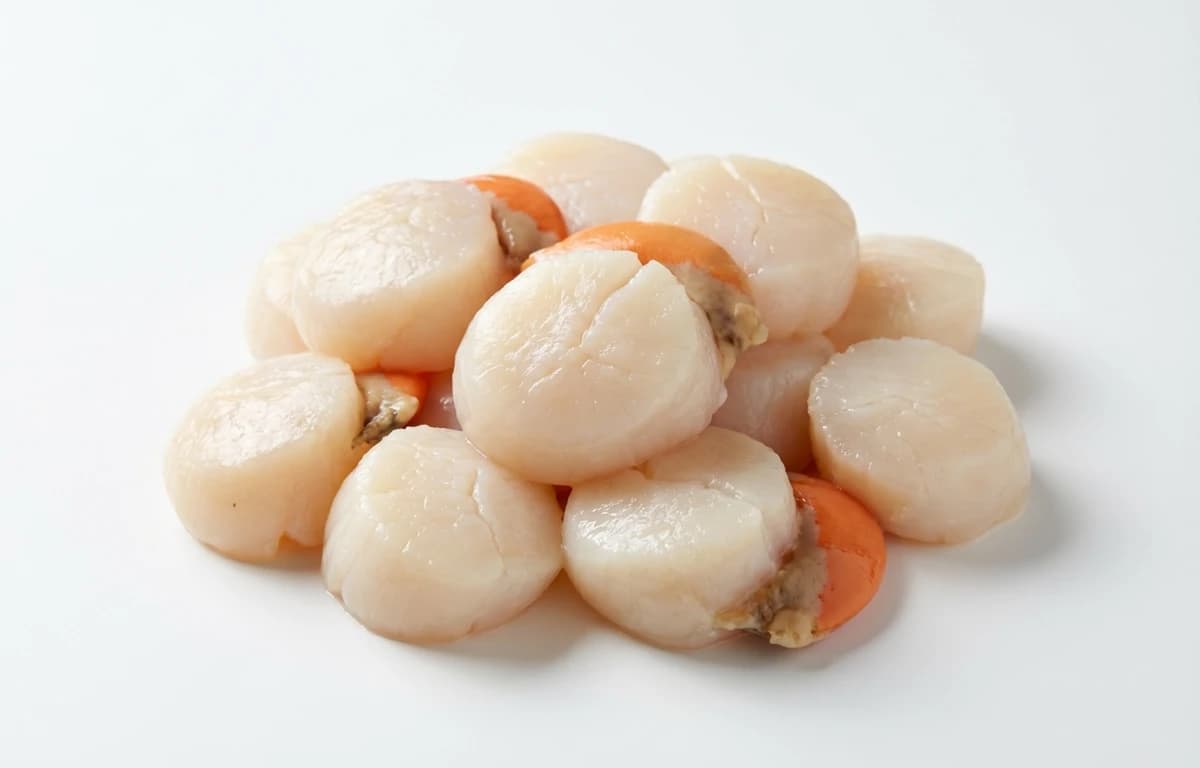
Fresh scallops should smell sweet and like the ocean, never fishy or like ammonia. They should be firm, moist, and have a creamy white to pale pink color.
'Dry' scallops are natural and untreated, making them better for searing. 'Wet' scallops are treated with sodium tripolyphosphate, which causes them to absorb water and prevents a good sear.
Yes, high-quality 'sushi-grade' sea scallops can be eaten raw in dishes like carpaccio, ceviche, or crudo, provided they are handled safely.
Bay scallops are a smaller alternative. For a similar texture, you can use chunks of lobster tail, jumbo shrimp, or even thick slices of king oyster mushroom for a vegan option.
The side muscle is a small, rectangular piece of tissue on the side of the scallop. Simply pinch it and pull it away; it should peel off easily.
Scallops contain a moderate amount of cholesterol (about 33mg per 100g), which is lower than many other types of shellfish and meat.
Large sea scallops are typically sold by count. U10 means under 10 per pound, while U15 means 10 to 15 per pound.
Yes, but they must be completely thawed in the refrigerator and patted very dry. Any excess moisture will cause them to steam rather than sear.
large sea scallops is a versatile ingredient found in cuisines around the world. With 88 calories per 100g and 16.7 grams of protein, it's a nutritious addition to many dishes.
Explore more ingredients in the other category with complete nutrition information.
View all other →Discover 2 recipes featuring large sea scallops with step-by-step instructions.
Browse recipes →No, scallops are mollusks and are a common allergen. People with shellfish allergies should avoid them unless cleared by a doctor.