
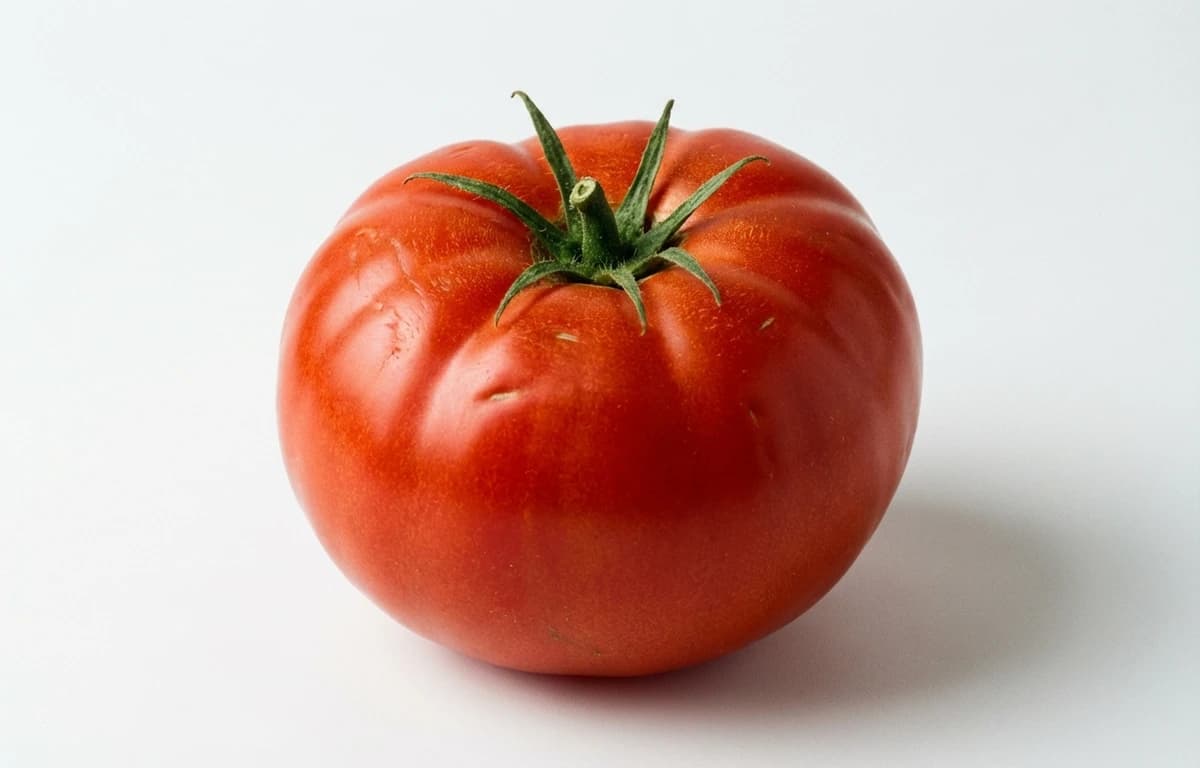
Large Tomato
Also known as: tamatar, jitomate, beefsteak tomato, large red tomato, big tomato
Loading...
Also known as: tamatar, jitomate, beefsteak tomato, large red tomato, big tomato
Per 100g
Nutrition data source: USDA FoodData Central
Common measurement equivalents in grams
At room temperature, ripe tomatoes last 2-5 days. If refrigerated, they can last up to a week, though texture may become mealy.
Look for tomatoes that are heavy for their size, have a deep red color, and a fragrant earthy aroma near the stem.
Yes, you can freeze them whole or chopped. They will lose their firm texture, so they are best used for sauces or soups after thawing.
Canned whole peeled tomatoes are the best substitute for cooking. For salads, use cherry tomatoes or red bell peppers for crunch.
Cold temperatures break down the cell membranes and destroy the enzymes responsible for flavor, resulting in a mealy, bland tomato.
Yes, the seeds and the surrounding jelly are edible and contain a high concentration of flavor and nutrients.
Place it in a paper bag with a banana or apple; the ethylene gas produced by the other fruit will speed up the ripening process.
They are ideal for slicing into sandwiches, dicing for fresh salsas, or stuffing and roasting due to their size.
Large Tomato is a versatile ingredient found in cuisines around the world. With 18 calories per 100g and 0.9 grams of protein, it's a nutritious addition to many dishes.
Explore more ingredients in the fruit category with complete nutrition information.
View all fruit →Discover 2 recipes featuring large tomato with step-by-step instructions.
Browse recipes →