Other
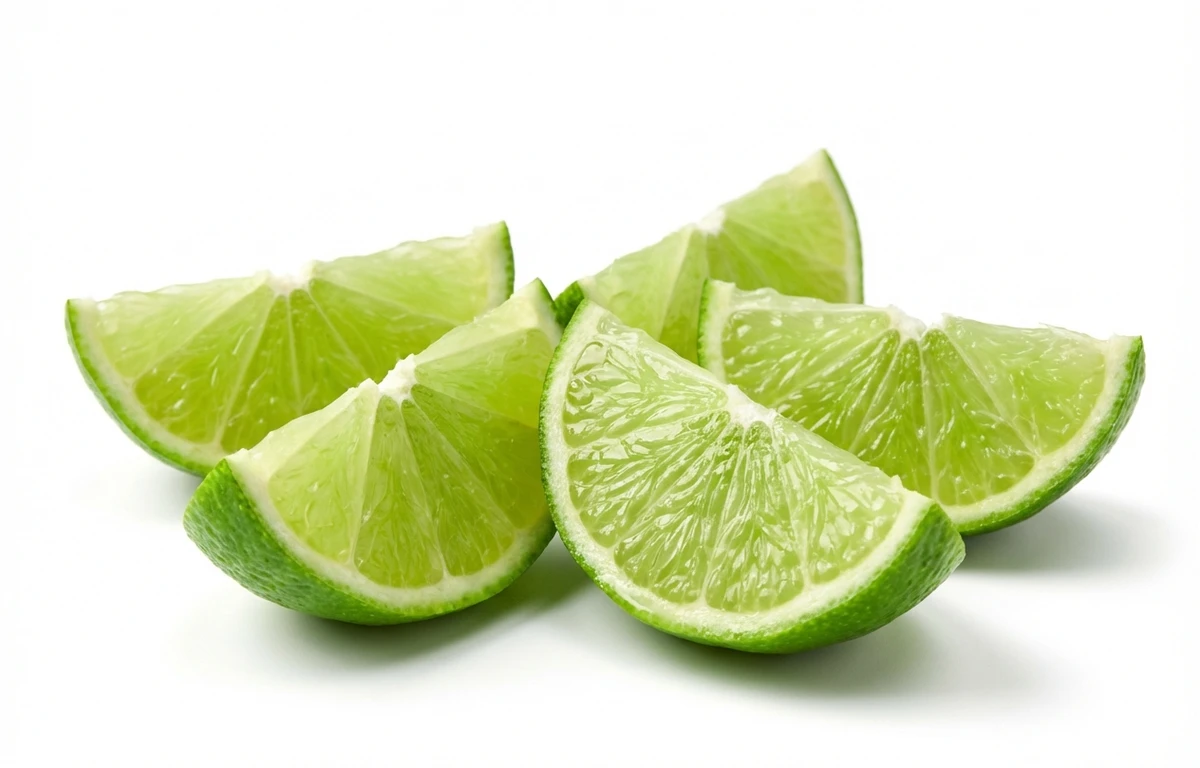
lime wedges.
VegetarianVeganGluten-freeDairy-freeNut-freePeanut-freeSoy-freeEgg-freeShellfish-freeHoney-freeAlcohol-free
SERVING
CALORIES
30
PROTEIN
0.60g
CARBS
6.5g
FAT
0.20g
FIBER
2.8g
This ingredient is flagged as naturally gluten-free. Per 100 g, it provides 0.60 µg of vitamin K.
NUTRITION PROFILE · per 100 g
Everything in this ingredient.
MACRONUTRIENTS
Calories30kcal—
Protein0.60g1%
Carbohydrates6.5g2%
Fiber2.8g10%
Sugar1.7g3%
Total fat0.20g0%
Saturated fat0.02g0%
Trans fat0g—
Cholesterol0mg0%
Water88.3g—
MINERALS
Sodium2.0mg0%
Potassium102mg2%
Calcium33mg3%
Iron0.60mg3%
Magnesium6.0mg1%
Phosphorus18mg1%
Zinc0.11mg1%
Copper0.07mg8%
Manganese0.01mg0%
Selenium0.40µg1%
VITAMINS
Vitamin A2.0µg0%
Vitamin C29.1mg32%
Vitamin D0µg0%
Vitamin E0.22mg1%
Vitamin K0.60µg1%
Thiamin (B1)0.03mg3%
Riboflavin (B2)0.02mg2%
Niacin (B3)0.20mg1%
Pantothenic acid (B5)0.22mg4%
Vitamin B60.04mg2%
Folate (B9)8.0µg2%
Vitamin B120µg0%
%DV based on a 2,000 cal diet. Source: USDA FoodData Central. A dash in the %DV column means there’s no established Daily Value for that nutrient.
MEASUREMENT CONVERSIONS
How much is what.
1 oz3.5g
1 lb0.2g
1 piece12g
HEALTH BENEFITS
Why eat it.
- ✓Enhances iron absorption from plant-based foods
- ✓Promotes healthy skin by aiding collagen production
COOKING TIPS
In the kitchen.
- 1Squeeze wedges just before serving to maintain the brightest flavor
- 2Avoid squeezing too hard to prevent bitter oils from the pith entering the food
- 3Use as a garnish for tacos, seafood, and cocktails for a fresh acidic lift
STORAGE
Keep it fresh.
- Store cut wedges in an airtight container in the fridge for 2-3 days
- Keep whole limes in the refrigerator crisper drawer for up to 4 weeks
- Freeze wedges in a single layer then bag them for use in drinks
FAQ
Frequently asked questions.
How long do lime wedges last in the fridge?
Once cut, lime wedges should be stored in an airtight container and used within 2 to 3 days for best quality.
Can you freeze lime wedges?
Yes, you can freeze them. Place them on a tray first so they don't stick together, then transfer to a freezer bag. They are best used in drinks.
How do I pick the best lime for wedges?
Look for limes that are heavy for their size, have smooth skin, and are slightly soft when squeezed, as these are the juiciest.
What is a good substitute for lime wedges?
Lemon wedges are the closest substitute. For specific cuisines, calamansi or a splash of bottled lime juice can work.
How many wedges are in one lime?
Typically, one medium lime is cut into 6 to 8 wedges depending on the desired size.
Should I wash limes before cutting them into wedges?
Yes, always wash the exterior of the lime thoroughly since the knife will pass through the skin into the flesh.
Why do some lime wedges taste bitter?
Bitterness usually comes from the white pith or the seeds. Avoid squeezing the wedge so hard that the pith oils are released.
RECIPES
Cook with lime wedges.
0 recipes · sorted by what’s quick