
Loading...
Per 100g
Nutrition data source: USDA FoodData Central
Common measurement equivalents in grams
Yes, basmati rice is a healthy source of energy, primarily from carbohydrates. It's naturally low in fat and cholesterol, and provides essential minerals like manganese and selenium. Its easily digestible nature makes it gentle on the stomach.
Per 100g of dry basmati rice, there are approximately 360 calories and 79.9g of carbohydrates. When cooked, the calorie and carb content per 100g will be lower due to water absorption.
While basmati rice is low in fat, its high carbohydrate and calorie content means it should be consumed in moderation for weight loss. Portion control is key, as excess calories from any source can hinder weight loss efforts.
Yes, basmati rice is naturally gluten-free, making it a safe and suitable grain for individuals with celiac disease or gluten sensitivity. It's a popular staple in gluten-free diets.
Basmati rice has a moderate glycemic index (GI) compared to some other white rice varieties, meaning it can cause a slower rise in blood sugar. However, diabetics should still consume it in controlled portions and monitor their blood glucose levels, ideally pairing it with protein and fiber to further manage blood sugar response.
No, basmati rice is not keto-friendly or low-carb. With approximately 79.9g of carbohydrates per 100g (dry), it is a high-carbohydrate food and would not fit into a ketogenic diet which typically restricts carbs to 20-50g per day.
For perfect basmati rice, rinse it thoroughly until the water runs clear to remove excess starch. Use a 1:1.5 ratio of rice to water (e.g., 1 cup rice to 1.5 cups water). Bring to a boil, then reduce heat to low, cover, and simmer for 12-15 minutes until water is absorbed. Let it rest, covered, for 5-10 minutes before fluffing with a fork.
long grain basmati rice is a versatile ingredient found in cuisines around the world. With 360 calories per 100g and 7.13 grams of protein, it's a nutritious addition to many dishes.
Explore more ingredients in the grain category with complete nutrition information.
View all grain →Discover 1 recipes featuring long grain basmati rice with step-by-step instructions.
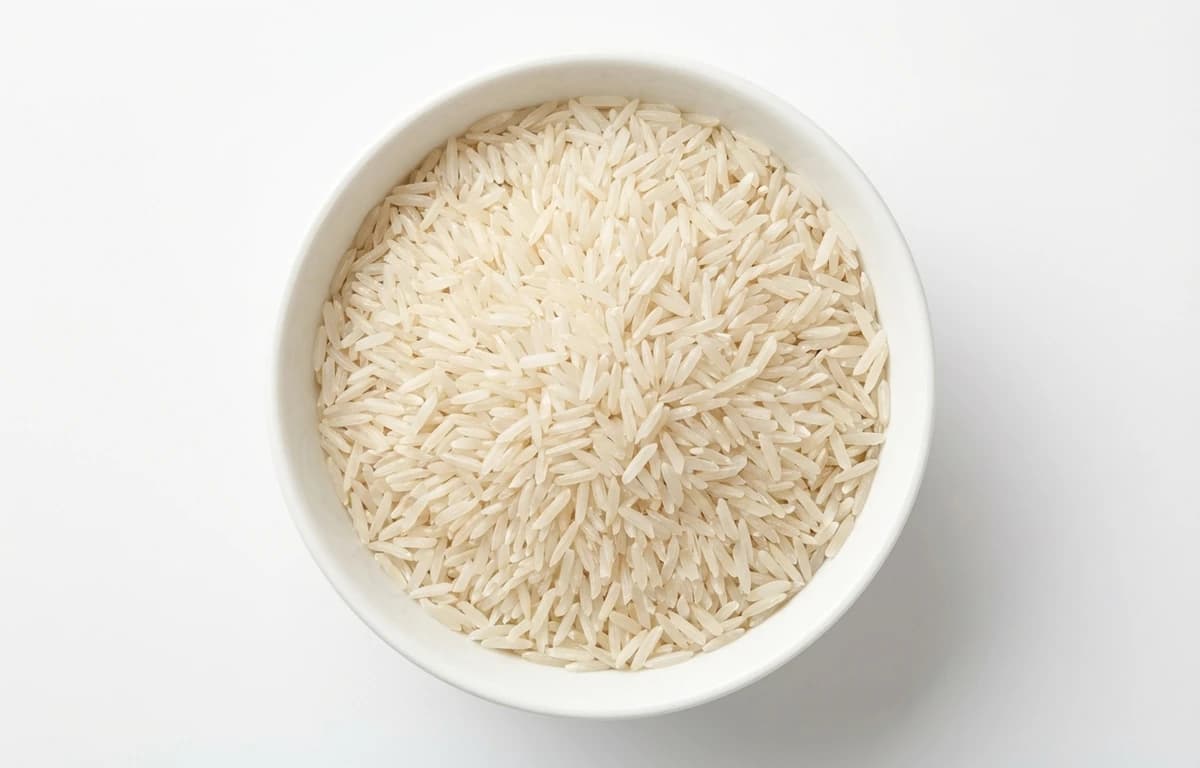
Browse recipes →Basmati rice has a distinct, delicate, and slightly nutty aroma and flavor, often described as 'popcorn-like.' Its grains are long and slender, and when cooked properly, they remain separate, light, and fluffy, not sticky.
Uncooked basmati rice should be stored in an airtight container in a cool, dry, and dark place, away from direct sunlight and moisture. This prevents pests and preserves its quality.
When stored properly in an airtight container, uncooked basmati rice can last for several years, often indefinitely, though its quality and aroma may diminish slightly over time. Cooked basmati rice should be refrigerated and consumed within 3-4 days.