
Spice
long pepper.
VegetarianVeganGluten-freeDairy-freeNut-freePeanut-freeSoy-freeEgg-freeShellfish-freeHoney-freeAlcohol-free
ALSO KNOWN AS
Indian long pepperpippalipiplithippili
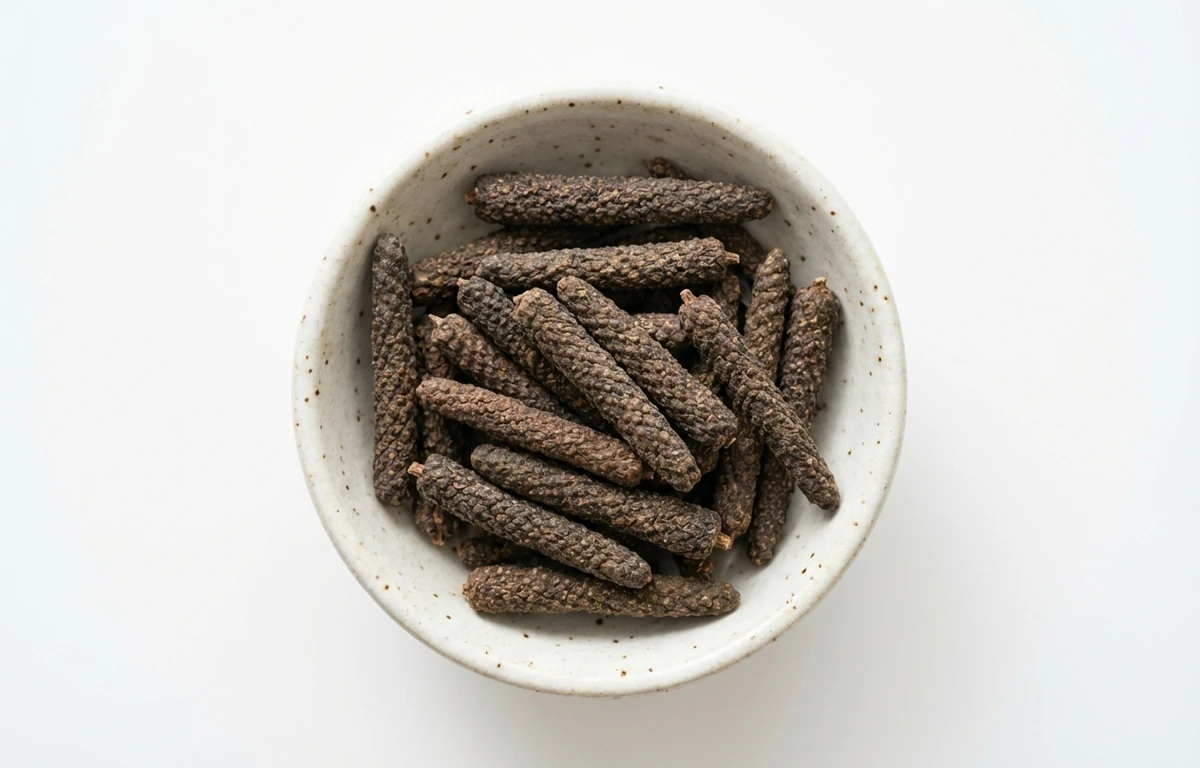
SERVING
CALORIES
290
PROTEIN
11.5g
CARBS
65g
FAT
3.5g
FIBER
18g
NUTRITION PROFILE · per 100 g
Everything in this ingredient.
MACRONUTRIENTS
Calories290kcal—
Protein11.5g23%
Carbohydrates65g24%
Fiber18g64%
Sugar1.5g3%
Total fat3.5g4%
Saturated fat0.50g3%
Cholesterol0mg0%
Water8.0g—
MINERALS
Sodium18mg1%
Potassium1100mg23%
Calcium450mg35%
Iron12mg67%
Magnesium190mg45%
Phosphorus295mg24%
Zinc1.8mg16%
Copper0.55mg61%
Manganese6.5mg283%
Selenium5.5µg10%
VITAMINS
Vitamin A0µg0%
Vitamin C15mg17%
Vitamin D0µg0%
Vitamin K1.0µg1%
Thiamin (B1)0.15mg13%
Riboflavin (B2)0.15mg12%
Niacin (B3)1.2mg8%
Vitamin B60.25mg15%
Folate (B9)15µg4%
%DV based on a 2,000 cal diet. Source: USDA FoodData Central. A dash in the %DV column means there’s no established Daily Value for that nutrient.
MEASUREMENT CONVERSIONS
How much is what.
1 cup144g
1 tablespoon9g
1 teaspoon3g
1 ml0.6g
1 liter600g
1 piece2g
HEALTH BENEFITS
Why eat it.
- ✓Contains piperine, which has potent anti-inflammatory and antioxidant properties.
- ✓Traditionally used in Ayurvedic medicine to support respiratory health, helping to alleviate coughs and congestion.
- ✓May enhance digestion by stimulating the secretion of digestive enzymes in the pancreas.
- ✓Can improve the bioavailability of other nutrients and compounds, such as curcumin from turmeric, enhancing their absorption.
COOKING TIPS
In the kitchen.
- 1Grind fresh using a mortar and pestle or a robust spice grinder; its elongated shape can jam standard pepper mills.
- 2Use in place of black pepper for a more complex, hotter, and slightly sweeter flavor with notes of cinnamon and nutmeg.
- 3Add whole peppers to slow-cooked dishes like stews, braises, or pickles to allow their flavor to infuse gradually.
- 4Pairs exceptionally well with rich meats, game, root vegetables, and can be used in some sweet applications like spiced desserts or mulled wine.
STORAGE
Keep it fresh.
- Store whole long peppers in an airtight container in a cool, dark, and dry place, away from direct sunlight and heat.
- When stored whole, it can maintain its potency for up to two years. Ground long pepper loses its flavor more quickly, so it's best to grind as needed.
FAQ
Frequently asked questions.
What are the health benefits of long pepper?
Long pepper contains piperine, known for its potent anti-inflammatory and antioxidant properties. It's traditionally used in Ayurvedic medicine to support respiratory health, alleviate coughs, and enhance digestion by stimulating digestive enzymes. It can also improve the absorption and bioavailability of other beneficial compounds, such as curcumin.
How does long pepper compare nutritionally to black pepper?
Nutritionally, long pepper is similar to black pepper, both being low in calories when used in typical spice quantities. Per 100g, long pepper has about 290 calories, 11.5g protein, 65g carbs, and 3.5g fat. Its primary health benefits come from compounds like piperine, which it shares with black pepper, but often in different concentrations and with a distinct flavor profile.
Is long pepper good for digestion?
Yes, long pepper is traditionally recognized for its digestive benefits. It's believed to stimulate the secretion of digestive enzymes in the pancreas, which can aid in breaking down food more efficiently and improving overall digestion. This can help alleviate issues like indigestion and bloating.
Is long pepper gluten-free?
Yes, long pepper in its pure, whole form is naturally gluten-free. As a whole spice, it does not contain wheat, barley, or rye. Always check labels if purchasing ground long pepper to ensure no cross-contamination or added ingredients.
Is long pepper vegan?
Yes, long pepper is a plant-based spice derived from the fruit of the Piper longum plant. It contains no animal products or by-products, making it suitable for a vegan diet. It's a natural ingredient from the plant kingdom.
Can diabetics eat long pepper?
When used as a spice in typical culinary amounts, long pepper is generally safe for diabetics. Its carbohydrate content is negligible per serving. While some traditional medicine suggests it may have benefits for metabolic health, it should not replace prescribed medication or dietary advice for managing diabetes.
How do you use long pepper in cooking?
Long pepper can be used whole, crushed, or ground. It's excellent in stews, braises, and curries, especially those with rich, savory flavors. It can also be infused into oils or vinegars, or used in spice blends for rubs and marinades. Grind it fresh for the best flavor and aroma.
What does long pepper taste like?
Long pepper has a complex flavor profile that is hotter and more pungent than black pepper, with earthy, musky, and slightly sweet undertones. It often carries notes of nutmeg, cinnamon, and cardamom, offering a unique warmth and aromatic depth to dishes.
How do you store long pepper?
Store whole long pepper in an airtight container in a cool, dark place away from direct sunlight and moisture. This helps preserve its volatile oils and flavor compounds. Ground long pepper should also be stored similarly but will lose its potency faster.
How long does long pepper last?
Whole long pepper can last for several years, typically 3-4 years, if stored properly in an airtight container. Ground long pepper has a shorter shelf life, usually retaining its peak flavor for about 6-12 months before its aromatic qualities begin to diminish. It won't spoil, but its potency will fade.



















