
Other
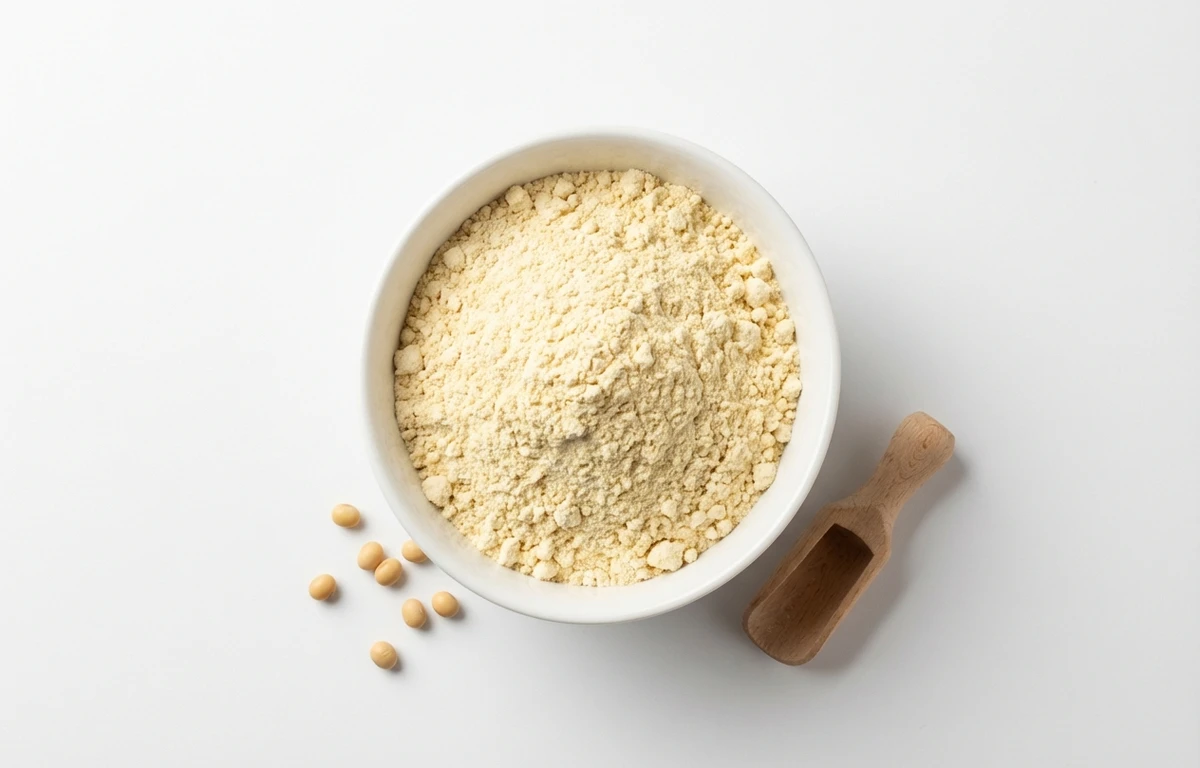
low-fat soy flour.
VegetarianVeganGluten-freeDairy-freeNut-freePeanut-freeSoy-freeEgg-freeShellfish-freeHoney-freeAlcohol-free
SERVING
CALORIES
372
PROTEIN
49.8g
CARBS
30.6g
FAT
8.9g
FIBER
16g
This ingredient is flagged as naturally gluten-free. Per 100 g, it provides 3.9 µg of vitamin K.
NUTRITION PROFILE · per 100 g
Everything in this ingredient.
MACRONUTRIENTS
Calories372kcal—
Protein49.8g100%
Carbohydrates30.6g11%
Fiber16g57%
Sugar9.3g19%
Total fat8.9g11%
Saturated fat1.3g6%
Trans fat0g—
Cholesterol0mg0%
Water4.6g—
MINERALS
Sodium9.0mg0%
Potassium2090mg44%
Calcium285mg22%
Iron8.2mg46%
Magnesium285mg68%
Phosphorus675mg54%
Zinc4.1mg37%
Copper1.6mg178%
Manganese3.1mg137%
Selenium58.9µg107%
VITAMINS
Vitamin A2.0µg0%
Vitamin C0mg0%
Vitamin D0µg0%
Vitamin E0.55mg4%
Vitamin K3.9µg3%
Thiamin (B1)1.1mg91%
Riboflavin (B2)0.28mg22%
Niacin (B3)3.0mg18%
Pantothenic acid (B5)1.6mg31%
Vitamin B61.1mg62%
Folate (B9)289µg72%
Vitamin B120µg0%
%DV based on a 2,000 cal diet. Source: USDA FoodData Central. A dash in the %DV column means there’s no established Daily Value for that nutrient.
MEASUREMENT CONVERSIONS
How much is what.
1 cup88g
1 tablespoon5.5g
1 teaspoon1.8g
1 ml0.4g
1 liter366.7g
HEALTH BENEFITS
Why eat it.
- ✓Excellent source of high-quality, complete plant-based protein, essential for muscle building and repair.
- ✓May help lower LDL ('bad') cholesterol levels, contributing to overall heart health.
COOKING TIPS
In the kitchen.
- 1In baking, substitute up to 25% of the regular flour with soy flour to increase protein and moisture content without significantly affecting texture.
- 2Use as a thickening agent for soups, gravies, and sauces due to its high water absorption capacity.
- 3Add a tablespoon to smoothies, oatmeal, or yogurt for an easy protein boost.
- 4Due to its distinct nutty flavor, it works well in savory dishes, breads, and baked goods with complementary flavors like chocolate or spices.
STORAGE
Keep it fresh.
- Store in an airtight container in a cool, dark, and dry place like a pantry for up to one year.
- For extended freshness, especially in warm climates, store in the refrigerator or freezer to prevent the small amount of remaining oil from becoming rancid.
FAQ
Frequently asked questions.
Is low-fat soy flour healthy?
Yes, low-fat soy flour is very healthy. It's an excellent source of high-quality, complete plant-based protein, essential for muscle building and repair. It's also rich in isoflavones, which may support bone and heart health, and is a good source of dietary fiber.
How much protein is in low-fat soy flour?
100g of low-fat soy flour contains approximately 49.81g of protein. This makes it an exceptionally high-protein flour, significantly contributing to daily protein intake, especially for plant-based diets.
Is low-fat soy flour vegan?
Yes, low-fat soy flour is 100% vegan. It is derived entirely from soybeans, a plant-based source, and contains no animal products or by-products.
How can I use low-fat soy flour in cooking?
Low-fat soy flour can be used to boost protein in various recipes. It can partially replace wheat flour in baked goods like breads, muffins, and pancakes, or be used as a thickener for soups and sauces. It's also great for breading or in protein shakes.
What does low-fat soy flour taste like?
Low-fat soy flour has a mild, slightly nutty flavor that is less pronounced than full-fat soy flour. When used in baking, it can impart a subtle beany taste, which is generally well-received, especially when combined with other flours.
What is the difference between low-fat soy flour and regular soy flour?
The primary difference is the fat content. Low-fat soy flour has most of its oil removed, resulting in a higher protein and carbohydrate concentration per serving compared to full-fat soy flour. This also gives it a longer shelf life and a milder flavor.



















