
Dairy
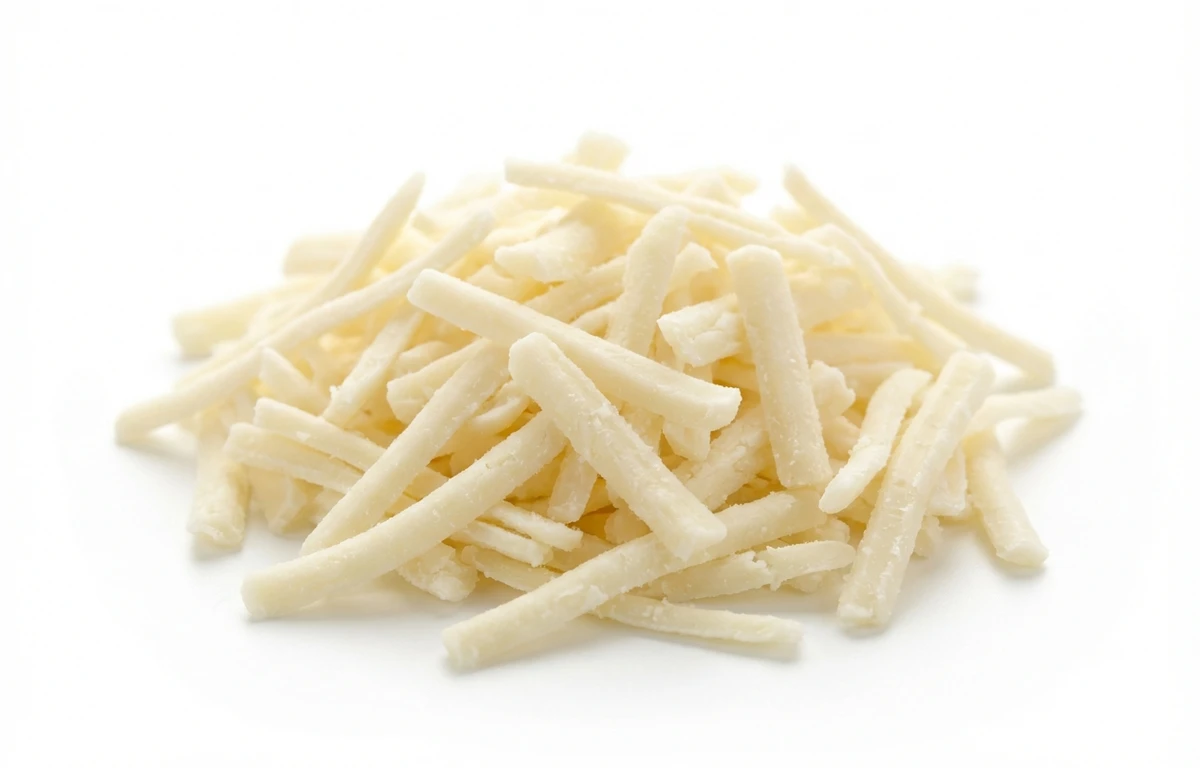
low-moisture mozzarella cheese.
VegetarianVeganGluten-freeDairy-freeNut-freePeanut-freeSoy-freeEgg-freeShellfish-freeHoney-freeAlcohol-freeFermented
ALSO KNOWN AS
low moisture mozzarellapizza mozzarella
SERVING
CALORIES
300
PROTEIN
28g
CARBS
2.3g
FAT
23.3g
FIBER
0g
NUTRITION PROFILE · per 100 g
Everything in this ingredient.
MACRONUTRIENTS
Calories300kcal—
Protein28g56%
Carbohydrates2.3g1%
Fiber0g0%
Sugar0.50g1%
Total fat23.3g30%
Saturated fat14.7g74%
Cholesterol68mg23%
Water45.7g—
MINERALS
Sodium669mg29%
Potassium95mg2%
Calcium731mg56%
Iron0.30mg2%
Magnesium6.0mg1%
Phosphorus117mg9%
Zinc0.70mg6%
Copper0.01mg1%
Manganese0mg0%
Selenium4.6µg8%
VITAMINS
Vitamin A186µg21%
Vitamin C0mg0%
Vitamin D0.30µg2%
Vitamin E0.06mg0%
Vitamin K1.0µg1%
Thiamin (B1)0.01mg1%
Riboflavin (B2)0.08mg6%
Niacin (B3)0.03mg0%
Pantothenic acid (B5)0.02mg0%
Vitamin B60.02mg1%
Folate (B9)2.3µg1%
Vitamin B120.21µg9%
%DV based on a 2,000 cal diet. Source: USDA FoodData Central. A dash in the %DV column means there’s no established Daily Value for that nutrient.
MEASUREMENT CONVERSIONS
How much is what.
1 cup113g
1 tablespoon7.1g
1 teaspoon2.4g
1 oz28.4g
1 lb453.6g
1 ml0.5g
1 liter470.8g
HEALTH BENEFITS
Why eat it.
- ✓Excellent source of calcium, which is vital for strong bones and teeth.
- ✓Rich in high-quality complete protein, essential for muscle repair and growth.
- ✓Contains phosphorus, which works with calcium to support bone health and energy metabolism.
- ✓Provides a good amount of Vitamin B12, important for nerve function and red blood cell formation.
COOKING TIPS
In the kitchen.
- 1Ideal for melting on pizza, in lasagna, or in baked pasta dishes due to its low water content, which prevents sogginess and promotes browning.
- 2For the best melting performance, buy a solid block and shred it yourself just before use. Pre-shredded varieties often contain anti-caking agents that can inhibit smooth melting.
- 3Allow the cheese to come to room temperature for about 20-30 minutes before baking to ensure it melts more evenly and smoothly.
- 4To achieve a classic 'cheese pull', use generous amounts and bake at a high temperature (around 425-475°F or 220-245°C).
STORAGE
Keep it fresh.
- Store in the refrigerator at or below 40°F (4°C), tightly wrapped in plastic wrap or in its original packaging to prevent it from drying out.
- For long-term storage, low-moisture mozzarella can be grated and frozen in an airtight container or freezer bag for up to 3 months.
FAQ
Frequently asked questions.
Is low-moisture mozzarella cheese healthy?
Low-moisture mozzarella is a good source of high-quality protein, calcium, phosphorus, and Vitamin B12, supporting bone health and muscle function. However, it is relatively high in calories and saturated fat, so it's best consumed in moderation as part of a balanced diet.
How much protein and calories are in low-moisture mozzarella cheese?
Per 100 grams, low-moisture mozzarella cheese contains approximately 300 calories and a significant 28 grams of protein. It also provides about 23.3 grams of fat and 2.3 grams of carbohydrates.
Is low-moisture mozzarella cheese good for weight loss?
While it's high in protein, which can aid satiety, low-moisture mozzarella cheese is also calorie-dense due to its fat content. It can be included in a weight-loss diet in controlled portions, but excessive consumption may hinder weight loss goals.
Is low-moisture mozzarella cheese lactose-free?
No, low-moisture mozzarella cheese is not lactose-free. As a dairy product, it contains lactose, though the aging process can reduce its content compared to fresh milk. Individuals with severe lactose intolerance may still experience symptoms.
Is low-moisture mozzarella cheese keto-friendly?
Yes, low-moisture mozzarella cheese is generally considered keto-friendly. With only about 2.3 grams of carbohydrates per 100 grams and a high fat and protein content, it fits well into a ketogenic diet.
Is low-moisture mozzarella cheese gluten-free?
Yes, low-moisture mozzarella cheese is naturally gluten-free. It is made from milk, rennet, and salt, none of which contain gluten. Always check labels for any added ingredients if you have severe gluten sensitivities.
What is low-moisture mozzarella cheese best used for?
Low-moisture mozzarella cheese is ideal for cooking applications where meltability and a slightly chewy texture are desired, such as on pizzas, lasagna, baked pasta dishes, and grilled cheese sandwiches. Its lower water content prevents dishes from becoming soggy.
How does low-moisture mozzarella cheese differ from fresh mozzarella?
Low-moisture mozzarella has a firmer texture, saltier taste, and a longer shelf life due to less water content. It melts and browns better, making it perfect for baking. Fresh mozzarella is softer, creamier, has a milder flavor, and is typically used in salads or dishes where its fresh texture is highlighted.
How should I store low-moisture mozzarella cheese?
Store low-moisture mozzarella cheese tightly wrapped in its original packaging or in an airtight container in the refrigerator. This helps prevent it from drying out and absorbing odors.
How long does low-moisture mozzarella cheese last?
An unopened block of low-moisture mozzarella cheese can last for several weeks in the refrigerator, typically until the 'best by' date. Once opened, it should be consumed within 1-2 weeks for best quality and safety. It can also be frozen for longer storage.



















