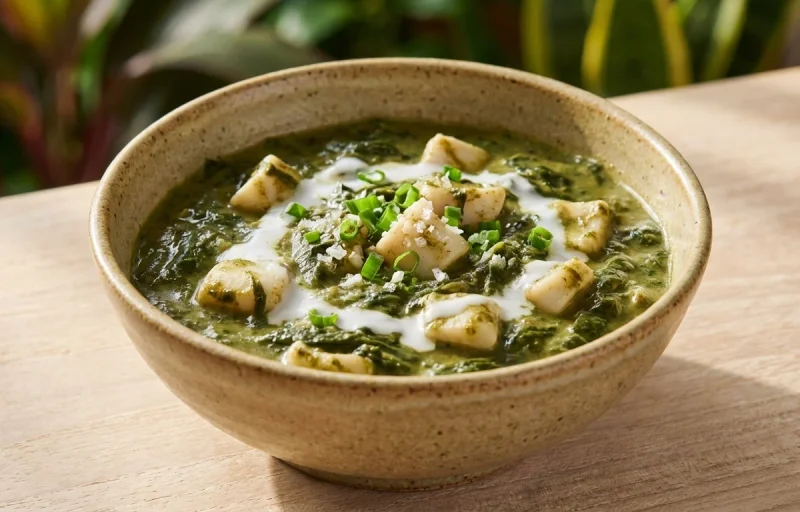
Other1 recipes
luau leaves.
VegetarianVeganGluten-freeDairy-freeNut-freePeanut-freeSoy-freeEgg-freeShellfish-freeHoney-freeAlcohol-freeHalalKosher
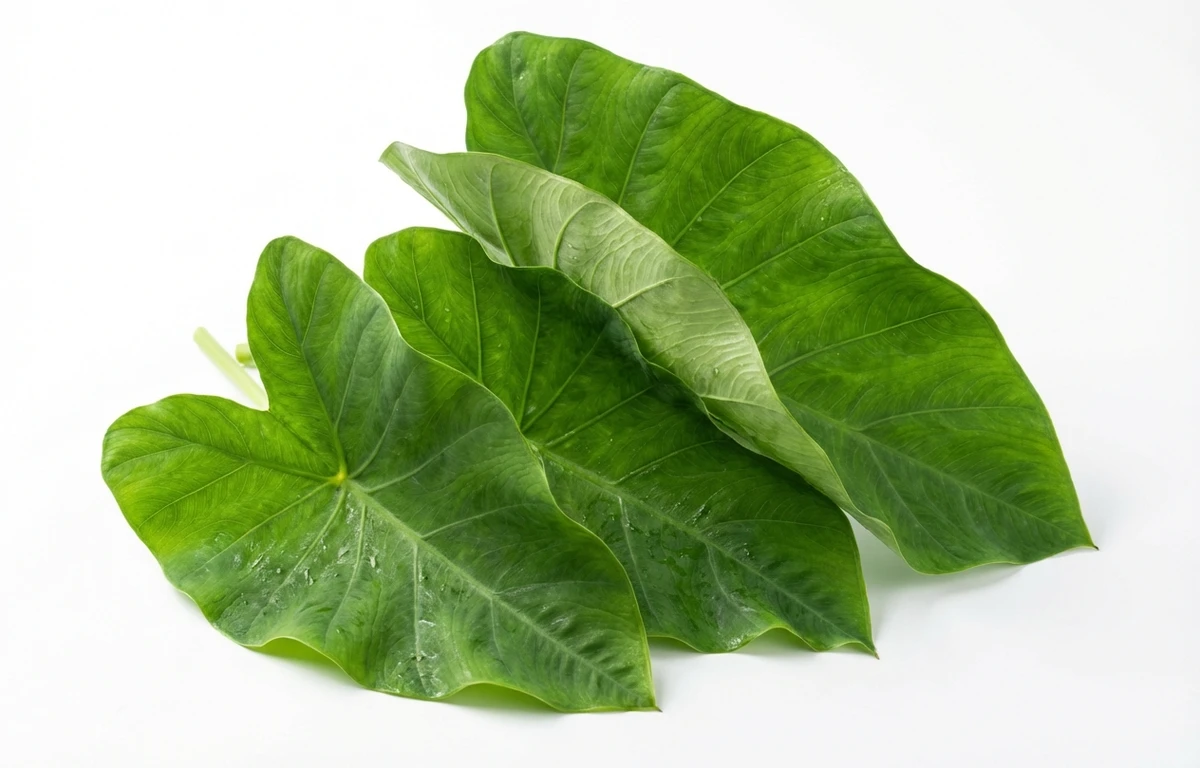
SERVING
CALORIES
42
PROTEIN
3.3g
CARBS
6.7g
FAT
0.74g
FIBER
3.7g
This ingredient is flagged as naturally gluten-free. Per 100 g, it provides 109 µg of vitamin K.
NUTRITION PROFILE · per 100 g
Everything in this ingredient.
MACRONUTRIENTS
Calories42kcal—
Protein3.3g7%
Carbohydrates6.7g2%
Fiber3.7g13%
Sugar1.1g2%
Total fat0.74g1%
Saturated fat0.15g1%
Cholesterol0mg0%
MINERALS
Sodium3.0mg0%
Potassium600mg13%
Calcium187mg14%
Iron2.2mg12%
Magnesium45mg11%
Phosphorus60mg5%
Zinc0.40mg4%
Copper0.15mg17%
Manganese0.45mg20%
Selenium0.90µg2%
VITAMINS
Vitamin A241µg27%
Vitamin C52mg58%
Vitamin D0µg0%
Vitamin E1.7mg11%
Vitamin K109µg90%
Thiamin (B1)0.15mg13%
Riboflavin (B2)0.45mg35%
Niacin (B3)0.50mg3%
Pantothenic acid (B5)0.15mg3%
Vitamin B60.15mg9%
Folate (B9)126µg32%
Vitamin B120µg0%
%DV based on a 2,000 cal diet. Source: USDA FoodData Central. A dash in the %DV column means there’s no established Daily Value for that nutrient.
MEASUREMENT CONVERSIONS
How much is what.
1 cup132g
1 tablespoon8.3g
1 teaspoon2.8g
1 ml0.6g
1 liter550g
1 piece10g
HEALTH BENEFITS
Why eat it.
- ✓Good source of potassium, which helps regulate blood pressure and fluid balance.
- ✓Provides dietary fiber, aiding in digestion and promoting gut health.
COOKING TIPS
In the kitchen.
- 1Crucially, luau leaves must be cooked thoroughly for at least 45-60 minutes to break down calcium oxalate crystals, which are toxic and cause severe throat irritation if undercooked.
- 2Remove the tough central stem and fibrous veins before cooking for a more tender result.
- 3Traditionally used to make Hawaiian laulau by wrapping them around pork or fish, or stewed with coconut milk for squid luau.
- 4Their flavor is similar to spinach when cooked and they absorb flavors well, making them ideal for stews and steamed dishes.
STORAGE
Keep it fresh.
- Store fresh, unwashed leaves in a plastic bag in the refrigerator's crisper drawer for up to 5 days.
- For long-term storage, blanch the leaves for 2 minutes, cool in an ice bath, then freeze in an airtight container for up to 6 months.
FAQ
Frequently asked questions.
How many calories and carbs are in luau leaves?
Per 100 grams, luau leaves contain approximately 42 calories and 6.7 grams of carbohydrates. They also offer about 3.34 grams of protein and only 0.74 grams of fat, making them a nutrient-dense, low-calorie vegetable.
Are luau leaves vegan and gluten-free?
Yes, luau leaves are naturally vegan, vegetarian, and gluten-free. As a plant-based vegetable, they fit well into various dietary preferences and restrictions without any animal products or gluten-containing ingredients.
Are luau leaves keto-friendly or low-carb?
With 6.7 grams of carbohydrates per 100 grams, luau leaves can be considered relatively low-carb, but may need to be consumed in moderation for strict ketogenic diets. They are a good option for general low-carb eating plans due to their high nutrient density.
How do you properly cook luau leaves?
Luau leaves must be cooked thoroughly to remove calcium oxalate crystals, which can cause irritation if eaten raw or undercooked. They are typically boiled for an extended period (at least 45 minutes to an hour) or slow-cooked in dishes like Hawaiian lau lau until very tender.
What do luau leaves taste like?
When properly cooked, luau leaves have a mild, earthy, and slightly spinach-like flavor, but with a creamier, more tender texture. They readily absorb the flavors of other ingredients they are cooked with, making them versatile in stews and curries.
Can you eat luau leaves raw?
No, luau leaves should never be eaten raw. They contain calcium oxalate crystals, which can cause severe irritation, burning, and swelling in the mouth and throat. Always cook them thoroughly until very tender before consumption to neutralize these compounds.
What are luau leaves commonly used for in cooking?
Luau leaves are a staple in Hawaiian cuisine, famously used in dishes like lau lau, where they wrap around meat and are slow-cooked. They are also used in stews, curries, and as a cooked green vegetable in various Pacific Island and Asian dishes, similar to spinach or collard greens.
RECIPES
Cook with luau leaves.
1 recipes · sorted by what’s quick