spice blend3 recipes
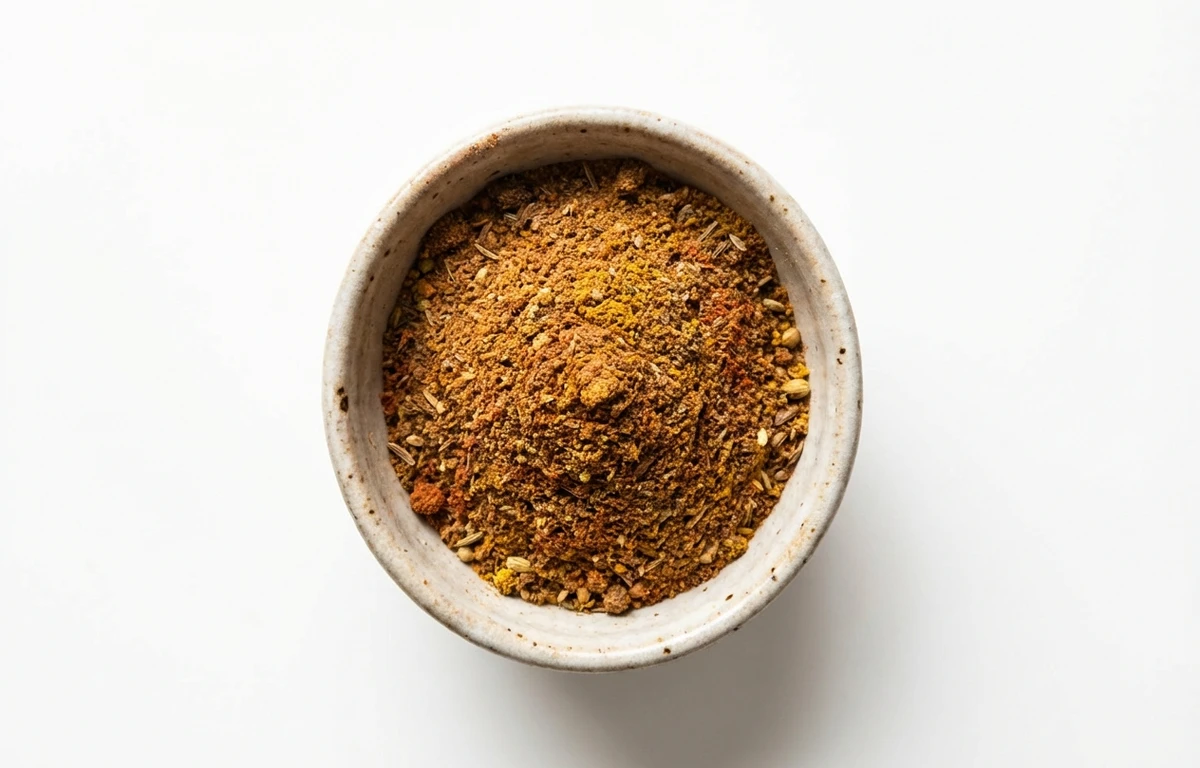
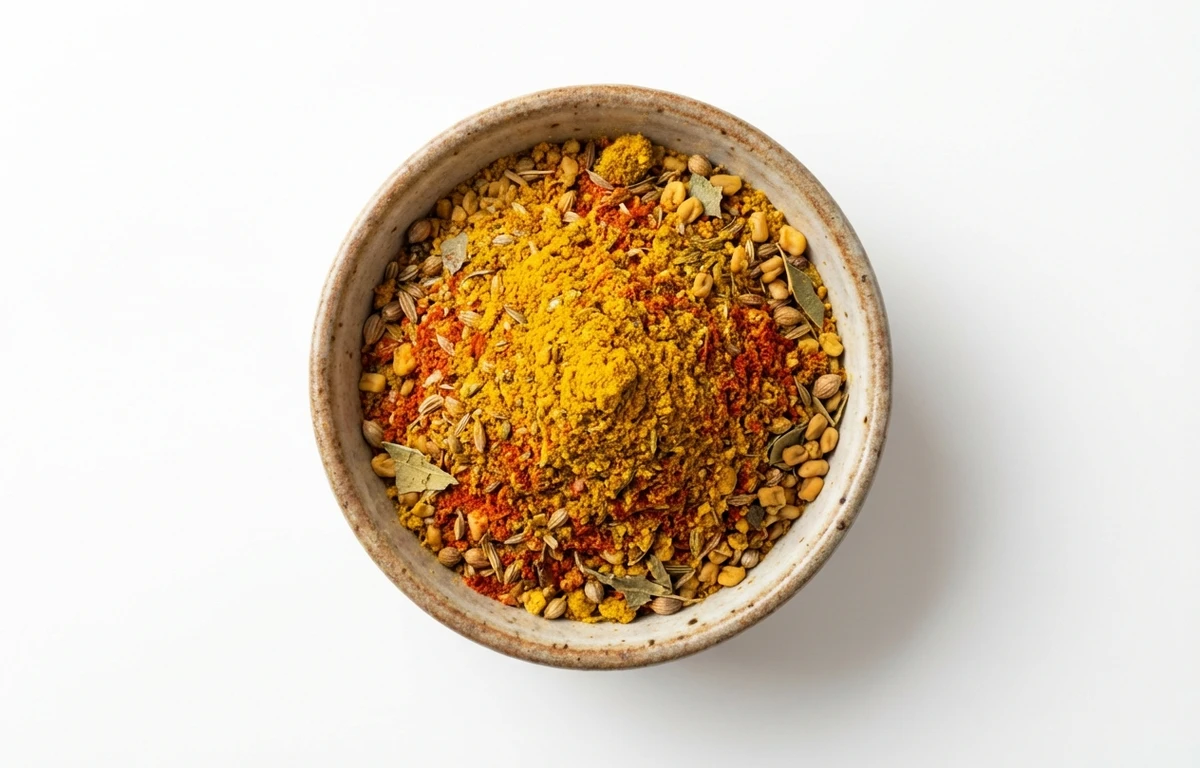
Madras Curry Powder.
VegetarianVeganGluten-freeDairy-freeNut-freePeanut-freeSoy-freeEgg-freeShellfish-freeHoney-freeAlcohol-free
SERVING
CALORIES
325
PROTEIN
12g
CARBS
45g
FAT
11g
FIBER
33g
NUTRITION PROFILE · per 100 g
Everything in this ingredient.
MACRONUTRIENTS
Calories325kcal—
Protein12g24%
Carbohydrates45g16%
Fiber33g118%
Sugar2.0g4%
Total fat11g14%
Saturated fat2.2g11%
Trans fat0g—
Cholesterol0mg0%
Water8.0g—
MINERALS
Sodium50mg2%
Potassium1540mg33%
Calcium470mg36%
Iron29mg161%
Magnesium250mg60%
Phosphorus280mg22%
Zinc4.0mg36%
Copper0.80mg89%
Manganese9.0mg391%
Selenium17µg31%
VITAMINS
Vitamin A0µg0%
Vitamin C11mg12%
Vitamin D0µg0%
Vitamin E22mg147%
Vitamin K100µg83%
Thiamin (B1)0.18mg15%
Riboflavin (B2)0.20mg15%
Niacin (B3)3.5mg22%
Pantothenic acid (B5)0.80mg16%
Vitamin B61.8mg106%
Folate (B9)56µg14%
Vitamin B120µg0%
%DV based on a 2,000 cal diet. Source: USDA FoodData Central. A dash in the %DV column means there’s no established Daily Value for that nutrient.
MEASUREMENT CONVERSIONS
How much is what.
1 cup100g
1 tablespoon6.3g
1 teaspoon2.1g
1 oz28.4g
1 lb453.6g
1 ml0.5g
1 liter450g
HEALTH BENEFITS
Why eat it.
- ✓Potent anti-inflammatory properties from high turmeric content
- ✓Rich in antioxidants that help combat oxidative stress
- ✓Supports digestive health through carminative spices like cumin
- ✓May improve heart health by helping manage cholesterol levels
- ✓Excellent source of dietary iron and manganese
COOKING TIPS
In the kitchen.
- 1Bloom the powder in hot oil or ghee first to release its full flavor profile
- 2Add early in the cooking process for deep flavor or late for brighter aroma
- 3Balance the heat of the powder with coconut milk, yogurt, or a squeeze of lime
STORAGE
Keep it fresh.
- Store in an airtight container to preserve volatile aromatic oils
- Keep in a cool, dark place away from direct sunlight and moisture
- Avoid storing directly above the stove where heat can degrade flavor
FAQ
Frequently asked questions.
How long does Madras curry powder last?
It typically lasts 1-2 years if stored correctly, though it will gradually lose its potency and aroma over time.
Is Madras curry powder hotter than regular curry powder?
Yes, Madras curry powder is characterized by a higher chili content, making it significantly spicier than standard yellow curry powder.
Can I freeze Madras curry powder?
It is not recommended as moisture from the freezer can cause clumping and flavor degradation; a cool, dry pantry is superior.
What is the best substitute for Madras curry powder?
You can use standard curry powder and add extra cayenne pepper or crushed red chili flakes to match the heat level.
Does Madras curry powder contain gluten?
Pure spice blends are naturally gluten-free, but always check labels for anti-caking agents or potential cross-contamination.
How can I tell if my curry powder has gone bad?
If the color has faded from vibrant orange-red to a dull brown, or if the sharp, pungent aroma is weak, it should be replaced.
What are the primary ingredients in this blend?
It usually contains turmeric, coriander, cumin, fenugreek, black pepper, and a high proportion of dried red chilies.
How should I use it in everyday cooking?
It is ideal for meat or vegetable curries, lentil soups (dal), or as a spicy dry rub for roasted cauliflower or chicken.
Is Madras curry powder the same as Garam Masala?
No, Madras curry powder is a complete seasoning with turmeric and chili, while Garam Masala is a finishing spice blend focused on 'warm' spices like cinnamon and cloves.
Does it contain salt?
Most high-quality Madras curry powders are pure spice blends without added salt, but some commercial brands may include it as a filler.
RECIPES
Cook with madras curry powder.
3 recipes · sorted by what’s quick