
Loading...
Per 100g
Nutrition data source: USDA FoodData Central
Common measurement equivalents in grams
When stored in an airtight container in a cool, dark place, it typically lasts 12 to 24 months before losing its potency and color.
Yes, it is often called 'poor man's saffron' because it provides a similar golden-yellow color, though the flavor is more floral and less pungent than saffron.
No, ensure you are using 'food-grade' powder specifically from Tagetes or Calendula species. Ornamental marigolds from florists may be treated with pesticides.
It has a mild, slightly bitter, and earthy flavor with distinct floral notes.
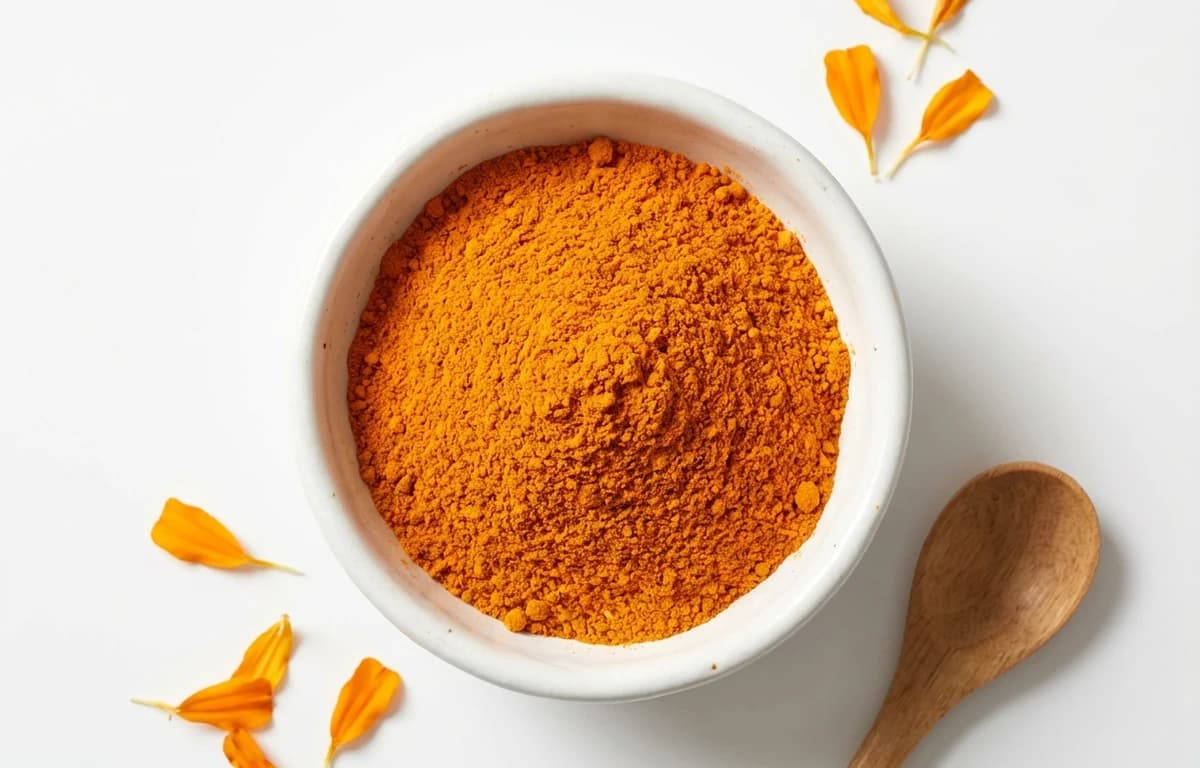
Look for a vibrant orange or deep yellow color. A dull or brownish color indicates age or poor drying processes.
It is not recommended to freeze the powder as moisture from condensation can ruin the texture and flavor; dry storage is superior.
It is excellent in herbal teas, infused into oils, added to vegan 'egg' dishes for color, or mixed into rice and grain dishes.
It is generally allergen-free, but individuals allergic to the Asteraceae/Compositae family (like ragweed or daisies) should use it with caution.
It is made by drying the petals of the marigold flower at low temperatures and then grinding them into a fine powder.
Marigold Powder is a versatile ingredient found in cuisines around the world. With 320 calories per 100g and 11.5 grams of protein, it's a nutritious addition to many dishes.
Explore more ingredients in the herb/spice category with complete nutrition information.
View all herb/spice →Discover 1 recipes featuring marigold powder with step-by-step instructions.
Browse recipes →Yes, it is frequently used in topical applications and DIY skincare for its soothing and anti-inflammatory properties.