
Loading...
Per 100g
Nutrition data source: USDA FoodData Central
Common measurement equivalents in grams
Yes, yellow onions are very healthy. They are rich in antioxidants, prebiotics for gut health, and Vitamin C, supporting immune function. They also have anti-inflammatory properties and may contribute to heart health by helping lower blood pressure.
Per 100g, yellow onions contain approximately 40 calories, 1.1g protein, 9.3g carbohydrates, and 0.1g fat. They are a low-calorie vegetable that adds flavor and nutrients without significant fat or protein.
Yes, yellow onions contain prebiotics, specifically fructans, which are beneficial fibers that feed the good bacteria in your gut. This supports a healthy gut microbiome and can aid digestion.
Yes, yellow onions are naturally gluten-free and vegan. They are a plant-based vegetable and do not contain any animal products or gluten-containing grains, making them suitable for various dietary needs.
While onions contain carbohydrates (around 9.3g per 100g), they can be used in moderation on a keto diet. Small amounts, especially when cooked, can add flavor to dishes without significantly impacting your daily carb intake.
Yes, yellow onions are generally safe for diabetics. They have a relatively low glycemic index and their fiber content can help manage blood sugar levels. However, as with all foods, portion control is important.
To prepare, peel the outer papery skin and trim the ends. Yellow onions can be chopped, sliced, or diced and are incredibly versatile for cooking. They are commonly sautéed, caramelized, roasted, or added to soups, stews, and sauces to build flavor.
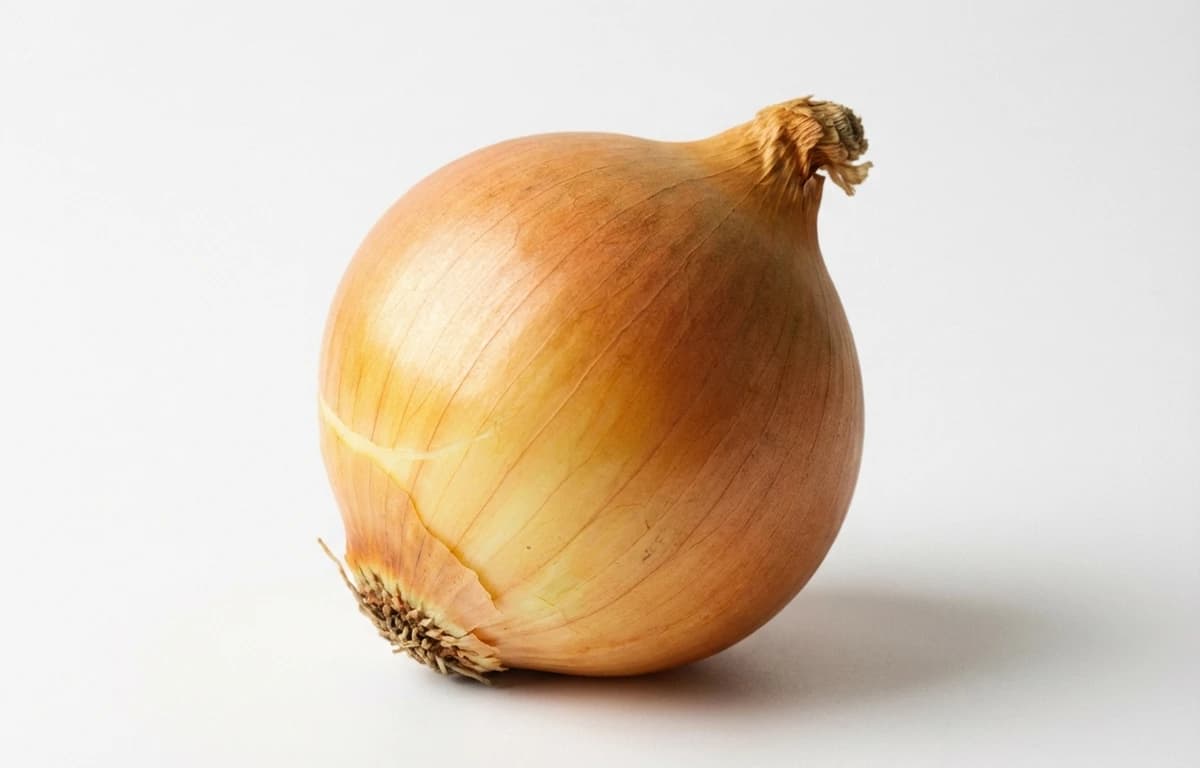
medium yellow onion is a versatile ingredient found in cuisines around the world. With 40 calories per 100g and 1.1 grams of protein, it's a nutritious addition to many dishes.
Explore more ingredients in the vegetable category with complete nutrition information.
View all vegetable →Discover 1 recipes featuring medium yellow onion with step-by-step instructions.
Browse recipes →Raw yellow onions have a pungent, sharp, and slightly spicy flavor due to sulfur compounds. When cooked, especially sautéed or caramelized, they become much sweeter, milder, and develop a rich, savory depth.
Store whole, unpeeled yellow onions in a cool, dry, dark, and well-ventilated place, like a pantry or cupboard. Avoid storing them in the refrigerator, as the moisture can make them soft and sprout faster.
A fresh yellow onion should be firm, have dry, papery skin, and feel heavy for its size. Avoid onions that are soft, mushy, have dark spots, mold, or a strong, unpleasant odor, as these are signs of spoilage.