dairy product1 recipes
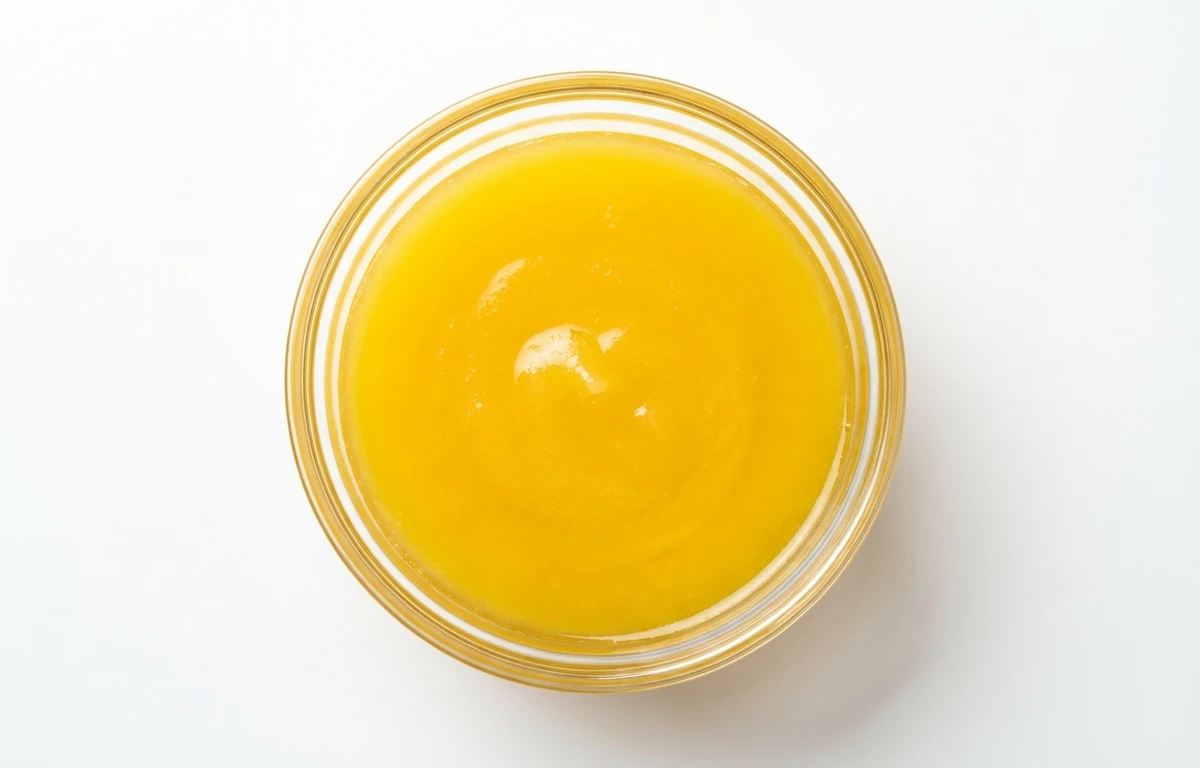
Melted Ghee.
VegetarianVeganGluten-freeDairy-freeNut-freePeanut-freeSoy-freeEgg-freeShellfish-freeHoney-freeAlcohol-free
SERVING
CALORIES
899
PROTEIN
0g
CARBS
0g
FAT
99.9g
FIBER
0g
NUTRITION PROFILE · per 100 g
Everything in this ingredient.
MACRONUTRIENTS
Calories899kcal—
Protein0g0%
Carbohydrates0g0%
Fiber0g0%
Sugar0g0%
Total fat99.9g128%
Saturated fat61.9g310%
Trans fat4.0g—
Cholesterol256mg85%
Water0.10g—
MINERALS
Sodium2.0mg0%
Potassium5.0mg0%
Calcium4.0mg0%
Iron0.01mg0%
Magnesium0mg0%
Phosphorus3.0mg0%
Zinc0.04mg0%
Copper0mg0%
Manganese0mg0%
Selenium0.90µg2%
VITAMINS
Vitamin A930µg103%
Vitamin C0mg0%
Vitamin D2.8µg14%
Vitamin E2.8mg19%
Vitamin K8.6µg7%
Thiamin (B1)0mg0%
Riboflavin (B2)0mg0%
Niacin (B3)0mg0%
Pantothenic acid (B5)0mg0%
Vitamin B60mg0%
Folate (B9)0µg0%
Vitamin B120µg0%
%DV based on a 2,000 cal diet. Source: USDA FoodData Central. A dash in the %DV column means there’s no established Daily Value for that nutrient.
MEASUREMENT CONVERSIONS
How much is what.
1 cup0.5g
1 tablespoon7.4g
1 teaspoon22.1g
1 oz3.5g
1 lb0.2g
1 ml108.7g
1 liter0.1g
HEALTH BENEFITS
Why eat it.
- ✓Rich in fat-soluble vitamins A, D, E, and K
- ✓Contains butyric acid, a short-chain fatty acid beneficial for gut health
- ✓High smoke point, making it suitable for high-heat cooking
- ✓Source of conjugated linoleic acid (CLA), which may have health benefits
- ✓Lactose and casein-free, often tolerated by those with dairy sensitivities
COOKING TIPS
In the kitchen.
- 1Use for sautéing, frying, and roasting due to its high smoke point.
- 2Adds a rich, nutty flavor to dishes, especially in Indian cuisine.
- 3Can be used as a substitute for butter or oil in most recipes.
STORAGE
Keep it fresh.
- Store in an airtight container in a cool, dark place.
- Does not require refrigeration and can last for months at room temperature.
- Ensure no moisture enters the container to prevent spoilage.
FAQ
Frequently asked questions.
Is melted ghee healthy?
Melted ghee is a nutrient-dense fat containing fat-soluble vitamins A, D, E, and K. It also contains butyric acid, which supports gut health and reduces inflammation. However, because it is 100% fat and high in calories, it should be consumed in moderation as part of a balanced diet.
How many calories and fat are in melted ghee?
Melted ghee is very calorie-dense, providing approximately 899 calories per 100g. It consists of 99.9g of fat and contains zero carbohydrates and zero protein, making it a pure source of dietary lipid.
Is melted ghee vegan?
No, melted ghee is not vegan. It is a dairy product made from cow's milk butter. While the milk solids are removed during processing, it remains an animal-derived product.
Can people with lactose intolerance consume melted ghee?
Yes, most people with lactose or casein sensitivities can tolerate ghee. The clarification process removes the milk solids (lactose and casein), leaving behind pure butterfat that is generally safe for those with dairy allergies or intolerances.
Is melted ghee keto-friendly?
Yes, melted ghee is highly keto-friendly and a staple in low-carb diets. Since it contains zero carbohydrates and is composed entirely of fat, it helps individuals maintain ketosis while providing a rich, nutty flavor to meals.
What is the smoke point of melted ghee and why does it matter?
Melted ghee has a high smoke point of about 485°F (250°C), which is significantly higher than butter or many vegetable oils. This makes it ideal for high-heat cooking methods like frying, searing, and sautéing without the fat breaking down or burning.
How do you use melted ghee in cooking?
Melted ghee can be used as a 1:1 replacement for butter or cooking oils. It is excellent for roasting vegetables, basting meats, or as a flavorful drizzle over popcorn, rice, and steamed vegetables.
How should I store melted ghee and how long does it last?
Melted ghee should be stored in an airtight container in a cool, dark place. It is shelf-stable and can last for 3 to 6 months at room temperature, or up to a year if kept in the refrigerator to prevent oxidation.
How do I know if melted ghee has gone bad?
You can tell ghee has spoiled if it develops a sour, rancid, or unpleasant odor. While it is naturally yellow, any signs of mold or a significant change in color to white or green indicate that moisture has entered the jar and it should be discarded.
What are the benefits of the butyric acid found in ghee?
Butyric acid is a short-chain fatty acid that serves as a primary energy source for the cells in your colon. It helps support a healthy gut barrier, promotes better digestion, and has been linked to anti-inflammatory effects in the digestive tract.
RECIPES
Cook with melted ghee.
1 recipes · sorted by what’s quick