
Other
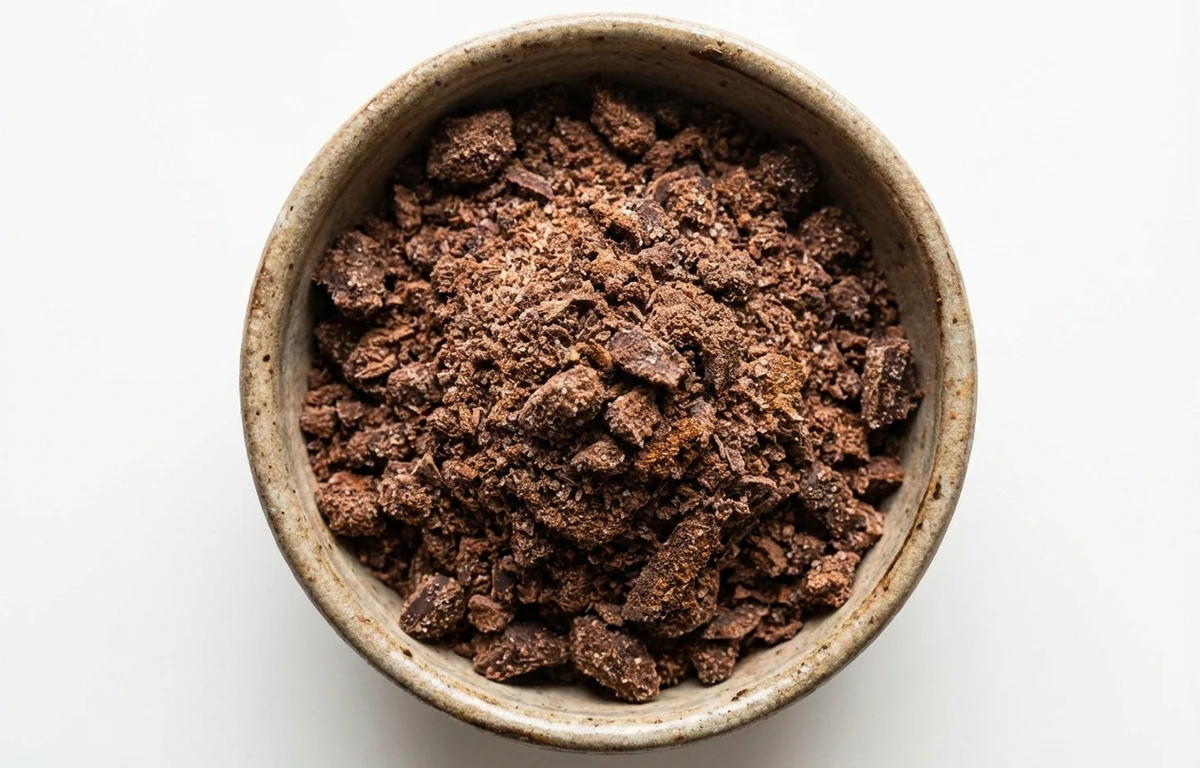
mexican chocolate.
VegetarianVeganGluten-freeDairy-freeNut-freePeanut-freeSoy-freeEgg-freeShellfish-freeHoney-freeAlcohol-freeFermented
ALSO KNOWN AS
chocolate de mesamexican style chocolate
SERVING
CALORIES
460
PROTEIN
5.0g
CARBS
72g
FAT
18g
FIBER
6.5g
This ingredient is flagged as naturally gluten-free. Per 100 g, it provides 2.0 µg of vitamin K.
NUTRITION PROFILE · per 100 g
Everything in this ingredient.
MACRONUTRIENTS
Calories460kcal—
Protein5.0g10%
Carbohydrates72g26%
Fiber6.5g23%
Sugar64g128%
Total fat18g23%
Saturated fat11g55%
Trans fat0g—
Cholesterol2.0mg1%
Water1.5g—
MINERALS
Sodium45mg2%
Potassium420mg9%
Calcium80mg6%
Iron4.5mg25%
Magnesium140mg33%
Phosphorus160mg13%
Zinc1.8mg16%
Copper0.90mg100%
Manganese1.2mg52%
Selenium2.5µg5%
VITAMINS
Vitamin A5.0µg1%
Vitamin C0mg0%
Vitamin D0µg0%
Vitamin E1.2mg8%
Vitamin K2.0µg2%
Thiamin (B1)0.05mg4%
Riboflavin (B2)0.12mg9%
Niacin (B3)0.60mg4%
Pantothenic acid (B5)0.30mg6%
Vitamin B60.04mg2%
Folate (B9)12µg3%
Vitamin B120.10µg4%
%DV based on a 2,000 cal diet. Source: USDA FoodData Central. A dash in the %DV column means there’s no established Daily Value for that nutrient.
MEASUREMENT CONVERSIONS
How much is what.
1 cup140g
1 tablespoon9g
1 teaspoon3g
1 oz28.4g
1 lb453.6g
1 piece90g
HEALTH BENEFITS
Why eat it.
- ✓Cocoa can improve mood by stimulating endorphins
- ✓Provides a source of dietary magnesium
- ✓Contains iron which supports oxygen transport in blood
COOKING TIPS
In the kitchen.
- 1Chop or grate the chocolate before adding to liquids for faster melting
- 2Whisk vigorously (traditionally with a molinillo) to create a frothy top
- 3Do not boil the chocolate directly; melt it into hot milk or water
STORAGE
Keep it fresh.
- Store in a cool, dry place away from direct sunlight
- Keep in an airtight container to prevent absorption of other odors
- Avoid refrigeration as it can cause sugar bloom and texture changes
FAQ
Frequently asked questions.
How long does Mexican chocolate last?
When stored in a cool, dry place, it can last for 1 to 2 years. If it develops a white coating (bloom), it is still safe to eat but the texture may be slightly altered.
What is the difference between Mexican chocolate and regular chocolate?
Mexican chocolate has a much grainier texture because the sugar is not fully refined, and it is flavored with cinnamon and often ground almonds.
Can I substitute regular semi-sweet chocolate for Mexican chocolate?
Yes, substitute 1 ounce of Mexican chocolate with 1 ounce of semi-sweet chocolate plus 1/2 teaspoon of ground cinnamon and a drop of almond extract.
Is Mexican chocolate vegan?
Generally no. Most major commercial brands like Abuelita and Ibarra contain dairy products or are processed on equipment that handles milk.
Does Mexican chocolate contain nuts?
Yes, traditional Mexican chocolate often includes ground almonds as a key ingredient for flavor and texture.
How do you prepare Mexican hot chocolate?
Dissolve the chocolate tablets in hot milk or water over medium heat, then whisk until frothy using a molinillo or a standard whisk.
Can Mexican chocolate be used in savory dishes?
Yes, it is a classic ingredient in savory mole sauces, providing depth, color, and a hint of spice and sweetness.
Why is Mexican chocolate so grainy?
The graininess comes from the minimally processed cocoa nibs and the large crystals of granulated sugar that are not fully emulsified.
Is Mexican chocolate gluten-free?
Most brands are naturally gluten-free, but you should check labels for cross-contamination warnings if you have a severe allergy.
What are the best pairings for Mexican chocolate?
It pairs excellently with chili peppers, cinnamon, vanilla, coffee, and citrus fruits like orange.



















