vegetable8 recipes
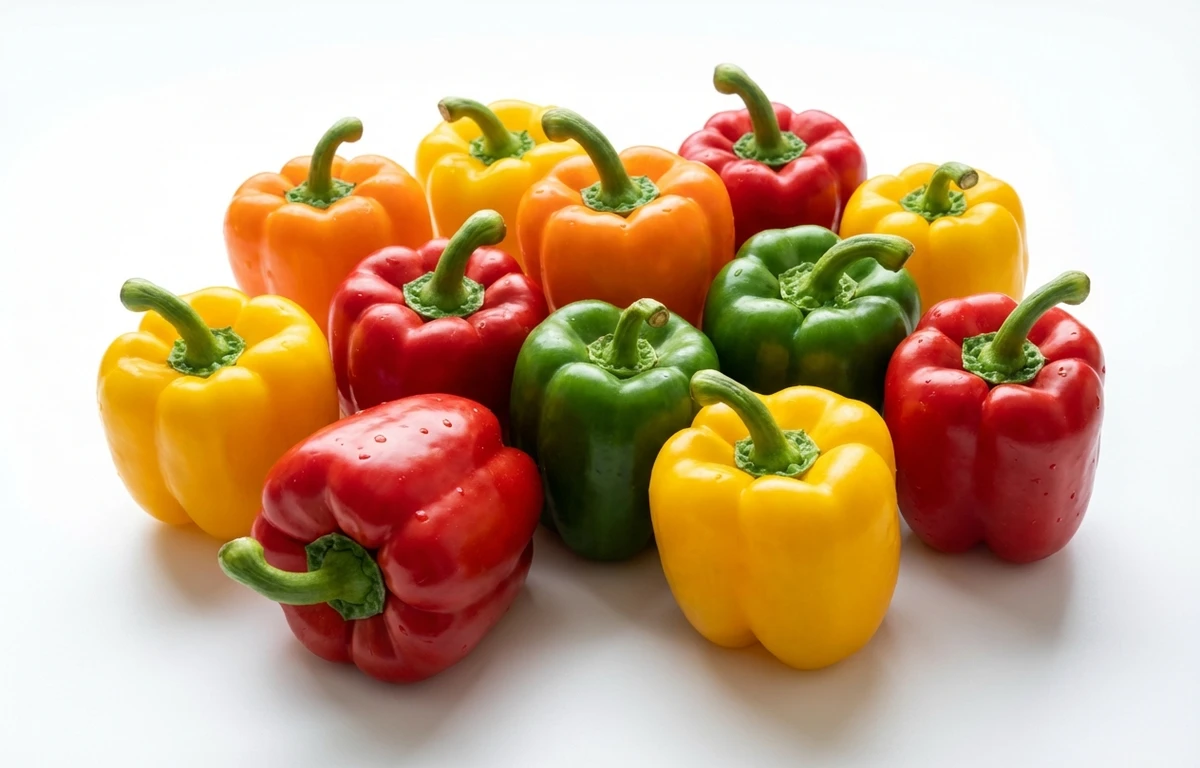
Mixed Bell Peppers.
VegetarianVeganGluten-freeDairy-freeNut-freePeanut-freeSoy-freeEgg-freeShellfish-freeHoney-freeAlcohol-free
SERVING
CALORIES
31
PROTEIN
1.0g
CARBS
6.0g
FAT
0.30g
FIBER
2.1g
NUTRITION PROFILE · per 100 g
Everything in this ingredient.
MACRONUTRIENTS
Calories31kcal—
Protein1.0g2%
Carbohydrates6.0g2%
Fiber2.1g8%
Sugar4.2g8%
Total fat0.30g0%
Saturated fat0.03g0%
Water92.2g—
MINERALS
Sodium3.0mg0%
Potassium211mg4%
Calcium10mg1%
Iron0.30mg2%
Magnesium12mg3%
Phosphorus26mg2%
Zinc0.10mg1%
Copper0.07mg8%
Manganese0.12mg5%
Selenium0.10µg0%
VITAMINS
Vitamin A157µg17%
Vitamin C128mg142%
Vitamin E1.6mg11%
Vitamin K7.4µg6%
Thiamin (B1)0.05mg4%
Riboflavin (B2)0.05mg4%
Niacin (B3)0.90mg6%
Pantothenic acid (B5)0.20mg4%
Vitamin B60.30mg18%
Folate (B9)26µg7%
%DV based on a 2,000 cal diet. Source: USDA FoodData Central. A dash in the %DV column means there’s no established Daily Value for that nutrient.
MEASUREMENT CONVERSIONS
How much is what.
1 oz3.5g
1 lb0.2g
HEALTH BENEFITS
Why eat it.
- ✓Excellent source of Vitamin C, boosting immunity.
- ✓Rich in antioxidants like carotenoids, protecting cells from damage.
- ✓Supports eye health due to high Vitamin A (beta-carotene) content.
- ✓May help reduce inflammation.
- ✓Low in calories and high in fiber, aiding in weight management.
COOKING TIPS
In the kitchen.
- 1Bell peppers are versatile and can be enjoyed raw in salads or as a snack with dips.
- 2They are excellent for stir-frying, roasting, grilling, or stuffing.
- 3Different colors offer slightly different flavors; green are more bitter, while red, yellow, and orange are sweeter.
STORAGE
Keep it fresh.
- Store unwashed bell peppers in the crisper drawer of your refrigerator for up to 1-2 weeks.
- Avoid storing them near ethylene-producing fruits like apples or bananas, as this can speed up spoilage.
- For longer storage, bell peppers can be chopped and frozen for several months.
FAQ
Frequently asked questions.
Are mixed bell peppers healthy?
Yes, mixed bell peppers are highly nutritious and low in calories. They are an exceptional source of Vitamin C, providing more than 100% of the daily recommended intake in a single serving, which helps boost immunity and skin health.
Which color bell pepper is the healthiest?
While all colors are healthy, red bell peppers are generally considered the most nutrient-dense. Because they stay on the vine longest, they contain higher concentrations of vitamins and antioxidants, including nearly double the Vitamin C of green peppers.
Are mixed bell peppers good for weight loss?
Absolutely. With only 31 calories per 100g and a high water content, they are a high-volume, low-calorie food. Their fiber content also aids in digestion and helps you feel full for longer periods.
Are bell peppers keto-friendly?
Yes, bell peppers are keto-friendly. They contain approximately 6g of carbohydrates per 100g, and when fiber is subtracted, the net carb count is low enough to fit into most ketogenic meal plans in moderate portions.
Can diabetics eat mixed bell peppers?
Yes, they are an excellent choice for diabetics due to their low glycemic index. The fiber in bell peppers helps slow the absorption of sugar, preventing sharp spikes in blood glucose levels.
What is the difference in taste between the different colors?
Green peppers are harvested earlier and have a slightly bitter, earthy flavor. Red, orange, and yellow peppers are fully ripe, offering a much sweeter and fruitier taste profile that is ideal for both raw and cooked dishes.
Can you eat bell peppers raw?
Yes, eating bell peppers raw is very common and healthy. Consuming them raw preserves their heat-sensitive Vitamin C content, which can be partially lost during high-heat cooking methods.
How do you store mixed bell peppers to keep them fresh?
Store whole, unwashed bell peppers in the crisper drawer of your refrigerator in a breathable or mesh bag; they typically last 1 to 2 weeks. Once cut, they should be stored in an airtight container and consumed within 3 to 5 days.
Can you freeze mixed bell peppers?
Yes, bell peppers freeze very well. Simply core and slice them, then freeze them in a single layer on a baking sheet before transferring to a freezer bag. Note that they will lose their crispness, so frozen peppers are best used for cooked dishes like stir-fries or soups.
How can you tell if a bell pepper has gone bad?
A fresh bell pepper should have firm, shiny skin and feel heavy for its size. Signs of spoilage include soft or sunken spots, wrinkled skin, a slimy texture, or any visible mold, especially around the stem.
RECIPES
Cook with mixed bell peppers.
8 recipes · sorted by what’s quick