
Other
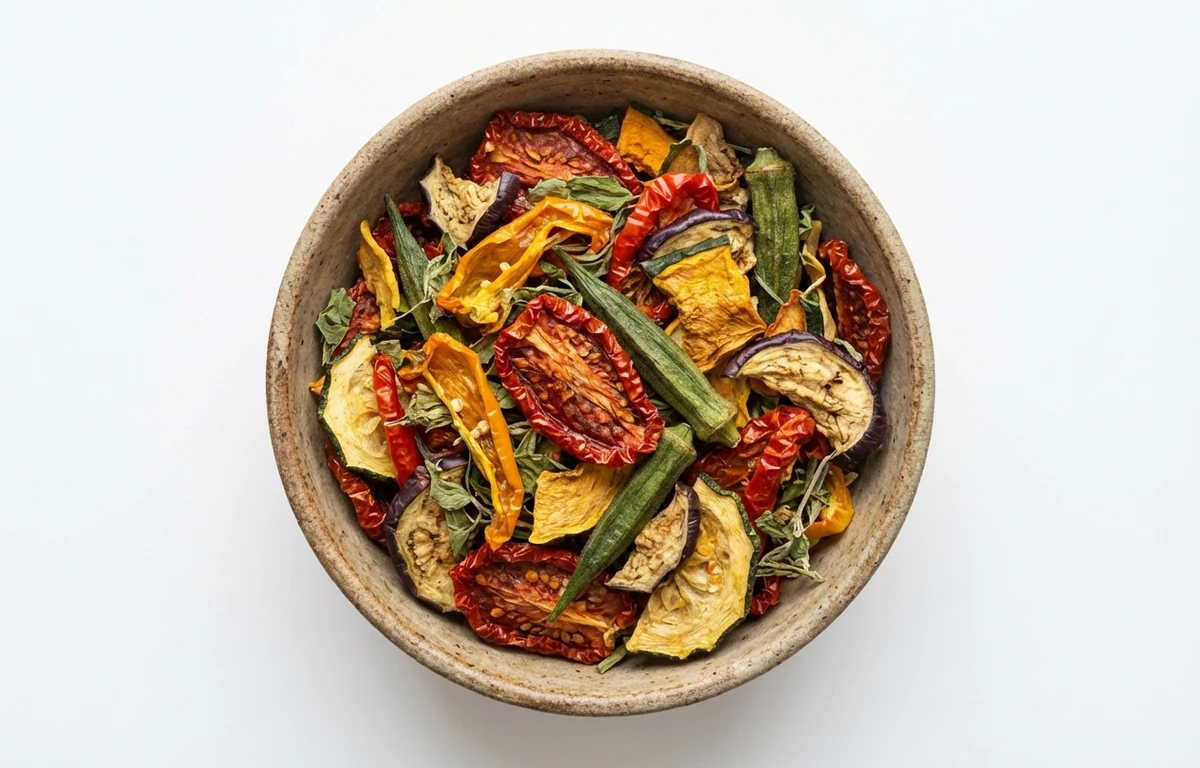
mixed dried desert vegetables.
VegetarianVeganGluten-freeDairy-freeNut-freePeanut-freeSoy-freeEgg-freeShellfish-freeHoney-freeAlcohol-free
ALSO KNOWN AS
dried desert vegdried ker sangri mixRajasthani dried vegetablesdried wild berries and podssukhi desert sabzi
SERVING
CALORIES
310
PROTEIN
12.5g
CARBS
58g
FAT
2.2g
FIBER
18.5g
This ingredient is flagged as naturally gluten-free. Per 100 g, it provides 15 µg of vitamin K.
NUTRITION PROFILE · per 100 g
Everything in this ingredient.
MACRONUTRIENTS
Calories310kcal—
Protein12.5g25%
Carbohydrates58g21%
Fiber18.5g66%
Sugar7.2g14%
Total fat2.2g3%
Saturated fat0.40g2%
Trans fat0g—
Cholesterol0mg0%
Water10g—
MINERALS
Sodium45mg2%
Potassium620mg13%
Calcium165mg13%
Iron6.8mg38%
Magnesium85mg20%
Phosphorus190mg15%
Zinc1.4mg13%
Copper0.30mg33%
Manganese0.50mg22%
Selenium2.1µg4%
VITAMINS
Vitamin A12µg1%
Vitamin C2.5mg3%
Vitamin D0µg0%
Vitamin E0.80mg5%
Vitamin K15µg13%
Thiamin (B1)0.15mg13%
Riboflavin (B2)0.12mg9%
Niacin (B3)1.8mg11%
Pantothenic acid (B5)0.40mg8%
Vitamin B60.20mg12%
Folate (B9)45µg11%
Vitamin B120µg0%
%DV based on a 2,000 cal diet. Source: USDA FoodData Central. A dash in the %DV column means there’s no established Daily Value for that nutrient.
MEASUREMENT CONVERSIONS
How much is what.
1 cup120g
1 tablespoon7.5g
1 teaspoon2.5g
1 oz28.4g
1 lb453.6g
1 ml0.5g
1 liter480g
HEALTH BENEFITS
Why eat it.
- ✓Extremely high in dietary fiber for digestive health
- ✓Rich source of plant-based iron and calcium
- ✓Provides essential minerals often lacking in cultivated crops
COOKING TIPS
In the kitchen.
- 1Must be soaked in water for at least 6-8 hours or overnight before cooking
- 2Rinse thoroughly multiple times to remove any residual desert sand or grit
- 3Boil in salted water until tender before sautéing with spices and oil
STORAGE
Keep it fresh.
- Store in a strictly airtight container to prevent moisture absorption
- Keep in a cool, dark, and dry pantry away from direct sunlight
- Can be stored for up to 12 months if kept completely dry
FAQ
Frequently asked questions.
How long do dried desert vegetables last?
When stored in an airtight container in a cool, dry place, they can last for up to 12 months without losing quality.
Do I need to soak them before cooking?
Yes, soaking is essential. They are very hard in their dried state and require 6-8 hours of soaking or a long boil to become edible.
What is the best way to clean them?
Since these are often wild-harvested and sun-dried, they may contain sand. Rinse them in a large bowl of water, letting the grit settle at the bottom, and repeat 3-4 times.
What can I use as a substitute?
While unique, you can substitute with a mix of dried beans, sun-dried tomatoes, and dried berries like cranberries or barberries for a similar texture profile.
Are these vegetables healthy?
Yes, they are nutrient-dense, providing high amounts of fiber, iron, and calcium, and are naturally free from pesticides as they grow wild.
Can I freeze the dried mix?
Freezing the dried mix is unnecessary and may introduce moisture. However, once cooked, the prepared dish can be frozen for up to 2 months.
How do I know if they have gone bad?
Check for signs of mold, a musty smell, or insect infestation. If they feel damp or sticky, they should be discarded.
What are the common dishes made with this mix?
They are most commonly used in traditional Rajasthani cuisine, often cooked with yogurt, amchur (mango powder), and heavy spices like cumin and coriander.
Are they suitable for a Jain diet?
Yes, as long as they are prepared without root vegetables like onion or garlic, the dried berries and pods themselves are Jain-friendly.



















