seed1 recipes
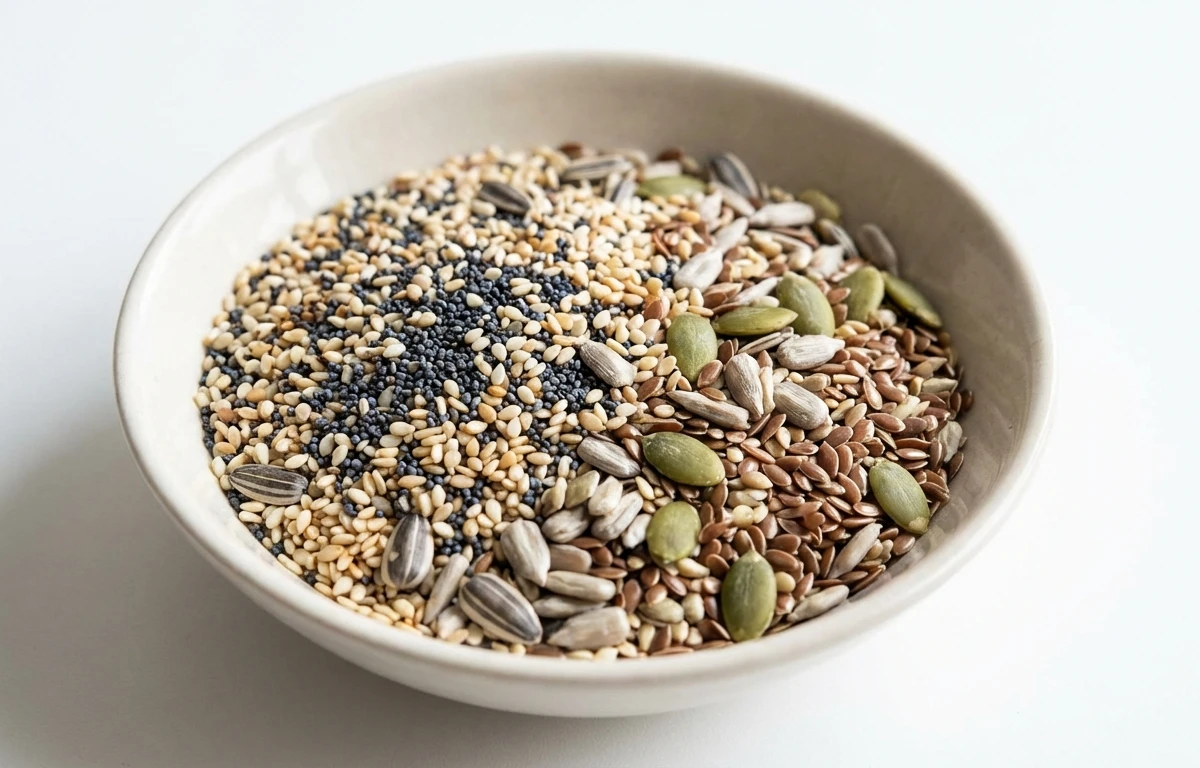
mixed seeds.
VegetarianVeganGluten-freeDairy-freeNut-freePeanut-freeSoy-freeEgg-freeShellfish-freeHoney-freeAlcohol-free
SERVING
CALORIES
545
PROTEIN
21.4g
CARBS
26.4g
FAT
43.4g
FIBER
19.2g
NUTRITION PROFILE · per 100 g
Everything in this ingredient.
MACRONUTRIENTS
Calories545kcal—
Protein21.4g43%
Carbohydrates26.4g10%
Fiber19.2g69%
Sugar1.7g3%
Total fat43.4g56%
Saturated fat5.0g25%
Trans fat0g—
Cholesterol0mg0%
Water4.5g—
MINERALS
Sodium15mg1%
Potassium663mg14%
Calcium254mg20%
Iron6.7mg37%
Magnesium401mg95%
Phosphorus834mg67%
Zinc5.4mg49%
Copper1.3mg144%
Manganese2.9mg126%
Selenium35.8µg65%
VITAMINS
Vitamin A0µg0%
Vitamin C0mg0%
Vitamin D0µg0%
Vitamin E9.5mg63%
Vitamin K2.9µg2%
Thiamin (B1)0.98mg82%
Riboflavin (B2)0.21mg16%
Niacin (B3)6.2mg38%
Pantothenic acid (B5)0.66mg13%
Vitamin B60.48mg28%
Folate (B9)105µg26%
Vitamin B120µg0%
%DV based on a 2,000 cal diet. Source: USDA FoodData Central. A dash in the %DV column means there’s no established Daily Value for that nutrient.
MEASUREMENT CONVERSIONS
How much is what.
1 cup150g
1 tablespoon10g
1 teaspoon3.5g
HEALTH BENEFITS
Why eat it.
- ✓Rich source of healthy fats, including omega-3 and omega-6 fatty acids, which support heart and brain health.
- ✓High in dietary fiber, aiding in digestion, promoting satiety, and helping to regulate blood sugar levels.
- ✓Excellent source of essential minerals such as magnesium, zinc, iron, and selenium.
- ✓Contain antioxidants like lignans and vitamin E, which help protect cells from oxidative damage.
COOKING TIPS
In the kitchen.
- 1Toast seeds in a dry skillet over medium heat for 3-5 minutes until fragrant to enhance their nutty flavor before sprinkling on salads, yogurt, or oatmeal.
- 2Grind seeds like flax or chia just before use to improve nutrient absorption and easily incorporate them into smoothies, batters, or doughs.
- 3Use as a crunchy topping for baked dishes like casseroles or roasted vegetables.
- 4Incorporate whole or ground seeds into homemade granola, energy balls, breads, and muffins for added texture and nutrition.
STORAGE
Keep it fresh.
- Store in an airtight container in a cool, dark, and dry place like a pantry for up to 6 months.
- For longer freshness and to prevent the oils from becoming rancid, store in the refrigerator for up to one year or in the freezer indefinitely.
FAQ
Frequently asked questions.
Are mixed seeds healthy?
Yes, mixed seeds are highly nutritious. They are an excellent source of healthy fats, including omega-3 and omega-6 fatty acids, dietary fiber, and essential minerals like magnesium, zinc, iron, and selenium. They also contain antioxidants, supporting heart health, digestion, and overall well-being.
How many calories and how much protein are in mixed seeds?
Per 100g, mixed seeds contain approximately 545 calories and 21.4g of protein. While calorie-dense due to their healthy fat content, they offer a significant amount of plant-based protein and essential nutrients, making them a valuable addition to a balanced diet.
Are mixed seeds good for weight loss?
Mixed seeds can be beneficial for weight management when consumed in moderation. Their high fiber and protein content promote satiety, helping to reduce overall calorie intake. However, they are calorie-dense, so portion control is crucial to avoid excessive calorie consumption.
Are mixed seeds gluten-free?
Yes, most mixed seeds are naturally gluten-free. Common seeds like flax, chia, pumpkin, sunflower, and sesame do not contain gluten. However, always check the product label to ensure there's no cross-contamination during processing if you have a severe gluten allergy.
Are mixed seeds vegan?
Yes, mixed seeds are inherently vegan. They are plant-based ingredients derived directly from various plants and contain no animal products or by-products, making them suitable for a vegan diet.
Are mixed seeds keto-friendly?
Many mixed seeds are suitable for a ketogenic diet due to their high fat and protein content and relatively low net carbs. While 100g contains 26.4g total carbs, a typical serving size is much smaller, making them a good source of healthy fats and fiber for keto dieters. Always monitor your total carb intake.
How can I use mixed seeds in my diet?
Mixed seeds are incredibly versatile. You can sprinkle them on salads, yogurt, oatmeal, or smoothies for added crunch and nutrition. They can also be incorporated into baked goods like bread, muffins, or granola bars, or used as a coating for proteins.
Do mixed seeds need to be soaked or roasted?
Soaking seeds like chia or flax can improve nutrient absorption and digestibility, especially for their mucilaginous properties. Roasting seeds (e.g., pumpkin, sunflower) enhances their flavor and crunch, making them more appealing for snacking or as a topping, but it's not strictly necessary for consumption.
How should I store mixed seeds?
Store mixed seeds in an airtight container in a cool, dark place, such as a pantry, to prevent them from going rancid. For longer shelf life, especially for larger quantities or ground seeds, refrigeration or freezing is recommended due to their high oil content.
What kind of seeds are typically found in mixed seeds?
Mixed seeds usually refer to a blend of various edible seeds. Common combinations often include pumpkin seeds, sunflower seeds, flax seeds, chia seeds, sesame seeds, and sometimes hemp seeds. The specific blend can vary by brand and desired nutritional profile.
RECIPES
Cook with mixed seeds.
1 recipes · sorted by what’s quick
SAME CATEGORY