
Loading...
Per 100g
Nutrition data source: USDA FoodData Central
Common measurement equivalents in grams
Typically 3 to 5 days. They are very delicate and will begin to wilt or become slimy if kept longer or exposed to excess moisture.
Freezing is not recommended for salad use as the cell walls will collapse. However, they can be frozen for use in smoothies or soups.
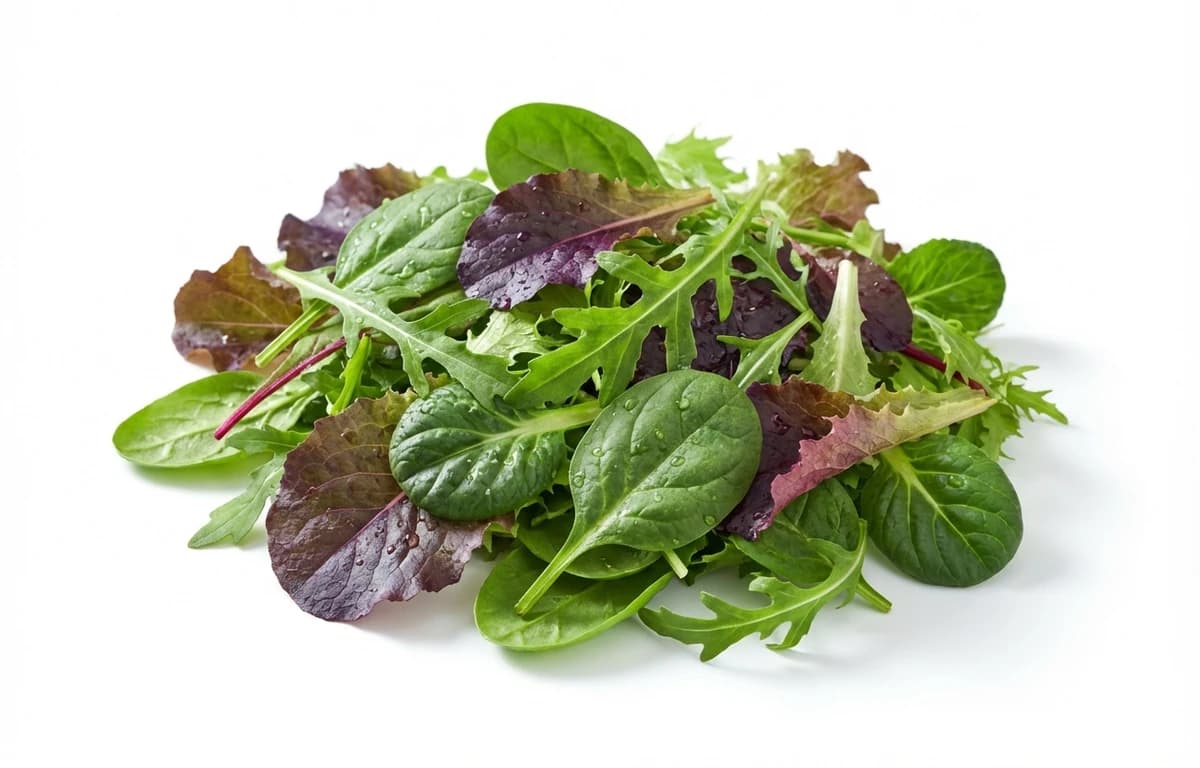
It typically contains a variety of young leaves such as baby spinach, red and green romaine, oak leaf, chard, arugula, and radicchio.
Look for vibrant colors and crisp leaves. Avoid containers with visible moisture, yellowing leaves, or any signs of dark, slimy spots.
Baby spinach, arugula, or butter lettuce are the best substitutes depending on whether you want a mild or peppery flavor.
While labeled pre-washed, a quick rinse in cold water and thorough drying in a salad spinner is often recommended for safety and freshness.
They contain a moderate amount of plant-based (non-heme) iron. Pairing them with Vitamin C (like lemon juice) helps increase absorption.
Slime is caused by excess moisture and bacterial growth. Ensure they are dry and stored with a paper towel to absorb moisture.
Yes, spring greens generally contain significantly higher levels of Vitamins A, C, and K, as well as more phytonutrients than iceberg lettuce.
mixed spring greens is a versatile ingredient found in cuisines around the world. With 23 calories per 100g and 2.1 grams of protein, it's a nutritious addition to many dishes.
Explore more ingredients in the other category with complete nutrition information.
View all other →Discover 7 recipes featuring mixed spring greens with step-by-step instructions.
Browse recipes →