
Other
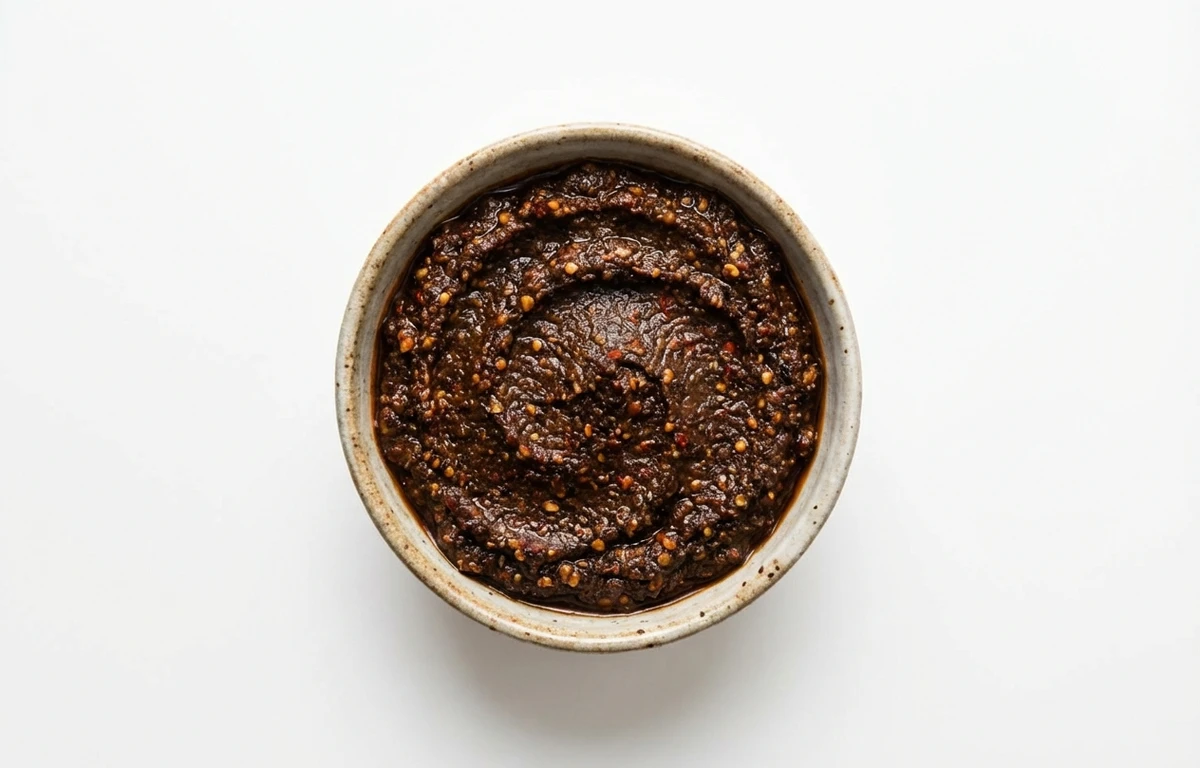
mole paste.
VegetarianVeganGluten-freeDairy-freeNut-freePeanut-freeSoy-freeEgg-freeShellfish-freeHoney-freeAlcohol-free
ALSO KNOWN AS
mole poblano pastepasta de mole
SERVING
CALORIES
410
PROTEIN
7.5g
CARBS
42g
FAT
28g
FIBER
6.5g
Per 100 g, it provides 8.0 µg of vitamin K.
NUTRITION PROFILE · per 100 g
Everything in this ingredient.
MACRONUTRIENTS
Calories410kcal—
Protein7.5g15%
Carbohydrates42g15%
Fiber6.5g23%
Sugar18g36%
Total fat28g36%
Saturated fat4.5g23%
Trans fat0g—
Cholesterol0mg0%
Water15g—
MINERALS
Sodium1250mg54%
Potassium480mg10%
Calcium95mg7%
Iron4.2mg23%
Magnesium110mg26%
Phosphorus160mg13%
Zinc1.8mg16%
Copper0.60mg67%
Manganese0.90mg39%
Selenium4.5µg8%
VITAMINS
Vitamin A180µg20%
Vitamin C2.5mg3%
Vitamin D0µg0%
Vitamin E3.2mg21%
Vitamin K8.0µg7%
Thiamin (B1)0.12mg10%
Riboflavin (B2)0.15mg12%
Niacin (B3)3.5mg22%
Pantothenic acid (B5)0.40mg8%
Vitamin B60.30mg18%
Folate (B9)25µg6%
Vitamin B120µg0%
%DV based on a 2,000 cal diet. Source: USDA FoodData Central. A dash in the %DV column means there’s no established Daily Value for that nutrient.
MEASUREMENT CONVERSIONS
How much is what.
1 cup280g
1 tablespoon18g
1 teaspoon6g
1 oz28.4g
1 lb453.6g
1 ml1.2g
1 liter1150g
HEALTH BENEFITS
Why eat it.
- ✓Contains healthy monounsaturated fats from nuts and seeds
- ✓Good source of dietary fiber for digestive health
- ✓Provides essential minerals like iron and magnesium
- ✓Capsaicin from chiles may boost metabolism
COOKING TIPS
In the kitchen.
- 1Always sauté the paste in a little oil first to 'bloom' the spices and release oils
- 2Gradually whisk in warm broth or water to reach your desired consistency
- 3Simmer on low heat and stir frequently as the high sugar and nut content can burn easily
STORAGE
Keep it fresh.
- Store unopened jars in a cool, dark pantry for up to 1 year
- Once opened, keep refrigerated in an airtight container for up to 6 months
- Can be frozen in small portions for up to 12 months to maintain flavor
FAQ
Frequently asked questions.
How long does mole paste last after opening?
When kept in an airtight container in the refrigerator, mole paste typically lasts for 4 to 6 months.
Is mole paste vegan?
Most commercial mole pastes are vegan, but traditional recipes may use lard. Always check the label for animal fats.
Does mole paste contain gluten?
Yes, most mole pastes use breadcrumbs or crackers as a thickening agent, making them unsuitable for gluten-free diets unless specified.
How do I dilute mole paste for a sauce?
The standard ratio is usually 1 part paste to 3 or 4 parts broth (chicken or vegetable), whisked over low heat until smooth.
Can I freeze mole paste?
Yes, mole paste freezes very well. Portion it into ice cube trays or small bags to use only what you need later.
What are the most common allergens in mole paste?
Mole paste frequently contains peanuts, tree nuts (like almonds), sesame seeds, and wheat (gluten).
What can I use as a substitute for mole paste?
A mix of adobo sauce with a bit of peanut butter and cocoa powder can mimic the flavor, though it won't be as complex.
Why is my mole sauce bitter?
Mole can be bitter if the chiles were over-toasted or if it's too concentrated. Adding a small amount of sugar or Mexican chocolate can balance it.



















