
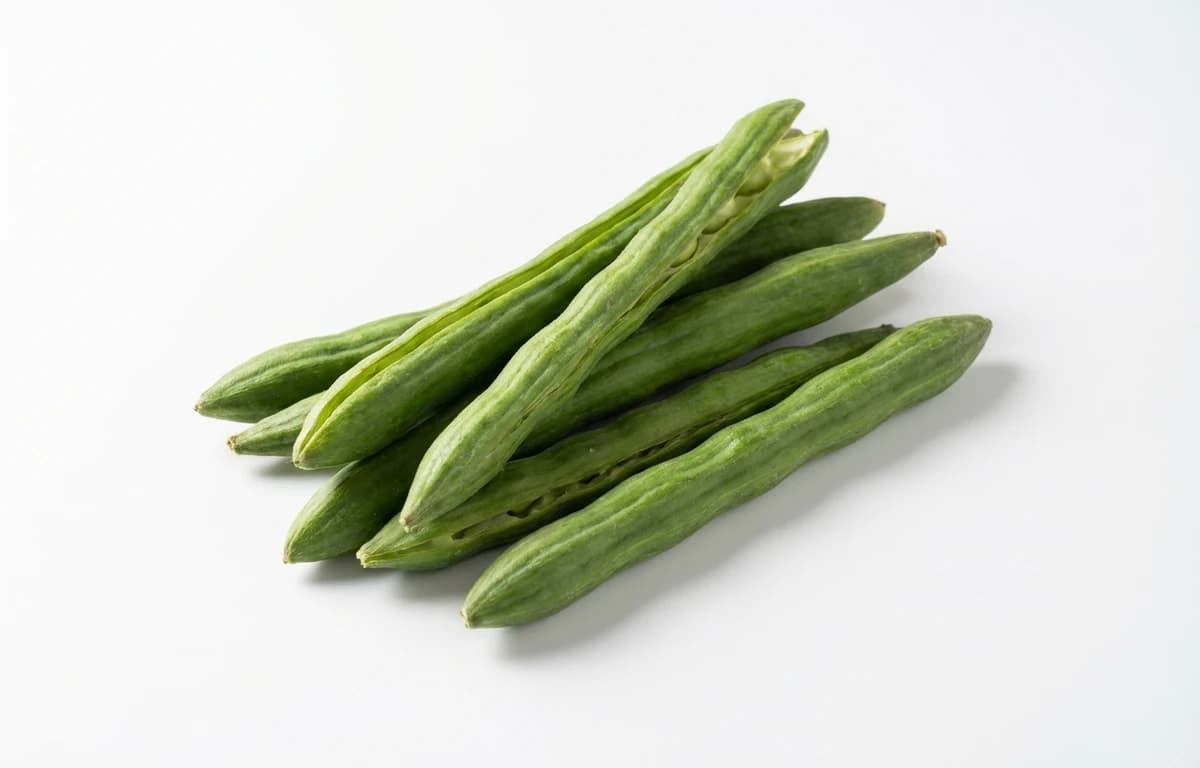
moringa pods
Also known as: drumstick, sahjan, shevga, murungakkai, munagakaya, moringa oleifera pods, moringa sticks
Loading...
Also known as: drumstick, sahjan, shevga, murungakkai, munagakaya, moringa oleifera pods, moringa sticks
Per 100g
Nutrition data source: USDA FoodData Central
Common measurement equivalents in grams
Look for pods that are firm, bright green, and relatively slender. Avoid pods that are very thick or have prominent bulges, as these are mature and likely to be woody and tough.
You don't need to peel them completely, but for thicker pods, it is common to lightly scrape the outer ridges with a knife to remove the toughest fibers.
Yes, the soft seeds inside young pods are edible and highly nutritious. In mature pods, the seeds become hard and are usually removed or the whole pod is discarded after extracting the pulp.
While the flavor is unique, green beans or okra can provide a similar texture in stews and curries, though they won't require the 'chew and spit' method of eating.
They typically take 10-15 minutes to boil or simmer in a curry until the pulp is soft and the pod can be easily split.
Yes, in many regions, especially India, moringa pods are commonly referred to as 'drumsticks' due to their long, slender shape.
They are rarely eaten raw because the outer shell is very fibrous. They are almost always boiled, steamed, or cooked in sauces.
They are a staple in South Indian Sambar, Avial, and various Thai and Filipino soups and stews.
moringa pods is a versatile ingredient found in cuisines around the world. With 37 calories per 100g and 2.1 grams of protein, it's a nutritious addition to many dishes.
Explore more ingredients in the other category with complete nutrition information.
View all other →Discover 0 recipes featuring moringa pods with step-by-step instructions.
Browse recipes →No, they are very low in calories, providing only about 37 calories per 100g, making them excellent for weight management.