
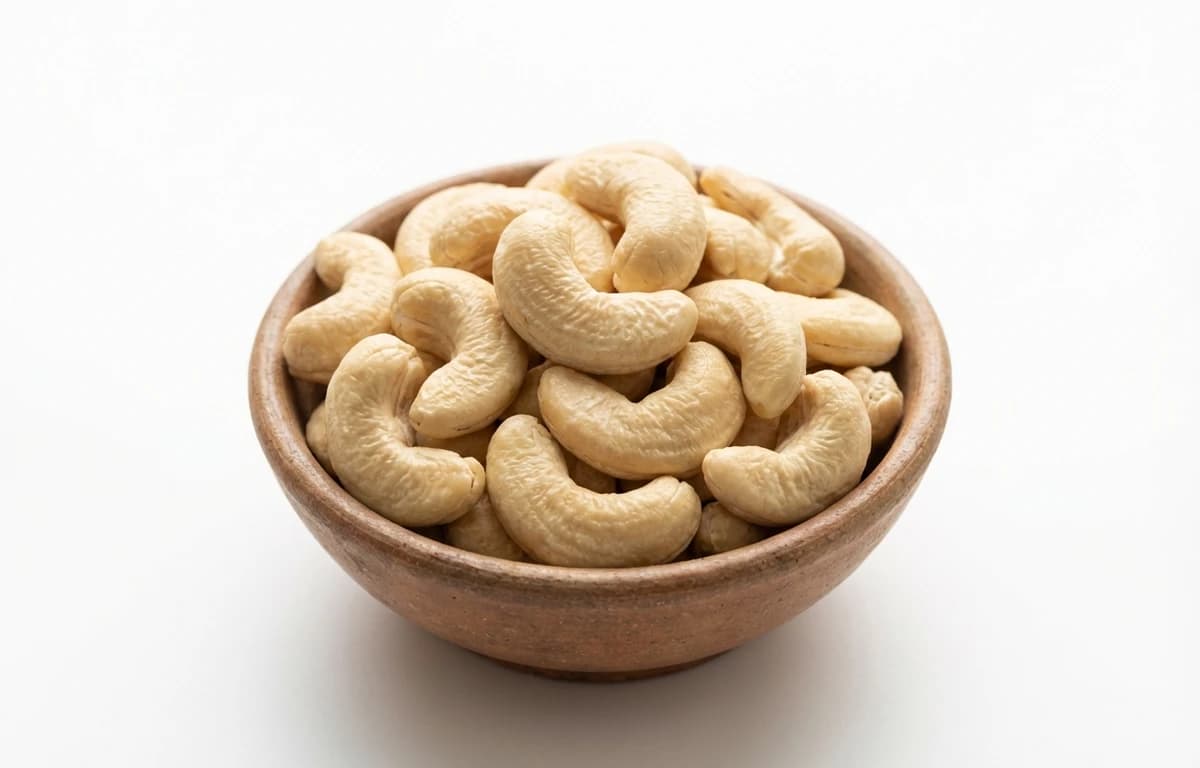
mundhiri
Also known as:
Loading...
Also known as:
Per 100g
Nutrition data source: USDA FoodData Central
Yes, mundhiri are very healthy when consumed in moderation. They are packed with heart-healthy monounsaturated fats, essential minerals like copper and magnesium, and antioxidants. These nutrients support heart health, bone strength, and provide anti-inflammatory benefits.
Mundhiri are calorie-dense, providing about 553 calories per 100g, along with 18.22g of protein, 30.19g of carbohydrates, and 43.85g of healthy fats. They are an excellent source of copper, magnesium, and manganese, which are vital for energy production, brain function, and bone health.
While mundhiri are calorie-dense, their healthy fats, protein, and fiber content can promote satiety, potentially aiding in weight management by reducing overall food intake. However, portion control is crucial due to their high caloric value.
Yes, mundhiri (cashew nuts) are naturally vegan as they are plant-based. They are also naturally gluten-free, making them suitable for individuals following a gluten-free diet. Always check for cross-contamination if severe allergies are a concern.
Yes, diabetics can generally eat mundhiri in moderation. Their low sugar content, combined with healthy fats and fiber, can help manage blood sugar levels. However, due to their calorie density, portion control is key to avoid excessive calorie intake.
Mundhiri are incredibly versatile. They can be eaten raw or roasted as a snack, added to stir-fries, curries, and salads for crunch, or ground into a paste for thickening sauces and making vegan cheeses or creams. They are also popular in desserts and baked goods.
mundhiri is a versatile ingredient found in cuisines around the world. With 553 calories per 100g and 18.22 grams of protein, it's a nutritious addition to many dishes.
Explore more ingredients in the nut category with complete nutrition information.
View all nut →Mundhiri have a distinct creamy, buttery, and slightly sweet flavor. When roasted, their nutty notes become more pronounced. Their smooth texture makes them a popular choice for both savory and sweet dishes.
To maintain freshness and prevent rancidity, store mundhiri in an airtight container in a cool, dark place. For longer storage, especially in warmer climates, refrigeration or freezing is recommended.
When stored properly in an airtight container in a cool, dark place, mundhiri can last for up to 6 months. If refrigerated, they can last for about a year, and if frozen, up to two years. Rancid nuts will have a bitter, sour smell or taste.
Yes, mundhiri are tree nuts and can cause allergic reactions in sensitive individuals, ranging from mild symptoms to severe anaphylaxis. They also contain oxalates, which might be a concern for people prone to kidney stones if consumed in very large quantities.