
Legume
natto.
VegetarianVeganGluten-freeDairy-freeNut-freePeanut-freeSoy-freeEgg-freeShellfish-freeHoney-freeAlcohol-freeFermented
SERVING
CALORIES
211
PROTEIN
19.4g
CARBS
12.7g
FAT
11g
FIBER
5.4g
NUTRITION PROFILE · per 100 g
Everything in this ingredient.
MACRONUTRIENTS
Calories211kcal—
Protein19.4g39%
Carbohydrates12.7g5%
Fiber5.4g19%
Sugar4.9g10%
Total fat11g14%
Saturated fat1.6g8%
Trans fat0g—
Cholesterol0mg0%
Water55g—
MINERALS
Sodium7.0mg0%
Potassium729mg16%
Calcium217mg17%
Iron8.6mg48%
Magnesium115mg27%
Phosphorus174mg14%
Zinc3.0mg28%
Copper0.67mg74%
Manganese1.5mg67%
Selenium8.8µg16%
VITAMINS
Vitamin A0µg0%
Vitamin C13mg14%
Vitamin D0µg0%
Vitamin E0.01mg0%
Vitamin K23.1µg19%
Thiamin (B1)0.16mg13%
Riboflavin (B2)0.19mg15%
Niacin (B3)0mg0%
Pantothenic acid (B5)0.22mg4%
Vitamin B60.13mg8%
Folate (B9)8.0µg2%
Vitamin B120µg0%
%DV based on a 2,000 cal diet. Source: USDA FoodData Central. A dash in the %DV column means there’s no established Daily Value for that nutrient.
MEASUREMENT CONVERSIONS
How much is what.
1 cup175g
1 tablespoon10.9g
1 teaspoon3.6g
1 ml0.7g
1 liter729.2g
HEALTH BENEFITS
Why eat it.
- ✓Exceptionally rich in Vitamin K2, which is crucial for bone health and may help prevent arterial calcification.
- ✓Contains the enzyme nattokinase, which has been studied for its potential to dissolve blood clots and support cardiovascular health.
- ✓A potent source of probiotics (Bacillus subtilis), which promote a healthy gut microbiome and aid digestion.
- ✓High in plant-based protein and fiber, contributing to satiety and muscle maintenance.
COOKING TIPS
In the kitchen.
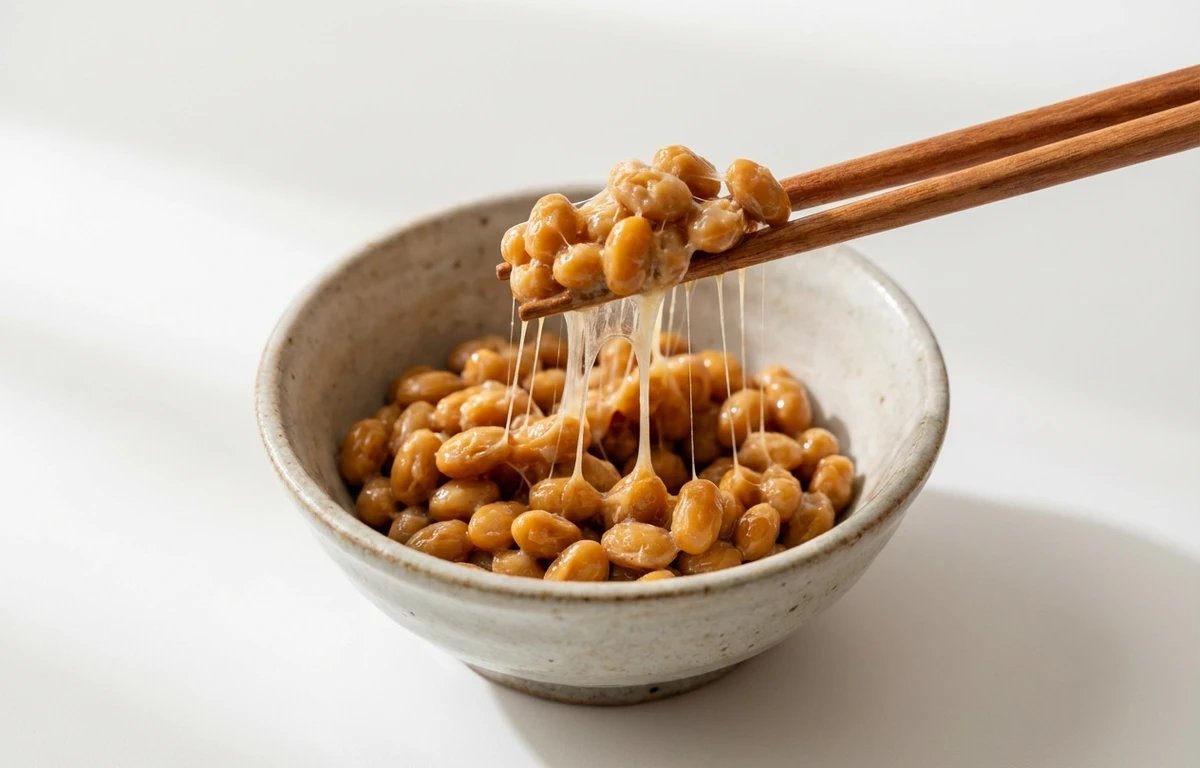
- 1For the best texture and flavor, stir natto vigorously with chopsticks for at least 30-50 times before adding seasonings. This incorporates air and develops its characteristic sticky, stringy consistency.
- 2Traditionally served cold over hot steamed rice, often mixed with the included soy sauce and karashi mustard packets, and topped with chopped scallions or a raw egg yolk.
- 3Avoid cooking natto at high temperatures, as heat can destroy its beneficial probiotics and the nattokinase enzyme. If adding to hot dishes like miso soup or pasta, stir it in at the very end after removing from the heat.
- 4To mellow its strong, pungent flavor, mix it with other ingredients like avocado, mayonnaise, kimchi, or perilla leaves.
STORAGE
Keep it fresh.
- Keep refrigerated at or below 40°F (4°C) and consume by the expiration date. The fermentation process continues slowly in the fridge, deepening the flavor over time.
- Natto freezes very well. Store in an airtight container or its original packaging in the freezer for up to 6 months. Thaw in the refrigerator overnight before use.
FAQ
Frequently asked questions.
Is natto healthy?
Yes, natto is exceptionally healthy. It's a powerhouse of nutrients, particularly known for its high content of Vitamin K2, which is crucial for bone health and cardiovascular well-being. It also contains nattokinase, an enzyme studied for its potential to support blood circulation, and beneficial probiotics for gut health.
What are the main nutritional benefits of natto?
Natto is rich in plant-based protein, fiber, and essential minerals like iron and magnesium. Its standout benefits include a high concentration of Vitamin K2, vital for calcium metabolism, and potent probiotics (Bacillus subtilis) that promote a healthy gut microbiome and aid digestion. It also provides the unique enzyme nattokinase.
How much protein and calories are in natto?
Per 100 grams, natto contains approximately 211 calories and a significant 19.4 grams of protein. It also provides about 11 grams of fat and 12.68 grams of carbohydrates, making it a nutrient-dense food that contributes to satiety and muscle maintenance.
Is natto vegan and gluten-free?
Yes, natto is naturally vegan as it is made solely from fermented soybeans. It is also gluten-free, provided no gluten-containing ingredients are added during processing or serving, such as certain soy sauces. Always check labels if you have a severe gluten allergy.
Can diabetics eat natto? Is it low-carb?
Natto can be a good food choice for diabetics due to its high fiber and protein content, which can help regulate blood sugar levels. While it contains about 12.68g of carbs per 100g, its low glycemic index and overall nutritional profile make it suitable in moderation. It's not strictly 'low-carb' for a ketogenic diet, but can fit into a balanced diet.
What does natto taste like and what is its texture?
Natto has a distinctive, pungent aroma often described as earthy or cheesy, and a unique savory, slightly bitter taste. Its most notable characteristic is its extremely sticky, stringy, and slimy texture, which is a result of the fermentation process and the production of polyglutamic acid.
How do you typically eat or prepare natto?
Natto is traditionally eaten for breakfast in Japan, often mixed with soy sauce, karashi mustard, and chopped scallions, served over rice. It can also be added to miso soup, salads, or used as a topping for toast or pasta. The key is to mix it vigorously to enhance its flavor and texture.
How should natto be stored?
Unopened natto should be stored in the refrigerator and consumed by its 'best by' date. Once opened, it's best to consume it within a day or two. Natto can also be frozen for longer storage, typically up to a few months, without significantly impacting its texture or nutritional value; thaw it in the refrigerator before use.
What is nattokinase and why is it beneficial?
Nattokinase is a potent enzyme produced during the fermentation of soybeans into natto by the bacterium Bacillus subtilis. It has been extensively studied for its fibrinolytic (clot-dissolving) activity, suggesting potential benefits for cardiovascular health by supporting healthy blood flow and reducing the risk of blood clots.
Why does natto have a strong smell and sticky texture?
The strong smell and sticky, stringy texture of natto are natural byproducts of the fermentation process. The Bacillus subtilis bacteria break down the soybeans, producing ammonia compounds that contribute to its pungent aroma, and polyglutamic acid, which creates the characteristic slimy, viscous consistency.



















