Other6 recipes
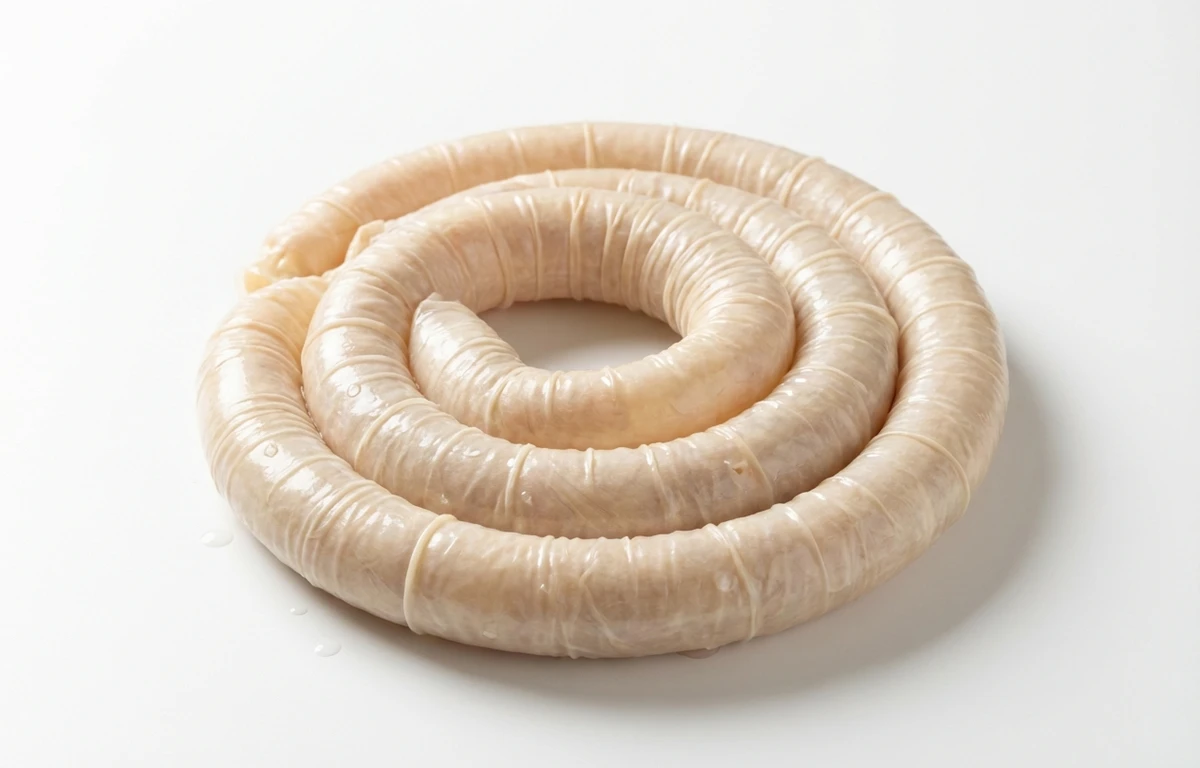
natural hog casings.
VegetarianVeganGluten-freeDairy-freeNut-freePeanut-freeSoy-freeEgg-freeShellfish-freeHoney-freeAlcohol-freeHalalKosher
ALSO KNOWN AS
pig casingssausage casingspork casings
SERVING
CALORIES
85
PROTEIN
16.2g
CARBS
0g
FAT
2.1g
FIBER
0g
NUTRITION PROFILE · per 100 g
Everything in this ingredient.
MACRONUTRIENTS
Calories85kcal—
Protein16.2g32%
Carbohydrates0g0%
Fiber0g0%
Sugar0g0%
Total fat2.1g3%
Saturated fat0.70g3%
Trans fat0g—
Cholesterol65mg22%
Water78.5g—
MINERALS
Sodium1500mg65%
Potassium25mg1%
Calcium12mg1%
Iron0.80mg4%
Magnesium6.0mg1%
Phosphorus45mg4%
Zinc1.2mg11%
Copper0.05mg6%
Manganese0.01mg0%
Selenium12.5µg23%
VITAMINS
Vitamin A0µg0%
Vitamin C0mg0%
Vitamin D0µg0%
Vitamin E0.10mg1%
Vitamin K0µg0%
Thiamin (B1)0.02mg2%
Riboflavin (B2)0.05mg4%
Niacin (B3)0.80mg5%
Pantothenic acid (B5)0.20mg4%
Vitamin B60.03mg2%
Folate (B9)2.0µg1%
Vitamin B120.50µg21%
%DV based on a 2,000 cal diet. Source: USDA FoodData Central. A dash in the %DV column means there’s no established Daily Value for that nutrient.
MEASUREMENT CONVERSIONS
How much is what.
1 oz28.4g
1 lb453.6g
HEALTH BENEFITS
Why eat it.
- ✓High quality animal protein source
- ✓Natural source of collagen
- ✓Zero carbohydrate food
- ✓Contains essential minerals like selenium and zinc
- ✓Low in calories compared to muscle meat
COOKING TIPS
In the kitchen.
- 1Rinse thoroughly in cold water to remove all preservation salt
- 2Soak in warm water (approx 30°C) for 30-60 minutes before use to improve elasticity
- 3Do not overstuff the casings to prevent bursting during the cooking or smoking process
STORAGE
Keep it fresh.
- Store in original salt or heavy brine to prevent spoilage
- Keep refrigerated at all times; do not leave at room temperature
- Avoid freezing as it can damage the elasticity and strength of the casing
FAQ
Frequently asked questions.
How long do natural hog casings last?
When kept heavily salted and refrigerated, they can last up to one year. If kept in brine, they usually last 6-9 months.
Can I freeze hog casings?
It is not recommended. Freezing can make the natural fibers brittle, causing the casings to burst easily when stuffing or cooking.
How do I prepare casings before stuffing?
First, rinse the salt off. Then, run warm water through the inside of the casing (flushing). Finally, soak them in warm water for at least 30 minutes.
What is the best substitute for hog casings?
Collagen casings are the most common substitute. For a vegan option, cellulose or seaweed-based (alginate) casings can be used.
Are hog casings edible?
Yes, natural hog casings are completely edible and provide a characteristic 'snap' when bitten into.
Why do my casings smell slightly?
A mild, characteristic 'animal' scent is normal for natural casings. However, if they smell putrid, sour, or extremely foul, they have likely spoiled and should be discarded.
What size sausages are hog casings used for?
Hog casings are typically 32-35mm in diameter, making them ideal for bratwurst, Italian sausage, and kielbasa.
How much sausage can one hank of casing hold?
A standard 'hank' (about 91 meters) of hog casing typically holds approximately 50-60kg (110-130 lbs) of meat.
RECIPES
Cook with natural hog casings.
6 recipes · sorted by what’s quick